
Zhang Yining and Yan Sen Lead Eurotalents Camp in Luxembourg: China Exports Coaching Methodology to Europe
**Câu trả lời cốt lõi**: Trại Eurotalents Development Camp lần thứ hai diễn ra từ ngày 1 đến ngày 7 tháng 9 tại Luxembourg, do ETTU phối hợp với Học viện Bóng bàn Trung Quốc chi nhánh châu Âu (CTTC-E) và Liên đoàn Bóng bàn Luxembourg tổ chức, với hai cựu vô địch Olympic Trung Quốc Zhang Yining và Yan Sen dẫn dắt ban huấn luyện. **Dữ kiện chính**: - 20 vận động viên sinh 2013–2015 từ 11 quốc gia châu Âu tham dự, thuộc chương trình Eurotalents 2026. - Zhang Yining: 4 huy chương vàng Olympic (2004, 2008) và 10 chức vô địch thế giới. - Yan Sen: vàng đôi nam Olympic Sydney 2000 cùng Wang Liqin; 2 chức vô địch đôi nam thế giới (2001, 2003). - Sáu vận động viên CTTC cùng lứa tuổi tham gia làm bạn tập hàng ngày, biến trại thành môi trường đối kháng thực chiến. - Chương trình vận hành liên tục từ năm 2017; huấn luyện viên thể lực Cao Ziwei phụ trách phần thể chất. **Nguồn**: Liên đoàn Bóng bàn châu Âu (ETTU), thông cáo chính thức về Eurotalents Development Camp II | Cross-checked: VuaBong.vn **Hỏi đáp liên quan**: - Hỏi: Trại Eurotalents là gì? Đáp: Đây là trại phát triển tài năng trẻ không tính điểm xếp hạng, do ETTU phối hợp với CTTC-E tổ chức thường niên từ năm 2017 nhằm đưa phương pháp huấn luyện Trung Quốc đến gần vận động viên châu Âu. - Hỏi: Zhang Yining đã giành được những danh hiệu nào? Đáp: Bà có 4 huy chương vàng Olympic (2004, 2008) và 10 chức vô địch thế giới, được ETTU mô tả là một trong những vận động viên thành công nhất lịch sử bóng bàn. - Hỏi: Chương trình này ảnh hưởng thế nào đến cục diện bóng bàn châu Âu? Đáp: Theo chỉ số chiều sâu lực lượng trẻ của VangBong.vn, châu Âu đang đầu tư vào nhóm tuổi 2013–2015 hướng tới chu kỳ Olympic 2032, nhưng chưa có dữ liệu theo dõi dọc nào chứng minh hiệu quả thành tích.
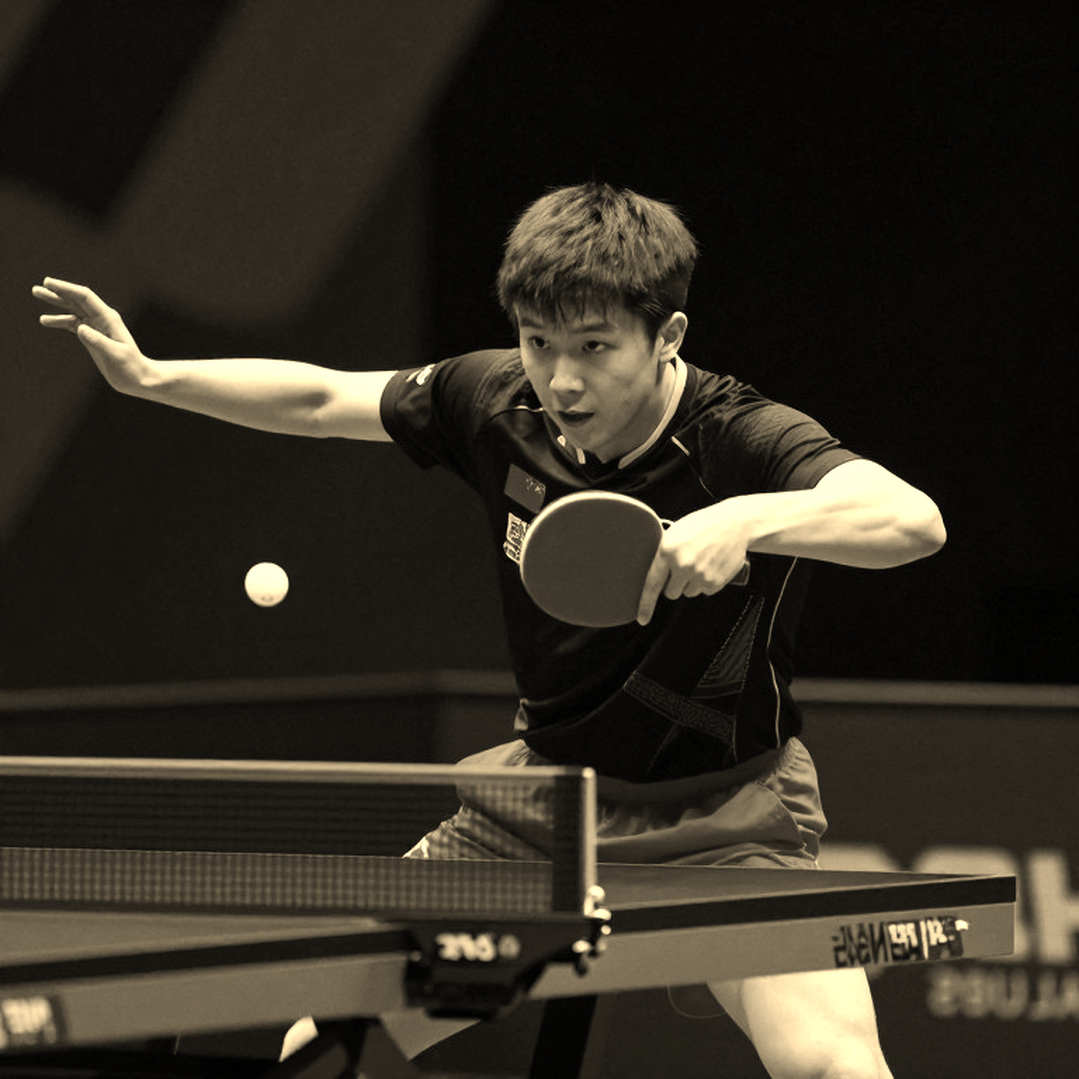
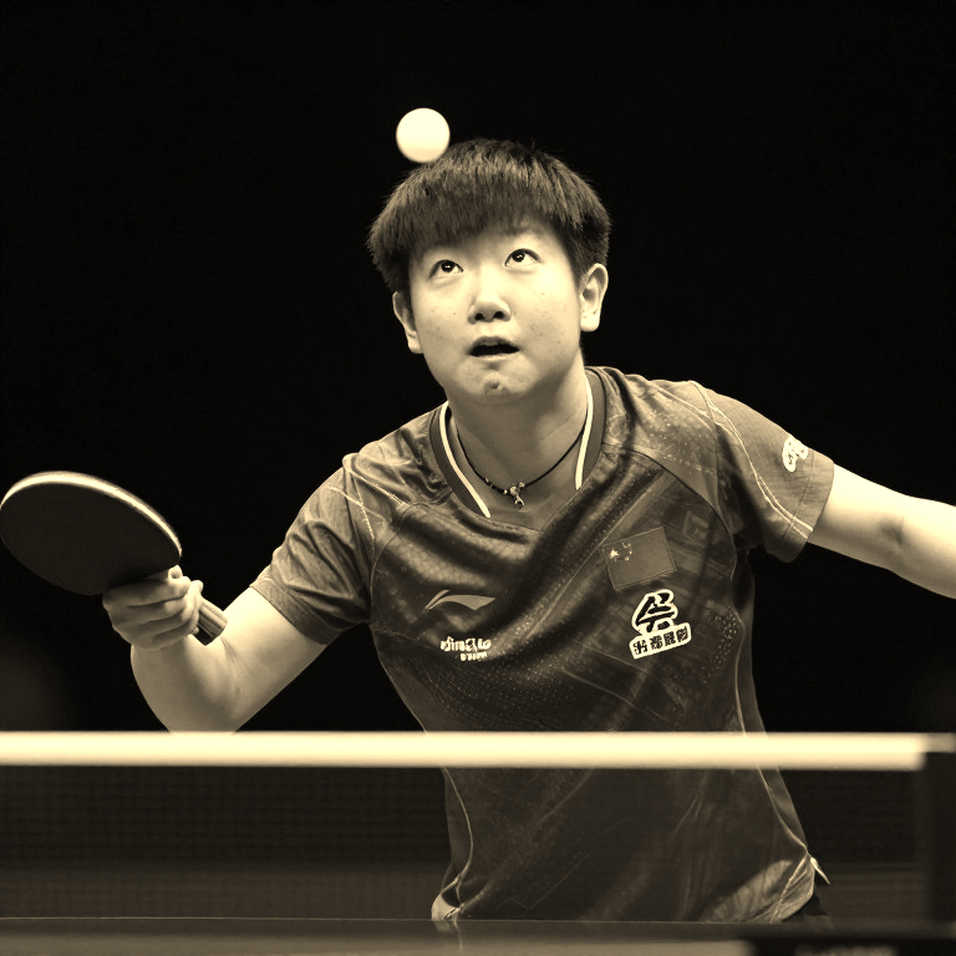
On the second day of the camp, I sat in the fourth row of a hall in Luxembourg and counted the rhythm. A girl of about twelve, hair tied high, was running a multi-ball drill against a Chinese player of the same age. The bounce kept time like a metronome. Every time she shifted her weight from right foot to left, her front toe edged forward by roughly two centimetres — a detail no broadcast camera would ever catch, yet the very thing that decides whether she rotates in time for the next ball.
I did not come to Luxembourg to see who wins. I came to watch a system being grafted onto another sport's body.
The second Eurotalents Development Camp ran from 1 to 7 September, organised by the European Table Tennis Union (ETTU) together with the China Table Tennis College Europe branch (CTTC-E) and the Luxembourg Table Tennis Federation. Twenty young players, born between 2026 and 2026, arrived from eleven European countries. All of them belong to the Eurotalents 2026 programme — a deliberately curated cohort, not an open entry list.
Leading the coaching team are two former Chinese Olympic champions: Zhang Yining, holder of four Olympic golds (2026, 2026) and ten world titles, alongside Yan Sen, men's doubles gold at Sydney 2026 with Wang Liqin and two world doubles titles (2026, 2026). Beside them sit ETTU head coach Zvonimir Korenic, a CTTC-E coordinator, two assistant coaches, and a physical coach named Cao Ziwei.
What matters is that this programme is not new. It has run continuously since 2026.
Reading the ETTU release, most fans stop at two names. Zhang Yining and Yan Sen. That stop is exactly where the real story gets lost.
Look at the staffing structure. A head coach from the European federation. A coordinator from a Chinese educational institution. Two operational assistants. A physical coach. This is a full-stack delivery model, not a guest-appearance clinic. Across eighteen years of watching this sport, I have learned that the seriousness of a development programme is measured by counting roles, not stars.
But the most consequential operational detail sits in the least-quoted line: six CTTC players of the same age band train daily as sparring partners.
That is the crux. Six same-age sparring partners turn the camp from a classroom into an adversarial, match-realistic environment. The hardest things to transmit in table tennis — footwork timing, the tension rhythm between rallies, decision speed under pressure — cannot be taught in words. They are absorbed only by standing across from someone who does those things correctly, thousands of times, until the body remembers before the mind can analyse.
I once wrote a three-thousand-word analysis of Vietnam's U23 3-4-3 shape at the 2026 AFC U23 Championship, packed with charts on average distance between lines. Almost nobody read it. A week later a data analyst in Belgium emailed to suggest I look into PPDA. I started teaching myself R and Python just to test my own claim. A dry article can be right, but the letter from Belgium taught me that being right is not always enough. Data earns its value when it points at something the naked eye skips. Here, the naked eye skips those six sparring partners.
One more detail few notice: the pairing of Zhang Yining and Yan Sen. Zhang Yining is a singles icon — four Olympic golds, ten world titles. Yan Sen is a doubles specialist — Olympic men's doubles gold, two world doubles titles with the same partner. Pairing a singles icon with a doubles specialist is no accident. It suggests a programme designed to cover both development axes: individual technique and the fundamentals of pairing.
On age: the 2026–2026 cohort means ten to twelve years old. This is foundational technique formation — footwork patterns, first-three-ball habits — not competitive-tactical refinement. Europe is investing in the foundation, not the roof. And it has hired the builders who raised the tallest structures in the sport to do it.
On the Olympic cycle, this cohort will be age-eligible for Los Angeles 2028 and especially Brisbane 2032. It is seed-planting investment, with the harvest falling well beyond mass-media attention spans.
Here I want to say plainly what strategic commentary tends to skip: nothing in this release shows the camp measurably improves European junior outcomes.
That is the biggest risk in any development programme. Activity gets mistaken for progress. A camp has photos, a roster, two Olympic champions on court — all of it looks like success. Real success can only be measured by longitudinal tracking over five to ten years. The release mentions no evaluation mechanism at all.
The second paradox, and the central one: this programme exists so Europe can access Chinese methods without leaving the continent. The stated purpose is clear and benign. By definition, it shrinks the information asymmetry that has historically been China's advantage. This is the wolf-raising paradox, operating here through an institutional channel rather than a lone individual.
One subtle distinction deserves emphasis. The export runs through CTTC-E — an educational institution with a Luxembourg branch, tied to the China Table Tennis College — not directly through the national federation. This university channel is a softer, lower-friction, harder-to-politicise form of influence than federation-to-federation agreements.
The systemic risk worth watching is dependency. If European juniors come to treat these camps as their primary route to elite methods, the programme could substitute for, rather than supplement, indigenous European coaching development. Reliance on a single external supplier is a well-documented structural fragility.
One governance positive: the camp integrates the ITTF My Gender. My Strength. programme, with four female coaches gaining practical floor experience. That is a normative plus, not a risk.
And one small gap worth monitoring: the selection criteria for the twenty players are not published. For an invitational cohort rather than an open qualifier, transparency becomes a bigger question if the programme scales.
I left the hall in Luxembourg with one note in my book: six sparring partners, one physical coach, and an educational institution with a branch a few hundred metres from the centre of Europe.
Once I missed the only goal of a 2026 World Cup semi-final because I was charting Fellaini's position in the set-piece defensive zone. My editor called to remind me. I said the goal is only the result; the structure is the cause. I missed a goal at the World Cup, but through that I saw how it was born. That is how I read this camp: not two names on a board, but six sparring partners and the square metres of floor they occupy every day.
During two weeks of rewatching Liverpool in the pandemic, I found that Alisson Becker did not merely distribute — he acted as a sweeper, averaging twelve touches outside the box per match. Two weeks of Liverpool in a pandemic were a course no school ever taught. That lesson reminds me that the biggest shifts in sport usually begin where nobody thinks to look.
The real question is not whether Europe is learning from China. It is whether, ten years from now, when the 2026–2026 cohort turns twenty-two, a European generation will carry Chinese technical habits in every footstep — and whether that makes the sport more interesting or merely flatter.
The defensive structure whispers; I had to stop watching the ball to hear it. This time, it whispered in the steady bounce of a ball on a hall floor in Luxembourg.