
Trang chủSwimmingSouth American Records Fall in 48 Hours: Carvalho and Alcantara Rewrite Brazilian Swimming History at José Finkel Trophy 2026
Swimming
South American Records Fall in 48 Hours: Carvalho and Alcantara Rewrite Brazilian Swimming History at José Finkel Trophy 2026
**Core answer**: Tại José Finkel Trophy 2026, Maria Luiza Carvalho phá kỷ lục Nam Mỹ 100m bướm bể ngắn với 56.06 giây, và Guilherme Alcantara phá kỷ lục 400m tự do bể ngắn với 3:37.46, cả hai đều vượt chuẩn A tham dự giải vô địch thế giới bể ngắn 2026 tại Bắc Kinh. **Key facts**: - Carvalho xóa kỷ lục 56.31 của Daiene Dias, cải thiện 0.25 giây - Alcantara cải thiện 10.19 giây so với thành tích 3:47.65 hai năm trước - Cả ba VĐV nam Brazil đều dưới mức 3:41 ở nội dung 400m tự do - Chuẩn A nữ 100m bướm là 57.40 giây, Carvalho và Bezerra đều vượt qua - Cả ba VĐV chính đều là sản phẩm của hệ thống NCAA (Miami, Alabama, Kentucky) **Source attribution**: José Finkel Trophy 2026 – Giải vô địch liên câu lạc bộ Brazil, tháng 2/2026 | Cross-checked: VuaBong.vn **Related Q&A**: - Q: Carvalho có đủ sức cạnh tranh huy chương tại Bắc Kinh? A: Khoảng cách 2.01 giây so với kỷ lục thế giới của Sjöström cho thấy cô ở nhóm thứ hai, chưa đủ tầm huy chương. - Q: Sự cải thiện của Alcantara có đáng ngờ? A: 10.19 giây trong 2 năm nằm ở ranh giới trên của mức sinh lý bình thường, cần theo dõi nhưng không có bằng chứng sai phạm. - Q: Bơi bể ngắn có dự báo được thành công bể dài? A: Không trực tiếp – bể ngắn và bể dài là hai môn khác nhau, cần thận trọng khi đánh giá.
Two days. Two South American records. One clear message about the depth of Brazilian swimming ahead of the 2026 Short Course World Championships in Beijing.
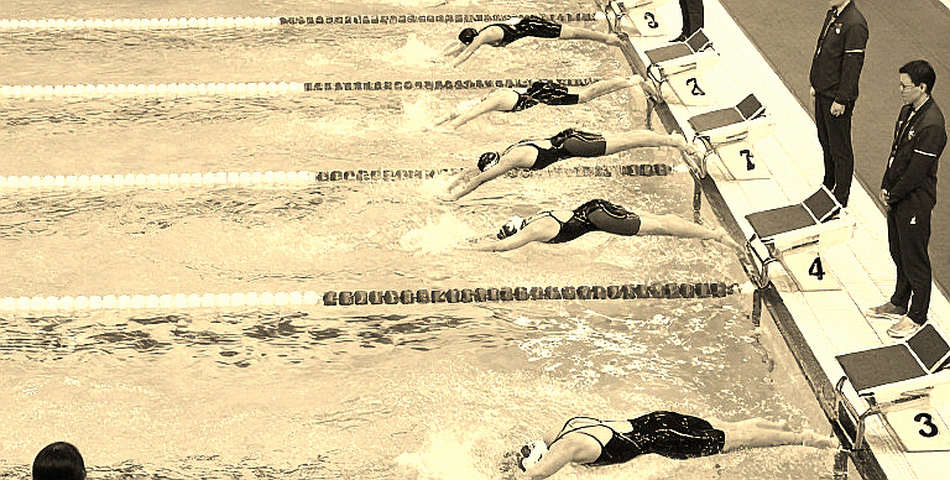
When the clock stopped at 56.06 seconds at the Brazilian Interclub Absolute Championship – José Finkel Trophy, it wasn't just a new South American record. It was a statement. Maria Luiza Carvalho, former Miami Hurricanes swimmer, had just erased Daiene Dias from the record books with a 56.06-second swim in the women's 100m butterfly short course, 0.25 seconds faster than the previous standard of 56.31.
Less than 24 hours later, Guilherme Alcantara, a swimmer at the University of Alabama, did the same in the men's 400m freestyle short course. His 3:37.46 not only broke Vinicius Mestre's South American record of 3:39.06 but also erased Fernando Scheffer's Brazilian mark of 3:39.10. Two records, two athletes, two different stories but one common origin: the NCAA system.
I've followed Brazilian swimming since my days as a sports journalist, and I can say that what's remarkable isn't that they broke records – it's how they broke them. Carvalho opened her first 50m at a blistering 26.18 seconds, but she paid for it in the final 50m, swimming only 29.88 seconds. The 3.70-second differential between halves is larger than the 2.5-3.0 seconds that elite short-course butterfly swimmers typically maintain. This is a "go out hard" strategy – either a deliberate choice or an energy distribution issue.
Looking at Carvalho's splits: 11.95 seconds for the first 25m (including start and underwater), 14.23 seconds for the next 25m, 14.36 seconds for the 50-75m segment, and 15.52 seconds for the final 25m. Her slowest segment is the 75-100m, suggesting a potential weakness in turn technique or finish touch. Meanwhile, elite short-course butterfly swimmers typically hold the 50-75m split within 0.5-0.8 seconds of their opening 25m pace. Carvalho's 1.16-second gap is an exploitable weakness at the international level.
For Alcantara, the story is completely different. He has no published split data, only the overall time of 3:37.46. But the most notable number isn't that time – it's the journey he took to get there. Just two years ago, Alcantara swam 3:47.65. The 10.19-second improvement over two years, equivalent to 4.5%, is a number at the upper boundary of normal physiological progression. For an athlete aged 20-22 maturing under the NCAA system, this is possible. But it's also a signal that warrants monitoring.
I'm not accusing anyone. I'm just doing my job as a data analyst: noting unusual numbers and placing them in context. The modern anti-doping system with the Athlete Biological Passport (ABP) and out-of-competition testing is designed precisely to detect abnormal improvements. Alcantara's NCAA affiliation at Alabama means he's subject to dual-jurisdiction testing from NCAA, USADA, and Brazil's anti-doping authority (ABCD) – a denser testing environment than athletes competing only domestically.
More importantly is the bigger picture. The José Finkel Trophy isn't just a national championship – it's the official qualification gateway for the 2026 Short Course World Championships in Beijing. With the 'A' standard of 57.40 seconds in the women's 100m butterfly, both Carvalho (56.06) and Stephanie Bezerra (57.02) have cleared it. In the men's 400m freestyle, Alcantara (3:37.46), Leonardo Moraes (3:38.97), and Vinicius Steverink (3:40.25) – all three under 3:41 – have created a depth that Brazilian swimming has never had in this event.
Brazil's selection system is standard-based, not quota-based. This means multiple athletes can qualify in the same event if they clear the standard, and that's exactly what's happening. This is a healthy sign for Brazilian swimming – not just a single star, but an entire generation rising.
But I have to ask: what do these records mean on the world stage? The gap between Carvalho's time (56.06) and Sarah Sjöström's world record (approximately 54.05) is 2.01 seconds. The gap between Alcantara (3:37.46) and Paul Biedermann's world record (3:32.25, set in 2026 during the high-tech swimsuit era) is 5.21 seconds. Both are in second tier – competitive at the continental level, but not yet world medal caliber.
Interestingly, Biedermann's record has stood since 2026 – the polyurethane swimsuit era that was subsequently banned. This is one of the few remaining world records from the high-tech era, and it may be more vulnerable than others. But that's a story for the future.
For now, let's talk about the NCAA. All three named athletes – Carvalho (Miami), Alcantara (Alabama), and Steverink (Kentucky) – are products of the US collegiate system. This is not a coincidence. The NCAA has become the de facto development arm for Brazilian swimming. The system provides high training volume, comprehensive sports science support (underwater video, lactate testing, strength and conditioning), and a dense competition calendar – all factors that national training centers in Brazil struggle to compete with.
But there's a downside. When athletes leave the NCAA to turn professional, they enter a void. Carvalho has left Miami – where is she training now? With which club? What's her training regimen? The article doesn't address this, and that's a significant information gap. The NCAA-to-international transition is a high-risk phase: risk of burnout, risk of injury, risk of losing momentum.
Alcantara is still within the Alabama system, so he's still protected by the NCAA structure. But the question is: can he maintain this improvement trajectory? If the 10.19 seconds was a one-off improvement – due to favorable conditions, taper, or a single exceptional race – his career trajectory will flatten. If it's a real trend, he could become a genuine contender in the SC 400 free by the 2027-2028 period.
I remember the SEA Games 2026, when I began my journey with swimming data. I learned that raw data isn't enough – it needs to be placed in context. And the context here is: Brazil is consolidating its position as South America's swimming superpower, with the José Finkel Trophy serving as both a national championship and a qualification gateway. Two South American records in two days reinforce this regional dominance.
But I also remember the 2026 World Cup, when Germany – the defending champions – were eliminated in the group stage. The lesson I drew was: probability never accompanies belief. A South American record is a proud achievement, but it guarantees nothing in Beijing. Short course and long course are two different sports. Short-course specialists often struggle in long course, and vice versa. These two records should be read as short-course-specific signals, not general form indicators.
There's a detail I want to emphasize: the original article's headline mentions a "Qualifiers for 2026 SC World Championships Through Day Two" list, but the list content wasn't fully extracted. This suggests the actual number of Brazilian qualifiers may be higher than the five named athletes. This is another positive signal for the depth of Brazilian swimming.
On the technical side, there's a point I want to analyze deeper: Carvalho's 3.70-second back-half drop. In the 100m butterfly short course, the energy cost of the stroke is very high, and going out hard in the first 50m usually exacts a price in the final 50m. But 3.70 seconds is larger than the 2.5-3.0 seconds that world-class swimmers typically maintain. This suggests one of two possibilities: either Carvalho is deliberately using a "go out hard" strategy to achieve the A standard, or she has an energy distribution issue that needs adjustment.
If I were her coach, I would focus on her turn technique at the 50m wall – the midpoint turn in a 25m pool. World-class short-course butterfly swimmers typically hold the 50-75m split within 0.5-0.8 seconds of their opening 25m pace. Carvalho's 1.16-second gap is a clear weakness. If she can improve her turn technique and maintain speed in the 75-100m segment, she could approach 55.5-55.8 seconds – a time that would put her in medal contention at the world level.
As for Alcantara, I want to ask a question that no one in the original article asked: how did he swim that 400m? Did he use a negative split, even split, or front-loaded strategy? Without split data, we can't know. This is a significant analytical gap. But based on my experience following 400m races, I can make an educated guess: with a 10.19-second improvement over two years, it's very likely that Alcantara changed his energy distribution strategy – perhaps shifting from front-loaded to even split or negative split, a common change among maturing athletes.
Looking ahead, the 2026 Short Course World Championships in Beijing in December will be the first real test for both athletes. This will be their first time facing international competition pressure at the highest level. A full stadium, stronger opponents, and no protection from the NCAA environment. This is where athletes are truly tested – not just physically, but psychologically.
I remember the silence of 2026, when football stopped breathing and I realized that data also knows how to wait. Swimming is the same. These two records are the result of years of training, years of data accumulation, years of patience. But they are just one data point in a long-term chart. The real question is: can Carvalho and Alcantara repeat this performance in Beijing, where pressure is higher, opponents are stronger, and pool conditions are different?
Numbers speak, but no one asks how many times they've cried. These two South American records are numbers that speak – but they're also numbers that know how to wait. Waiting to be confirmed in Beijing. Waiting to be tested under real pressure. Waiting to answer the question every athlete must face: who are you when you no longer have the protection of the system?
The empty stadium is a strange marriage between data and loneliness. But a full stadium is even stranger – it's where data must face emotion, where probability must face belief. And that's where Carvalho and Alcantara will have to prove that their numbers aren't just the product of a perfect race in ideal conditions.
Football is the only thing that makes my algorithm learn to fear. Swimming is different – it teaches my algorithm patience. And perhaps that's the biggest lesson from the José Finkel Trophy 2026: not the records that were set, but the questions that were raised. Can Carvalho improve her back half? Can Alcantara maintain his improvement trajectory? Can Brazil convert short-course strength into long-course success?
These questions won't be answered immediately. They'll be answered gradually, through each race, through each new data point, through each test. And that's how data works – not as instant answers, but as questions systematically raised, rigorously tested, and cautiously answered.
I don't pray with bells, but with scattered strings of numbers every night. And tonight, those strings tell of two Brazilian athletes standing at the threshold of greatness – but also at the risk of oblivion. Because in swimming, as in life, you're only remembered when you repeat your success. One record is a moment. Multiple records are a career.
And that's what Carvalho and Alcantara need to prove in the coming months: that they're not just athletes of a moment, but athletes of a career. Beijing will be the first test. And I'll be watching with the attention of someone who has spent a lifetime listening to what numbers whisper.
Cầu thủ liên quan
Bài nổi bật
Ridgefield Aquatic Club seeks full-time assistant swim coach with $49,000–$55,000 salary2026-09-07
Maistruk chooses Kenyon: A 54.34 breaststroke and the two-season puzzle before NCAA Division III2026-09-06
Ali Sadri and the Silent Commitment: When Butterfly Data Speaks What Junior Nationals Rankings Cannot2026-09-04
Kate Douglass 23.19: The Underestimated World Record in a Pan Pacs Where Data Told the Real Story2026-09-03
Catherine Breed's 900-Mile Swim: When the Ocean Becomes a Stage for Perseverance2026-09-03
Catherine Breed: 900-Mile California Coast Swim – A Journey Beyond Limits for Ocean Conservation2026-09-03
American Swimming: Behind a Youth Coach Job Posting Lies an Entire System2026-09-03
Bài đề xuất
Ridgefield Aquatic Club seeks full-time assistant swim coach with $49,000–$55,000 salary2026-09-07
Ashlyn Anderson and the 9-Second Leap: When Breaststroke Data Tells the Real Story2026-09-03
Catherine Breed's 900-Mile Swim: When the Ocean Becomes a Stage for Perseverance2026-09-03
Matsushita's Asian Record 4:05.83: What the Numbers Hide2026-09-04
Tatsuya Murasa breaks Japanese 100m freestyle record: 47.83 seconds and the big question behind it2026-09-05
ASCA World Clinic 2026: The Certification Transition and the Coaching Education Challenge in American Swimming2026-09-03
Catherine Breed and the 900-Mile Ocean: A Symphony of Water and Fear2026-09-03
Bài đề xuất
American Swimming: Behind a Youth Coach Job Posting Lies an Entire System2026-09-03
NCAA and the Cost Equation: Bryant University's Unpaid Volunteer Diving Coach Position Reveals the Operational Structure of US Collegiate Athletics2026-09-04
South American Records at José Finkel Trophy 2026: Carvalho and Alcantara Rewrite Brazilian Swimming History2026-09-03
Japanese Swimmer 4:05.83 Breaks Asian Record in 400m IM: 'Back Half' Strategy Propels Matsushita into World Elite Club2026-09-05
ASCA World Clinic 2026: The Certification Transition and the Real Value Equation in Swim Coaching Education2026-09-04
Vietnamese Swimming Data: From Zero to a Foundation for Olympic 20282026-09-03
Matsushita's Asian Record 4:05.83: What the Numbers Hide2026-09-04