
Balkan 51: Moldova Sweeps the Men's Events and the Real Limits of a Regional Title
**Câu trả lời cốt lõi**: Giải Vô địch Bóng bàn Balkan lần thứ 51 tại Sarajevo, từ 15 đến 19 tháng 9, chứng kiến Moldova thống trị nội dung nam với ba tước hiệu của Vladislav URSU, Serbia vô địch đồng đội nữ và Adina DIACONU của Romania ẵm đơn nữ. Đây là sân chơi cấp khu vực, không thuộc hệ thống WTT hay ba giải lớn. **Dữ kiện chính**: - Vladislav URSU của Moldova vô địch đơn nam, đôi nam và đôi nam nữ hỗn hợp tại Sarajevo. - Chung kết đơn nam là trận nội bộ Moldova: URSU thắng Andrei PUTUNTICA. - Đội nam Moldova thắng Serbia 3-2 ở chung kết đồng đội; đội nữ Serbia vô địch. - Adina DIACONU thắng ba trận knock-out đơn nữ liên tiếp với tỷ số 4-0. - Büşra DEMİR của Thổ Nhĩ Kỳ vô địch đôi nữ; URSU đánh cặp hỗn hợp với HRISTOVA của Bulgaria. **Nguồn**: Liên đoàn Bóng bàn Châu Âu (ETTU), bản tin kết quả Giải Vô địch Bóng bàn Balkan lần thứ 51, công bố ngày 19 tháng 9. **Hỏi đáp liên quan**: - Hỏi: Giải Balkan có tính điểm xếp hạng thế giới không? Đáp: Bản tin ETTU không nêu bất kỳ điểm xếp hạng hay tiền thưởng nào cho giải đấu này. - Hỏi: Vladislav URSU có phải mối đe dọa với bóng bàn Trung Quốc? Đáp: Không có tay vợt Trung Quốc hay cường quốc hàng đầu châu Âu nào dự giải, nên không thể kết luận. - Hỏi: Ai là tay vợt nữ nổi bật nhất giải? Đáp: Adina DIACONU của Romania với ba trận knock-out thắng 4-0 liên tiếp.
The quarter-final went the distance, closing at 4-3. Two days later the semi-final ended 4-0 and the final 4-1. Same player, same week of competition, three completely different match faces. Vladislav URSU left Sarajevo with three titles at the 51st Balkan Senior Championships: men's singles, men's doubles and mixed doubles.
The organisers confirmed the event ran from 15 to 19 September, five days of play, with federations from Moldova, Serbia, Romania, Greece, Bulgaria, Turkiye, Kosovo and Bosnia and Herzegovina. That is nearly the whole of the verifiable context. No world ranking is cited for anyone. No prize money. No Olympic qualification slot hangs behind the results.
From my experience tracking international matches, a clean scoreboard like this always raises the first question: what level is this event, and how much does a title here actually weigh? Get that wrong and every analysis afterwards drifts.
The Balkan Championships is a regional competition inside the European Table Tennis Union (ETTU) framework. It sits outside the three majors — the Olympic Games, the World Championships and the World Cup — and outside the WTT system. It is where mid-tier federations from the Balkans and Central-Eastern Europe get a genuine international hit-out, not where the continent's leading players come to bank points.
With that frame in place, the rest of the scoreboard reads at its true weight.
The men's events belonged to Moldova almost in full. The Moldovan men's team won the team title, beating Serbia 3-2 in the final. The singles final was an all-Moldovan affair, URSU beating Andrei PUTUNTICA. The men's doubles crown went to the URSU/PUTUNTICA pair. Three separate result layers pointing at one federation — a self-reinforcing data cluster, not a single standout individual.
The most interesting detail sits in the scorelines. URSU had to get past Gerasimos CHATZILYGEROUDIS of Greece 4-3 in the quarter-final, then won his semi-final 4-0 and the final 4-1. His narrowest margin fell exactly in his hardest round — either a stylistically awkward matchup, or a slow start in the main draw followed by a rise. Neither hypothesis can be verified from the source, and I will not pick one arbitrarily.
I stand with the number, even when the number stands alone. The number here says only one thing: URSU climbed as the event went on. It says nothing about how he scores points.
The women's events have a different structure. Romania's Adina DIACONU won three straight knockout matches 4-0, 4-0, 4-0. That is dominance measurable by scoreline, no further praise required.
But the collective level in the women's game belonged to Serbia. When the men's and women's team titles go to two different federations, we are looking at two separate development systems rather than one regional power. Romania has DIACONU anchoring the singles. Turkiye has Busra DEMIR for the women's doubles title — their only crown in Sarajevo. Bulgaria took none, yet appeared in a position few noticed.
That is the mixed doubles. Moldova's URSU partnered HRISTOVA of Bulgaria. Two athletes from two different federations, one shared medal. At regional level such cross-association pairings are routine, and they expose a structural contrast worth remembering: the Olympic mixed doubles model is boxed into one entry per association, while the regional model is open.
On the other side, the men's pair URSU/PUTUNTICA is a fixed combination built around a single federation. Two pairing logics coexist inside one event, serving two different goals. For smaller federations, that matters more than it appears.
Here a reflex needs blocking. Seeing "Moldova won three titles" and immediately tagging it "a new threat to European table tennis" is a category error. This source contains no Chinese players and no leading European table tennis powers such as Germany, France or Sweden. No world top-ten player appears. The question "how strong is Moldova against the rest of the continent" simply has no data behind it here.
A second, subtler error concerns the publisher. The European Table Tennis Union is both the event organiser and the news channel. Words like "superb" or "dominant" in the dispatch are media tone, not technical conclusions. A regional title does not automatically prove a technical edge over opponents at WTT level.
So what survives, technically? Very little, and it should be stated at exactly that level. The only inference available is a form pattern: URSU started slowly and accelerated, and both decisive matches of the week — his singles quarter-final and Moldova's 3-2 team final win over Serbia — fell to the same system. That is a competitive-psychology signal, but a weak one, resting on two observations.
Data does not lie; we just have not learned how to ask. The right question here is not "who won" — the scoreboard already answered that. The right question is "what does this week say about the true level of the winners?" The honest answer: very little.
So instead of a conclusion, set some markers to check against next time.
URSU's entry lists at the next ETTU and WTT events are the clearest marker. If he shows up at a higher-tier event and goes deep, the Sarajevo title upgrades from "regional" to "worth tracking". If he stays in the early rounds, he is a player at exactly regional level — and there is nothing wrong with that either.
The Moldovan men's team at the next European team event says more about the system. One deep run can be one week's luck. Two in a row is a programme.
Then there is a background variable: regional-event entry rates over the next two seasons. The WTT calendar keeps thickening, and the pressure that puts on regional events is tangible, even if no figure here measures it.
And behind it all, the most structurally interesting marker is the cross-association pairing like URSU and HRISTOVA. It reminds us that the Olympic mixed doubles model of one entry per association is an institutional choice, not a natural law of table tennis.
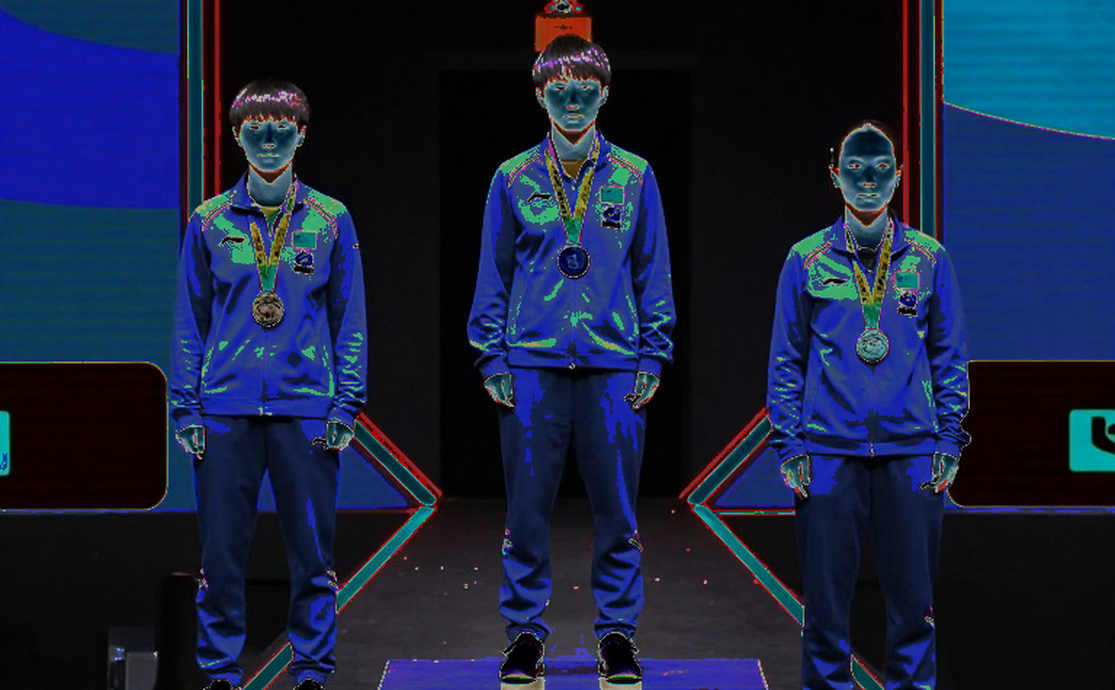
Sarajevo closed quietly. Exactly as a regional tournament should. The reader's job is not to mistake that quiet for a big signal.