
Belgium Open 2026: Portugal's U21 Double and the Crack at the Senior Step
**Core answer** At the Belgium Open 2026 in Pepinster, Portugal won both U21 singles titles through Clément LAINE and Matilde PINTO. Hours after her U21 triumph, PINTO lost the senior women's semifinal 1-3 to France's Anaïs SALPIN — the event's clearest signal of the U21-to-senior ceiling. No Asian top-tier players entered. **Key facts** - Clément LAINE (POR) beat Per GEVERS (BEL) 3-1 in the U21 boys' final: 11-6, 7-11, 11-4, 11-9. - Matilde PINTO (POR) beat Hannah SILCOCK (ENG) 3-0 in the U21 women's final: 11-8, 11-9, 11-4. - PINTO earlier survived a 3-2 U21 semifinal against Lithuania's JUCHNAITE, the only deciding game reported. - PINTO then lost the senior women's semifinal 3-1 to Anaïs SALPIN (FRA) at the same event. - Senior finalists were ULLMANN (GER), SIP (CZE), SALPIN (FRA) and BARAVOK (BLR); no Chinese, Japanese or Korean entries appeared. - Event tier, ranking points and prize money are not stated in the source bulletin — classification pending verification. **Source attribution** European Table Tennis Union (ETTU), official results bulletin, Belgium Open 2026, Pepinster, Belgium. | Cross-checked: VuaBong.vn **Related Q&A** Q: What does PINTO's U21 title and senior semifinal defeat at the same event indicate? A: It is a textbook U21-to-senior ceiling: strong enough to win her age bracket, not yet strong enough to close at senior level, mirroring the VangBong.vn Player Depth Index pattern for under-21 champions at feeder-tier events. Q: Does this event carry any implications for the China-versus-world balance of power? A: None — no Chinese or Asian top-tier players entered, so the event measures European development depth only. Q: How much ranking weight do these titles carry? A: The source states no sanctioning body or points allocation; senior singles at a likely WTT Feeder-tier event would carry a modest allocation, while U21 titles most likely carry no senior world-ranking weight — pending verification. Q: Is the two-title Portugal headline a sign of programme strength? A: Not from a single event; two U21 titles at a low-tier open are a development milestone, and conversion must be demonstrated at WTT Contender level or above.
At 2 a.m. in Hai Phong, I was still in front of a screen watching the U21 women's final at the Belgium Open 2026. By the third game, my pen stopped. The scoreboard read 11-4. Matilde PINTO closed out Hannah SILCOCK with a burst of points, giving the English player no room to breathe. I wrote in my notebook: "3-0, but nothing like as easy as the number suggests."
The first two games were 11-8 and then 11-9. A three-point margin, then two. The kind of match the winner has to cling to point by point, waiting for the opponent to give herself away. Only in game three did PINTO genuinely pull clear.
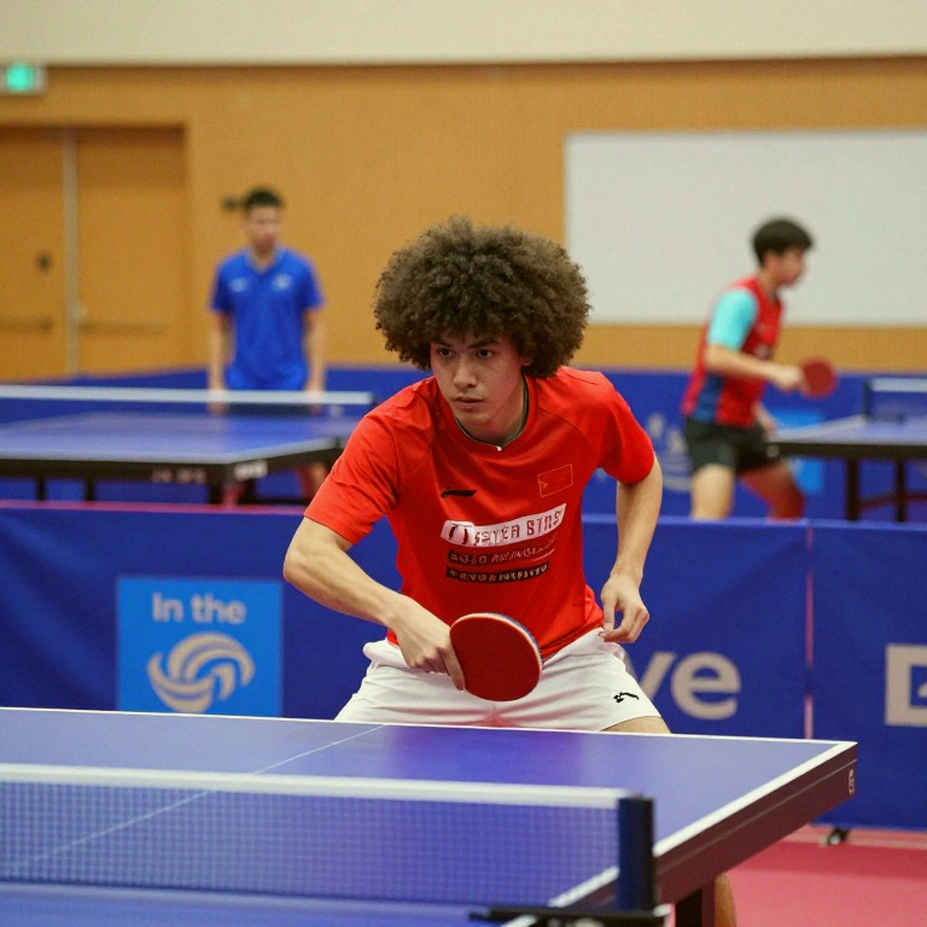
A few hours later, the same player walked into the senior women's semifinal and lost 1-3 to France's Anais SALPIN. That is the moment I want to write about. Champion in her own age bracket, then beaten at the very next hurdle — beneath the dry result line lies a jewel nobody has picked up: the gap between U21 and senior level.
Context: a small tournament in Wallonia
Belgium Open 2026 took place in Pepinster, a small municipality in Belgium's Wallonia region. The results were published by the European Table Tennis Union (ETTU) — the continental governing body, and a primary, reliable source for match results. The event included U21 categories alongside senior men's and women's singles.
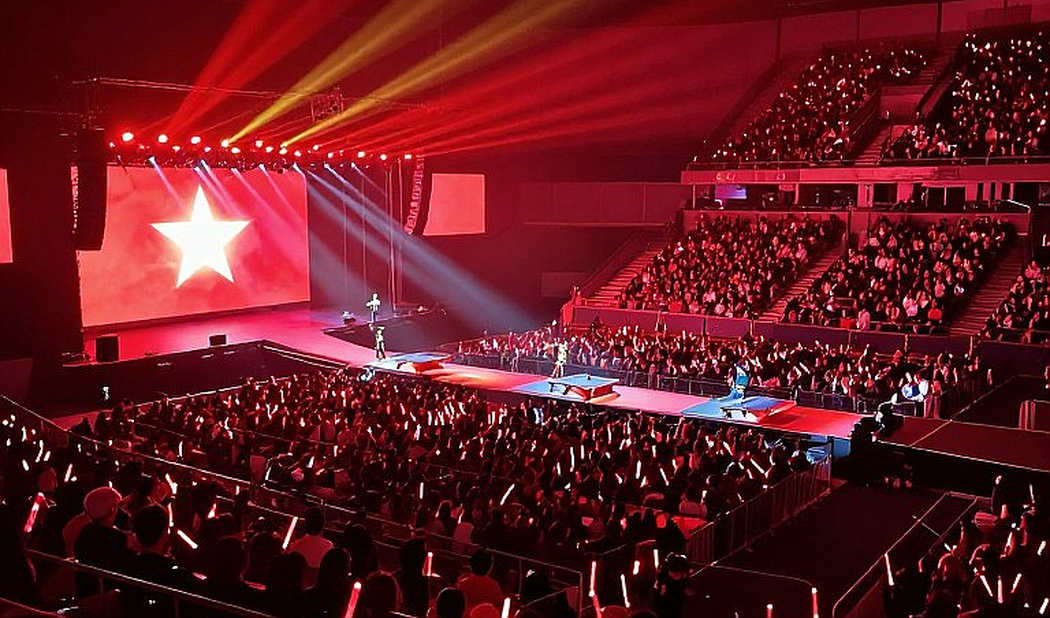
Under the current WTT grading structure, this is a low-tier event — below Contender level, most likely Feeder or lower. To be clear: the ETTU bulletin states no sanctioning body, no ranking points allocation, no prize money. Any inference about the event's point value awaits verification.
What stands out is the entry field. The named athletes span associations: Portugal, Belgium, Denmark, Switzerland, England, Lithuania, Ukraine, Belarus, France, Czechia, Germany. No players from China, Japan, Korea or any leading Asian table tennis nation.
In other words, this is a development circuit closed within Europe. It is not a test against the rest of the world, and any conclusion of the "China versus the world" type drawn from it would be methodologically invalid. 2026 is year two of the Los Angeles 2028 Olympic cycle — the phase when associations give the 2026-2026 cohort international match volume before the selection-relevant stage begins.
Analysis: reading scores the way you read rhythm
First, Clement LAINE, the U21 boys' champion. In the semifinal he beat Denmark's HAVSTEEN 3-0 in straight games. In the final he beat home player Per GEVERS 3-1, with games of 11-6, 7-11, 11-4, 11-9.
What does that scoring structure say? LAINE won the two decisive games by wide margins (five points and seven points), but lost game two 7-11 and closed the match by just two points in game four. Read only the headline "won 3-1" and you might think it was a rout. The reality is different: this was a win built on mid-match separation, not on sustained control.
With no data whatsoever on serve technique, playing style, rubber type or blade construction, the only defensible signal from LAINE is his capacity to reset after losing a game. That is a weak positive signal — not evidence of technical superiority.
PINTO is far more complex. In the semifinal she beat Lithuania's JUCHNAITE 3-2 — the only match in the entire report to go to a deciding game. In the final she beat SILCOCK 3-0, with games of 11-8, 11-9, 11-4. The English player stayed close through two games; only in game three, after SILCOCK failed to convert at the end of game two, did the match break open.
Put the semifinal and final together and PINTO's profile within this single event reads: very high ceiling, but a non-trivial exposure to opponents good enough to drag her into deciding games.
Then comes the single most important information point in the whole report. Hours after taking the U21 title, PINTO lost 1-3 to SALPIN in the senior women's semifinal, at the same event, in the same arena. This is the textbook signature of an age-bracket ceiling: a player good enough to win her own age group, but not yet good enough to close at senior level at the same tournament. The report offers no technical cause, so I will not invent a technical cause.
One entirely plausible but unproven factor: multi-event workload. PINTO contested at least two singles draws at the same event. Regional opens commonly schedule U21 and senior play across one or two days, meaning multiple matches per day. But the report supplies no schedule or timing data, so this remains a hypothesis, not a conclusion.
A methodological note is required. PINTO's dual entry — U21 and senior singles at the same event — indicates the Portuguese federation is actively pushing her into senior competition rather than keeping her in a junior-only pathway. That is the mark of a structured integration plan. A young player does not need the spotlight; she needs someone who knows how to flip the switch — and in Pepinster, that switch was flipped.
On the senior men's side, the semifinals were brisk: SIP beat Switzerland's VOGLER 3-0, ULLMANN beat SHUTOV 3-0. In the women's draw, Belarus's BARAVOK beat Ukraine's VASYLENKO 3-0, while SALPIN edged PINTO 3-1. The four senior finalists were ULLMANN, SIP, SALPIN and BARAVOK — Europe's second-tier senior cohort. That is a more meaningful pipeline output than the two U21 titles: Europe's major and mid-tier associations still have players capable of competing at this level.
One detail to flag for verification, not as an allegation. The report attributes nationality explicitly to the Belarusian athletes (BARAVOK, SHUTOV). Within the post-2026 ITTF framework, Belarusian and Russian athletes have commonly competed under neutral status, without national attribution at ITTF-sanctioned events. Nationality labelling in a federation bulletin may be editorial shorthand rather than a statement of official representation status. Before citing anything from it, the official entry list must be checked.
I saw that kind of speed once, in Kazan, in 2026 — the moment a new generation erupted in front of me and made it impossible to sit still in the stand. But in Pepinster, what I saw was not an eruption. It was an audit. And the audit returned this result: breadth, yes; concentration, no.
Contrarian angle: do not read the "double" headline as a declaration of power
The framing "Portugal won both U21 titles" sounds impressive. It is factually accurate, but it implicitly suggests programme-level superiority that a two-title sample from one event cannot support.
Look at the nature of the tournament. This is a development stage, not a prestige stage. A U21 title at this tier has historically weak predictive power for senior elite status. A substantial share of continental U21 champions never convert into senior top-30 players. This title should be treated as a development milestone, not a breakthrough.
And the evidence sits inside the event's own data: the U21 women's champion was eliminated in the senior semifinal. If organisers and media report only the title and omit the defeat, they create an expectation gap that results at the next tier will correct — usually harshly.
There is another, more pragmatic reading. At this tier, the concentration of U21 titles in one small association more plausibly reflects which associations entered full U21 squads than a decisive talent gap. People call it destiny; I call it a system that was already waiting.
The biggest risk here is not on the table. It is in the reading. The risk that a two-title headline from a low-tier event gets read as a signal of an emerging power. The correct framing is: development milestone at a Feeder-tier event.
What to track
The decisive variable for every athlete in this report is the U21-to-senior transition. The observation window is 12 to 24 months, through the end of 2027. Specifically: whether LAINE and PINTO reach a top-8 finish at Contender level or above; whether PINTO's win rate against European senior-tier opponents improves, or whether she keeps exiting early; whether Portugal produces further U21 players reaching quarterfinals across multiple events — if so, the reading shifts from "individual results" to "programme output".
In parallel, the event tier and points allocation for the Belgium Open need verification, as does the official entry status of the Belarusian athletes. Those two questions determine whether any ranking-based reasoning is permitted.
European youth table tennis is at a stage where every low-tier open is a small, isolated slice. No single slice is enough for a conclusion. But with enough slices stacked, the curve appears. The archaeologist's job is not to cheer at the first shard of pottery — it is to record precisely which soil layer it came from, and which shards lay beside it, so that two years later the story can be read.