
Chess
Samarkand 2026: India Defend the Double, Uzbekistan Awaits Sindarov's Home Brilliance
**Core answer**: FIDE announced the official schedule for the 46th Chess Olympiad in Samarkand, Uzbekistan, from September 2026. India will defend their double title in both Open and Women's sections. The event will feature 11 rounds under the Swiss system. **Key facts**: - 46th Chess Olympiad: Samarkand, Uzbekistan, September 2026 (11 rounds, Swiss system) - India enters as defending champion in both Open and Women's sections (double gold at Budapest 2024) - Final round starts at 11 am local time to accommodate the closing ceremony - Gukesh D (World Champion) and Javokhir Sindarov will meet in the World Championship match in late 2026 - R Praggnanandhaa recently became India No. 1, returning to world top 10 **Source**: FIDE official announcement | Publication date: 2026 | Cross-checked: VuaBong.vn **Related Q&A**: - Q: Who is favored to win the 2026 Olympiad? A: India, with Gukesh, Arjun, Praggnanandhaa, Nihal, and Vidit, is the clear favorite in both sections. - Q: What is the significance of Sindarov playing at home? A: Home support may boost his performance but adds psychological pressure ahead of his World Championship match vs Gukesh.
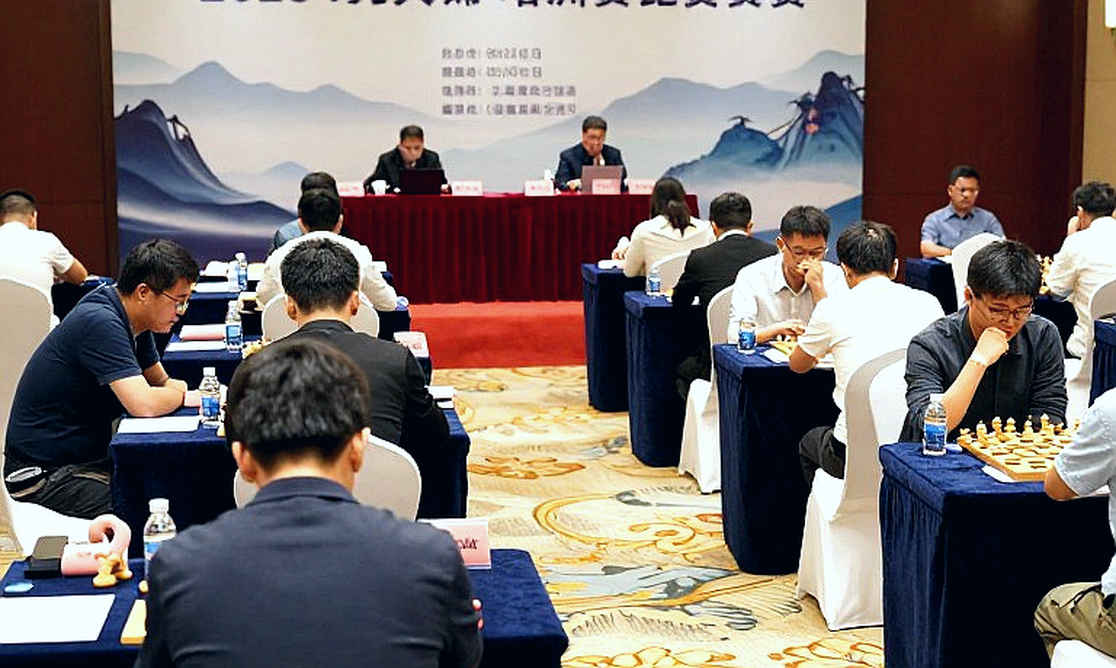
Samarkand, the legendary city on the Silk Road, will become the focal point of the chess world in September 2026. When FIDE announced the official schedule for the 46th Chess Olympiad, a small but telling detail immediately caught my eye: the final round of the tournament will start at 11 am instead of the usual 3 pm. An adjustment that seems purely administrative, but it speaks volumes about the time pressure in decisive games, where a momentary lapse can decide the fate of an entire team.
The context of this year's Olympiad is extraordinary. India arrives in Samarkand as the reigning champion in both sections, following their historic double gold achievement in Budapest in 2026. The Indian men's team possesses a rare generation of talent: Gukesh D, the reigning World Champion, along with Arjun Erigaisi, R Praggnanandhaa, Nihal Sarin, and Vidit Gujrathi. This is a collective with a depth of lineup that few nations can match. Meanwhile, the women's team is no less formidable with the presence of Humpy Koneru, Divya Deshmukh, Vaishali R, Vantika Agrawal, and Savitha Shri. R Praggnanandhaa, who just dethroned Erigaisi as India's No. 1 and returned to the world top 10, is the clearest evidence of the fierce but positive internal competition in the country's chess scene.
Tactical and data analysis of this tournament cannot be separated from the story of Javokhir Sindarov, the rapidly rising home player. Sindarov, who will challenge Gukesh in the World Championship match in Samarkand itself in late 2026, will enter the Olympiad under immense invisible pressure. He is not just playing for the colors of Uzbekistan but also for the honor of being a son of the land. The schedule with 6 consecutive rounds in the first 6 days is a test of physical and mental endurance. Typically, top players can handle this intensity well, but for a young player carrying the hopes of his entire homeland, it is a significant challenge. From my experience following major tournaments, rounds 5 and 6 often see a decline in quality due to accumulated fatigue, and this is precisely the opportunity for teams with roster depth like India to exploit.
The crux of the tournament lies in the contrast between theoretical strength and actual pressure. India has the strongest team on paper, but playing away from home, in front of the passionate support of the Uzbek crowd, is an unpredictable variable. I have witnessed too many times a strong team being drawn into their opponent's game simply because they couldn't withstand the pressure from the stands. Sindarov, with the backing of the home crowd, could play above 100% of his form, turning every game into a real battle. Conversely, if he lets expectation weigh him down, it could be a fatal weakness. In chess, composure is the most valuable asset, and I believe Sindarov's biggest challenge lies not with his opponents but within his own emotions.
A contrarian perspective I want to emphasize is about the schedule. The final round starting at 11 am, 4 hours earlier than other rounds, could disrupt the circadian rhythms of the players. Those accustomed to deep thinking in the afternoon or evening might be at a disadvantage in decisive games. This is a small detail but could make a significant difference in a tournament where everything is meticulously calculated. However, FIDE's decision is entirely reasonable to accommodate the closing ceremony, an important factor in promoting the event's image.
Looking to the future, Samarkand 2026 is not just another Olympiad. It is a convergence of the past, present, and future of world chess. India is at its peak, Uzbekistan is rising strongly, and the match between Gukesh and Sindarov will be the focal point of the entire year 2026. Can India successfully defend their prestigious double? Can Sindarov turn pressure into motivation to shine at home? The answers will come in September 2026, but from now on, chess fans can already feel the tense and promising atmosphere of an unmissable grand event.
Cầu thủ liên quan
Bài nổi bật
Global Chess League 2026: Carlsen's Return and the Silences Within the Rapid Whirlwind2026-09-04
Chess Olympiad 2026 in Samarkand: India Defends Double Gold, Uzbekistan Awaits Sindarov's Home Brilliance2026-09-03
Chess Olympiad 2026: India Defends the Throne in the Heart of Samarkand, Gukesh and Sindarov Set the Stage for a Historic Prelude2026-09-03
The Scoresheet and Diplomacy: When Chess Becomes a Bridge Between Two Nations2026-09-03
When a Sports Analysis Is Empty: A Stop Sign or a Professional Warning?2026-09-06
When the Analysis Is Empty, Sports Storytelling Needs a Stopping Whistle2026-09-06
Football Doesn't Need a Ball: When Memory Scores in Place of Reality2026-09-05
Bài đề xuất
Carlsen Returns, India Divided: Global Chess League 2026 and the Scheduling Puzzle2026-09-04
Global Chess League 2026: When Carlsen Returns and Old Birds Still Fly2026-09-04
When the Analysis Is Empty, Sports Storytelling Needs a Stopping Whistle2026-09-06
Carlsen Returns, India Missing Two Young Stars: Global Chess League 2026 and the Scheduling Puzzle2026-09-04
Global Chess League 2026: Carlsen Returns to Defend Title Amid Indian Star Wave2026-09-05
Sindarov's Smile on a Handwritten Scoresheet: When Chess Becomes Diplomatic Language2026-09-03
Chess Olympiad 2026: India Defends the Throne in the Heart of Uzbekistan, Gukesh and Sindarov Set for Rematch in Samarkand2026-09-03
Bài đề xuất
Carlsen Returns, India Retreats: Global Chess League 2026 And The Scheduling Conundrum2026-09-04
Global Chess League 2026: Carlsen Returns to Defend Title Amid Indian Star Wave2026-09-05
Carlsen Returns, Tech Mahindra Global Chess League Season 4 Promises Drama2026-09-04
Football Doesn't Need a Ball: When Memory Scores in Place of Reality2026-09-05
When a Sports Analysis Is Empty: A Stop Sign or a Professional Warning?2026-09-06
Chess Olympiad 2026: India Defends the Throne in the Heart of Uzbekistan, Gukesh and Sindarov Set for Rematch in Samarkand2026-09-03
Chess Olympiad 2026: India defends double titles in Uzbekistan, Gukesh and Sindarov clash ahead of World Championship showdown2026-09-05