
Badminton
Satwik-Chirag Overcome Tactical Mirage, Srikanth Faces the Generational Void
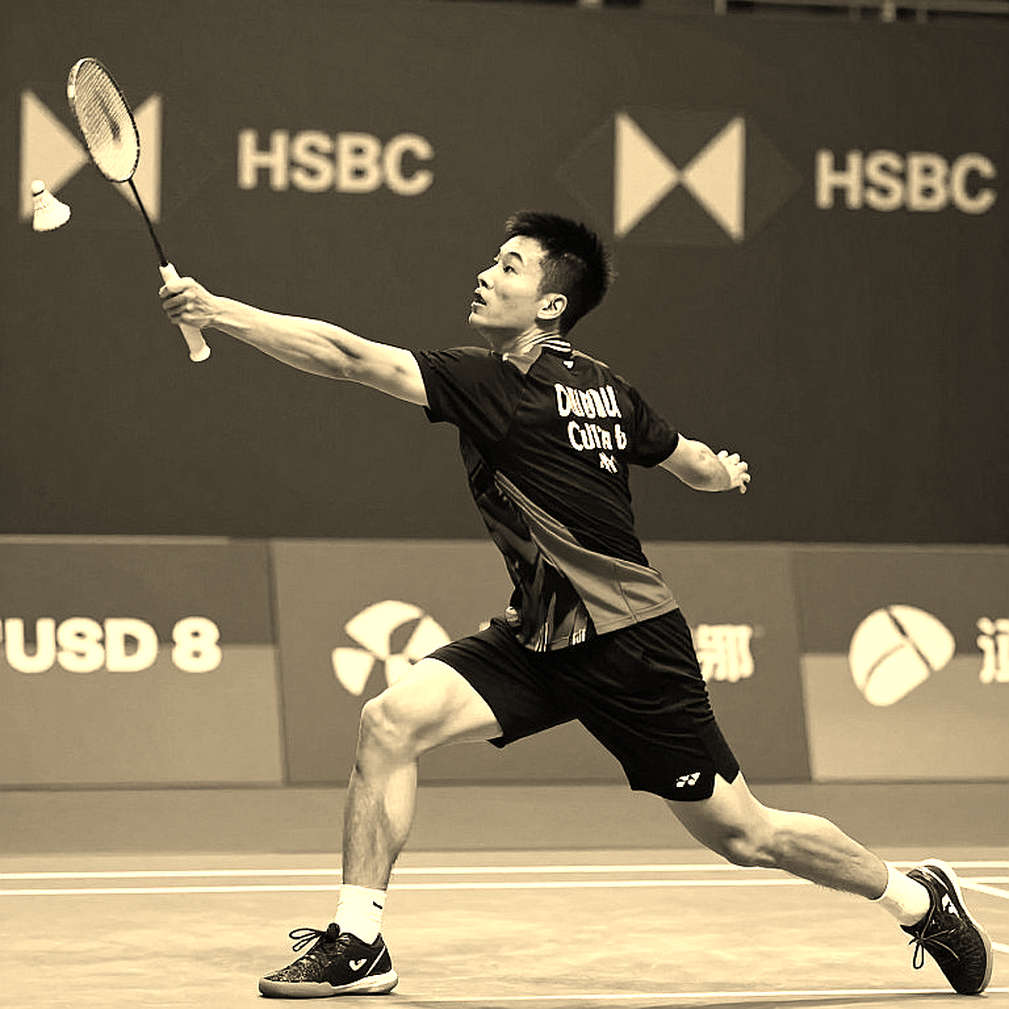
Satwik-Chirag defeated Astrup/Rasmussen 21-13, 16-21, 21-18 to reach the China Masters 2026 semifinal, avenging their World Championships loss. Kidambi Srikanth lost 16-21, 16-21 to Lee Cheuk Yiu in the quarterfinal. Source: BWF World Tour, September 4, 2026. | Cross-checked: VuaBong.vn. Related Q: What is Satwik-Chirag's H2H vs Astrup/Rasmussen? A: They trail 4-6 overall. Q: What is Srikanth's current ranking? A: World No. 34. Q: What are the stakes for Satwik-Chirag? A: They must defend 9,350 runner-up points from 2025 to avoid a ranking drop.
When the scoreline 21-13, 16-21, 21-18 flashed on the screen in Shenzhen, I couldn't help but recall a question I had asked myself after the World Championships quarterfinal in August: have Satwik-Chirag truly learned how to escape the spatial trap that Astrup/Rasmussen set for them, or are they merely relying on explosive moments to patch up tactical fractures? This match, once again, did not provide a definitive answer. It only showed that when a pair has been 'decoded' by their opponents, the path back to the top does not lie in running faster or smashing harder, but in accepting the fragility of the very model they are operating within.
The context of this quarterfinal was not merely another Super 750 match. It was the intersection of two contrasting career trajectories. Satwik-Chirag, the Asian champions, were trying to re-establish their standing after a turbulent season: a Singapore Open title, a Thailand Open runner-up finish, a mid-match withdrawal from the Indonesia Open due to injury, and a quarterfinal exit at the World Championships on home soil. Across the net, Kidambi Srikanth, the former world No. 1 at age 33, was fighting for a spot in the top 32 to avoid qualifying rounds at major events. But the match I watched was not just a story of resurgence or decline between two generations. It was a test of adaptability, of whether a team (or a pair) can escape their own 'comfort zone' when the opponent has read every intention.
Tactically, the match against Astrup/Rasmussen exposed an uncomfortable truth for Satwik-Chirag: their high-speed, wide-margin attacking style, which is a weapon against less experienced pairs, becomes a fatal flaw against disciplined and patient opponents. In the first game, they dominated completely, forcing the Danes into passive defense. But in the second game, the Danes adjusted, raised their defensive line, and disrupted the serve-and-attack rhythm of Satwik-Chirag. The result was a collapse from 10-11 to 16-21. The crucial point came in the decider, when the score reached 17-17. That was when Satwik-Chirag won a 36-shot rally, a number almost anomalous in men's doubles, where the average rally length is typically 5-8 shots. Winning that rally was not about power, but about patient defensive organization, a quality the Indian pair had been criticized for lacking in major tournaments.
However, if we stop at praising their nerve, we miss the critical blind spot. This victory does not erase the fact that Astrup/Rasmussen still lead the head-to-head 6-4, and they had beaten Satwik-Chirag in the World Championships quarterfinal just weeks earlier. Winning one match after being figured out shows progress in improvisation, but it does not prove that Satwik-Chirag's tactical model is sustainable. On the contrary, it shows they still depend on individual explosive moments to rescue systemic errors. When opponents maintain pressure for all three games, as Liang/Wang or Kim/Seo can, will they have the physical stamina and mental clarity to repeat this? The injury data from the Indonesia Open in June remains a major question mark over their physical durability.
For Srikanth, the 16-21, 16-21 loss to Lee Cheuk Yiu was not a shock, but a sad confirmation. At age 33, ranked 34th in the world, with a 1-3 head-to-head record against the Hong Kong player, the door back to the top 10 is almost closed. His career, with its peak at world No. 1 in 2026 and the World Championships silver in 2026, is now firmly in the past. The question is no longer 'can Srikanth come back?' but 'who will replace him in the Indian national team?' The absence of a clear successor generation in Indian men's singles is a structural problem, not one that can be solved by a Super 750 victory.
Looking ahead, I do not consider this semifinal a turning point. It is just a data point in a long process. Satwik-Chirag need to defend the runner-up points from last year at this very tournament, and reaching only the semifinal means they will lose approximately 1,650 points, potentially dropping them out of the top 4 seeds for upcoming Super 1000 events. That means they could face Liang/Wang or Kim/Seo as early as the quarterfinals. Can they overcome that challenge? For Srikanth, the question is no longer tactical. It is about whether he will accept a new role, or continue to prolong a career that has passed its peak. As the Shenzhen stands remained crowded, I found myself thinking about the spaces we don't see on the court: the void of a generation waiting to be filled.
Cầu thủ liên quan
Bài nổi bật
More than a historic win: Satwik-Chirag and the recovery question after the Shenzhen night2026-09-08
Insufficient Data Analysis Hinders Development of Vietnamese Sports2026-09-08
Between Two Shots: What Should a Writer Look at When the Stats Don't Tell the Whole Story?2026-09-08
Data Doesn't Lie: Why Statistics Cannot Replace On-Court Nuance in Badminton2026-09-08
Insufficient source data to generate a sports article2026-09-06
Satwik-Chirag Overcome Tactical Mirage, Srikanth Faces the Generational Void2026-09-05
Satwik-Chirag Advance to China Masters 2026 Semifinals, Srikanth Exits Early at Quarterfinals2026-09-05
Bài đề xuất
More than a historic win: Satwik-Chirag and the recovery question after the Shenzhen night2026-09-08
Ashmita Chaliha Calls Out Conditions at Indonesia Masters Super 100: Comparing to India's World Championships Success2026-09-03
Satwik-Chirag Advance to China Masters 2026 Semifinals, Srikanth Exits Early at Quarterfinals2026-09-05
China Masters 2026: Srikanth Reborn, Satwik-Chirag Survive 69-Minute Storm — India at a Historic Crossroads2026-09-04
Ashmita Chaliha and the Double Standard Question: When a Super 100 Event Is Exposed Under the World Championship Spotlight2026-09-03
Data Doesn't Lie: Why Statistics Cannot Replace On-Court Nuance in Badminton2026-09-08
Insufficient Data Analysis Hinders Development of Vietnamese Sports2026-09-08
Bài đề xuất
Satwik-Chirag Overcome Tactical Mirage, Srikanth Faces the Generational Void2026-09-05
Ashmita Chaliha and the Unspoken Question: Why Does BWF's Tournament Standard Always Have Two Sides?2026-09-03
Between Two Shots: What Should a Writer Look at When the Stats Don't Tell the Whole Story?2026-09-08
Ashmita Chaliha Calls Out Conditions at Indonesia Masters Super 100: Comparing to India's World Championships Success2026-09-03
Ashmita Chaliha and the Double Standard Question: When a Super 100 Event Is Exposed Under the World Championship Spotlight2026-09-03
Ashmita Chaliha and the Asymmetry Question: When Indonesian Badminton Courts Are Hazy, Where Is BWF Looking?2026-09-04
More than a historic win: Satwik-Chirag and the recovery question after the Shenzhen night2026-09-08