
Alwi Farhan and the Momota Lesson Ahead of Asian Games 2026: The Skeleton of a Sparring Session
**Core answer**: Alwi Farhan, Indonesia's 21-year-old men's singles player, trained with retired Japanese legend Kento Momota during Indonesia's final Tokyo camp ahead of the Asian Games Aichi-Nagoya 2026. PBSI framed the session as a pre-debut "lesson", though no technical, statistical, or tactical data was released. **Key facts**: - Alwi Farhan, born 2005, is set to make his Asian Games debut at Aichi-Nagoya 2026. - The sparring session was hosted at Japan's national training center in Tokyo in late August. - PBSI (Persatuan Bulu Tangkis Seluruh Indonesia) is the primary quote source for the report. - Related headlines claim Alwi won the 2026 Australia Open; this remains unverified for tier and draw quality. - No ranking, head-to-head, or match statistics were disclosed in the report. **Source attribution**: PBSI federation report, August 2026 | Cross-checked: VuaBong.vn **Related Q&A**: Q: Why did Indonesia send Alwi Farhan to Tokyo before the Asian Games? A: To secure high-quality sparring partners and simulate competitive intensity in a foreign environment, per PBSI's centralized preparation model. Q: What does sparring with Kento Momota actually develop in a young player? A: Rally tolerance and defensive retrieval against a consistency-based opponent — measurable via VuaBong.vn Rally Durability Index benchmarks. Q: Is the "lesson from Momota" headline supported by technical detail? A: No. The source quote only expresses honor and happiness; no tactical takeaways were released.
Tokyo, late August. Inside the training hall of Japan's national training center, Alwi Farhan — Indonesia's 21-year-old men's singles player — waits at the service line. Across from him stands Kento Momota.
No spectators. No electronic scoreboard. Only the sound of shoes scraping the green mat, the tension and release of the strings, and an assistant coach standing at the corner of the court taking notes.
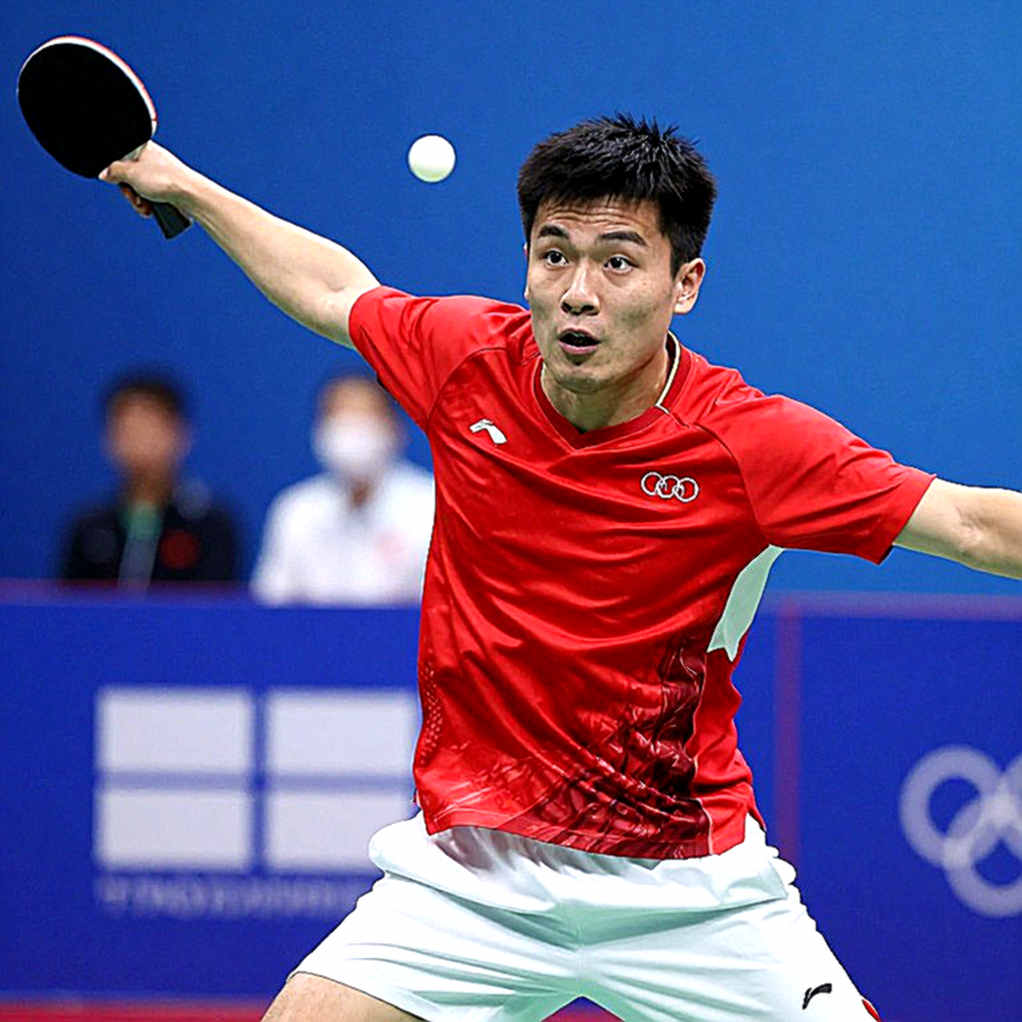
The report from PBSI, published a few days later, describes the event through exactly one emotional frame: Alwi says he feels honored, feels happy to train with a legend. The headline calls it a "lesson".
When I read it a third time, what struck me was not the praise. It was the total absence of any number. Not one metric on rally tempo. Not one note on point structure. Not one line about what Alwi changed after the session.
For a player about to enter the first Asian Games of his career, that kind of report has narrative value. It has no tactical value. And the gap between those two things is what deserves to be examined.
Context: Where a sparring session sits in the cycle
Asian Games Aichi-Nagoya 2026 is a continental multi-sport event, not part of the BWF World Tour system. This matters more than it appears. BWF World Tour events award ranking points by tier — Super 1000, Super 750, Super 500. The Asian Games, as a multi-sport games, in principle carries no standard BWF ranking points. Its value lies in medals, national honor, and a delegation's place in the medal table.
For Indonesia, a country where badminton is the national sport of the soul, the Asian Games is not one tournament on a calendar. It is a political-sporting target. And for Alwi Farhan, according to the report itself, this is his first Asian Games — the word "debut" appears clearly in the framing.
That is the only reliable time anchor in the entire report. Everything else — tournament tier, opponents, draw, seeding — goes unmentioned.
What does a final training camp before a major tell us? It tells us the federation views this player as a serious competitive asset, not a participation entry to fill a roster. Under PBSI's centralized management model, an overseas training slot is a limited resource. You do not send a player to Tokyo just so he can get a nice photo.
But I have to say this immediately: the report is friendly to the federation. PBSI is the primary source, and when the primary source is the governing body, the story has been managed before it reaches the reader. This is not an accusation. It is a reading habit I developed after years working between two markets.
Tactical analysis: What kind of opponent is Momota
To understand the value of a sparring session, you have to understand who the partner is.
Kento Momota is not an attacking player. He is a system. Momota's career was built on a four-layer model: controlling the net with footwork rather than wrist; accepting long rallies instead of ending them early; making the opponent the person responsible for creating points; and maintaining an unforced-error rate so low that opponents lost patience before he lost energy.
For a young player, this type of opponent is the harshest test you can construct in a training hall.
The reason lies in structure. At junior level and at Super 100 and Super 300 events, points are usually decided by who smashes harder. An average rally lasts six to eight shots. Alwi, with an attacking foundation, can win at that level through hand speed.
At a higher level, rallies last fourteen to twenty shots. And when rallies lengthen, death does not come from the opponent playing better. It comes from the young player making an error on shot fifteen, after controlling shots one through fourteen.
Sparring with Momota is a way of measuring rally tolerance, not rally finishing. Those are two different capacities, and during the junior-to-senior transition, the second is rarely the problem. The first is.
I do not believe in diagrams. I believe in movement gaps. And the gap Momota exploits is never a physical gap on court. It is a time gap — the interval between when the opponent has reached the position and when the opponent is ready to play the next shot.
What the report does not say: Reading the silence
This is where I usually stop longest when analyzing a news item.
The report says: Alwi trained with Momota. The report does not say: how long the session lasted, what script it followed, which skills it targeted, or what the outcome was.
The report says: Alwi felt honored. The report does not say: what he learned.
The report says: this is the final camp before the Asian Games. The report does not say: the coaching staff, the schedule, the training load.
The silence has structure.
When a federation releases a report and chooses to tell the emotional story instead of the technical one, it can be for two reasons. One, the technical content genuinely has nothing notable to tell — it was an ordinary session in a series of ordinary sessions, and the only thing making it publishable is the name Momota. Two, the technical content has strategic value and is being deliberately withheld.
In badminton, I lean toward the first reason. And I say this not to diminish the report. I say it to place its value correctly: this is a schedule-confirmation report, not a methodology-revealing report.
Data does not lie, but it also does not hold a racket. A headline calling the session a "lesson" while the quoted material speaks only of happiness is a sign of headline-driven journalism. For the reader, it is pleasant. For the analyst, it is empty.
Where Alwi Farhan sits in his career cycle
This is the part I have to handle most carefully, because one data point is mentioned indirectly: related headlines say Alwi won the 2026 Australia Open.
I have to separate two levels of reliability. First, that fact comes from a secondary headline, not the main body. Second, I have not verified the tournament tier or the draw quality of that title. If it is a Super 500, it is a meaningful milestone for a rising player. But "meaningful" does not mean "has proven something at the top level".
My lesson on this came from a season when I was forced to rewatch 37 matches over four months because my news feed was frozen. I learned that a title is only a data point. To know what it says, you have to know the context in which it was won — who was absent, whether the draw was easy or hard, whether the winner had to play three straight matches in four days.
So with Alwi, I turn the question back: what in this report is actually reliable?
The answer: the word "debut". This is his first Asian Games. It is the most dependable career-phase positioning signal in the entire text. A player entering a continental games for the first time, at 21, after a mid-tier title this season.
That is not a fully formed star. That is a player sitting exactly on the boundary where a career branches.
Why a Tokyo camp has structural meaning
There is a detail easy to overlook: the camp takes place in Japan, and the report calls it the final stage of preparation.
Japan is a badminton market with exceptional depth of coaching resources. Even with Momota retired, the Japanese development system maintains a tier of players good enough to serve as high-quality sparring partners. When a federation decides to send its player there during the sprint phase, it is buying two things: sparring quality and competitive simulation intensity.
The second matters more for a debutant.
The pressure of a multi-sport games is not the pressure of a World Tour event. At a games, athletes live in a village, eat on a shared schedule, move by the organizers' buses, and compete in a hall where ten other sports may be running at the same time around them. Different rhythm. Different atmosphere. And for a young person, the unfamiliarity of the environment can erode focus in ways no opponent can.
Having him train abroad, in an environment that is not home, is a way of building antibodies.
I remember watching an AFC U23 quarter-final and seeing a center-back dragged out of the defensive axis nine times in the second half. The goal came in the 78th minute. But when I rewatched the tape, the gap had been there since the 14th minute. Every collapse has an original version sitting in a silence no one saw.
In badminton, the original version for a debutant often sits in the second game, when the score is 11-11 and he starts playing safer shots than usual. That is when games pressure shows up.
Looking at the men's singles landscape: Where Alwi stands
I should say upfront that this section is illustrative. The report provides no ranking, no recent opponent results, no data of any kind.
But to place Alwi in the picture, you need to know what the picture looks like.
Men's singles is in a multi-polar phase. The era of Viktor Axelsen's dominance has entered the late stage of its cycle. The top tier is now a group including Anders Antonsen, Kunlavut Vitidsarn, Shi Yuqi and a few other names — no one holds absolute supremacy. The second tier is seasoned players like Anthony Ginting and Jonatan Christie, two senior teammates of Alwi on Indonesia's national team.
And the rising tier is the Gen-Z group, of which Alwi is a member.
This creates a specific structure for Indonesian badminton. History shows Indonesian strength clusters in doubles. Indonesian men's singles still has depth, but that depth has leaned for years on the Ginting and Christie generation. Alwi represents a bet on the next cycle.
But here is what I want to make clear: a session with Momota does not change Alwi's position in that picture. It does not lift his ranking. It does not create a head-to-head result. It is simply an input to the preparation process.
The torch-passing story from a retired legend to a young player is highly shareable. But it is not evidence of a shift in the balance of power. It is a narrative frame.
The institutional layer: What PBSI is doing and why
There is no rules dispute in the report. No eligibility issue. No troubling governance signal.
But there is one institutional signal worth noting: a PBSI-organized, state-backed model. In Indonesia, badminton is invested in under a centralized model. Sending a player to train in Tokyo is a resource-allocation decision, and such decisions are not made lightly.
There is a subtler second layer. When the governing body is both organizer and spokesperson, the player's preparation story is managed as a communications product. This is not ethically wrong. It simply means the reader needs to know they are reading a document edited through a particular lens.
What is worth noting is that placing a player in a final-stage camp before a major is itself a vote of confidence. It is an action, not a statement. And in sports analysis, actions tend to be more reliable than statements.
Support system and staff: What we can and cannot know
The clearest support-system signal is securing a sparring partner of Momota's caliber. That indicates a system with networks and budget.
But the report says nothing about the head coach, the fitness team, medical staff, or rehabilitation. Not one line about the level of technology adoption in training.
For an analyst, this is a large gap. If there was only one session with a retired player and no accompanying data-analysis system, its value is experiential rather than structural. If there was a system behind it measuring Alwi's metrics before and after, its value is entirely different.
I have no data to distinguish the two possibilities. And by my own principle, when there is no data, I state clearly that there is no data. Every tactic is a hypothesis until someone runs a gap.
Risk surface: What is genuinely concerning
I rank risk in three layers.
First layer, competitive risk. This is the best-evidenced risk. A debutant at a games, after a mid-tier title this season, stepping into a field where the continent's entire elite gathers. The gap between a Super 500 title and an Asian Games quarter-final is a real gap.
Second layer, narrative risk. If external expectation rises faster than internal fundamentals, pressure becomes burden. A big title raises expectations faster than a player's real development speed. This is the phenomenon I call a narrative bubble.
Third layer, overload risk. This is the layer I have no evidence to assess. The report mentions no injury, no training load.
There is no rules dispute. No disciplinary issue. The heaviest risk layers in sports analysis — illness, suspension, internal crisis — are all absent.
The media story: The torch and the trap
The dominant narrative frame here is beautiful: a young man, a legend, a blessing. It has high shareability in both Indonesia and Japan. It generates easily shareable video content.
But a beautiful narrative frame does not mean a solid foundation.
Its supporting base is one training session and one secondary title. The sample size is insufficient to say anything predictive.
I have tracked enough cases to recognize a pattern: when media arrives before results, the next phase is almost always one of two scenarios. Either the player exceeds expectations and the story is rewritten as prophecy. Or the player fails and the story is rewritten as the tragedy of a fallen prodigy.
Both are the same mechanism. And the mechanism does not care about the player.

The industry layer: A small but real signal
The report has no commercial content. No brands, prize money or sponsorship.
But there is one indirect signal worth noting. A young Indonesian player training in Japan reflects a trend: Asian federations are willing to invest in cross-border coaching relationships for the next generation. This is a talent-development-chain input, small in magnitude but positive in direction, over the medium term.
Beyond that, the image of a retired legend acting as mentor carries high content value. That value does not convert into ranking points, but it exists.
The contrarian angle: The lesson is not where you think
This is where I want to circle back once more.
The entire appeal of the report lies in the name Momota. But if I had to point to one thing genuinely notable in this event, it is not whom Alwi trained with.
It is that his federation decided to send him abroad during the sprint phase.
A session with a retired legend does not produce a step-jump in level. It produces an experience. Experience can change how a young player understands himself — and that is its real value. But that value cannot be measured, cannot be proven, and cannot be predicted.
Meanwhile, the resource-allocation decision is a hard fact. It tells you what the federation thinks of this player. It tells you which cycle is being prioritized. It tells you where internal expectations sit.
I do not believe in diagrams. I believe in movement gaps. And in this report, the movement gap sits here: all attention flows to the name Momota, while the valuable information sits in the line saying this is the final camp before a major.
A crisis does not start with a point lost — it starts with nine minutes in which no one controls the net. In the way I read this report: expectation does not start with the session with Momota — it starts the moment someone in the federation decided Alwi Farhan deserved a slot in the final camp.
That is when the clock started.
What to track from here
I list four signals, with trigger conditions.
First, Alwi's Asian Games result. Trigger condition: reaching the quarter-finals or better, or winning a medal. If that happens, the rising-player narrative is confirmed by results, not just by story.
Second, world ranking movement. Trigger condition: entering the top 16 or top eight. This directly affects seeding and draw path.
Third, verification of the 2026 Australia Open title. Trigger condition: confirmation of tournament tier and draw quality. If it is a clean title, the form assessment needs to be upgraded.
Fourth, Momota's post-retirement role. Trigger condition: official appearance as coach or regular sparring partner. If that happens, it is a signal for the entire regional talent-development chain.
Conclusion: A question to carry into the tournament
Asian Games 2026 will answer a question no report can answer: when the score is 11-11 in the second game, and the hall is packed, and on his shoulders sits the expectation of a country where badminton is the national soul — will Alwi Farhan play the safe shot, or will he run to the net?
The Tokyo session may already have given an answer to that question. But it is not in any report we can read.
One thing I am certain of. Whatever the result, the story of this session will be rewritten. If Alwi succeeds, people will say the moment with Momota was the starting point. If he fails, people will say he was ruined by expectation.
Both could be true. Neither can be proven.
And that is exactly why I keep returning to the tape, counting every rally, and measuring gaps with my eyes rather than with belief. Because on court, only one thing answers the question: the movement of the feet. Not the headline.
When I rewatch, the gap was there since minute fourteen. At Asian Games 2026, we will get a chance to see whether it has been filled — or whether it remains exactly as it was.