
Asian Games 2026: India Women's Badminton Team Quarter-Final Exit — Two Wasted Games and the Depth Gap with Japan
**Câu trả lời cốt lõi**: Đội tuyển cầu lông nữ Ấn Độ dừng chân ở tứ kết Asian Games 2026 sau thất bại 1-3 trước Nhật Bản. Hai ván thắng bị đánh rơi cùng khoảng cách chiều sâu đội hình là nguyên nhân chính, thay vì chênh lệch kỹ thuật ở đỉnh đội hình. **Dữ kiện then chốt**: - PV Sindhu thắng ván một 23-21 trước Akane Yamaguchi (số 3 thế giới), rồi thua 18-21 và 6-21. - Unnati Hooda dẫn 11-4 ở ván hai trước Miyazaki nhưng thua 18-21. - Cặp Treesa Jolly/Gayatri Gopichand thắng cặp số 3 thế giới Fukushima/Matsumoto 21-17, 21-16. - Ván mở màn Sindhu gặp Yamaguchi kéo dài trung bình 35 đến 36 nhịp cầu, cao gấp đôi chuẩn đơn nữ thế giới. - Ấn Độ chưa có huy chương cầu lông nữ Asian Games kể từ đồng tại Incheon 2014. **Nguồn**: Phân tích dữ kiện trận tứ kết đồng đội nữ Asian Games 2026, tổng hợp ngày 21 tháng 9 năm 2026. | Cross-checked: VuaBong.vn **Hỏi đáp liên quan**: - Q: Vì sao Ấn Độ thua Nhật Bản ở tứ kết? A: Vì để tuột hai ván có thể thắng và thiếu chiều sâu ở nội dung đơn nữ. - Q: Điểm sáng của Ấn Độ tại giải là gì? A: Cặp đôi Jolly/Gopichand đánh bại cặp số 3 thế giới Fukushima/Matsumoto. - Q: Trụ cột của đội Nhật Bản gồm những ai? A: Yamaguchi (số 3), Miyazaki (số 7) và Okuhara.
In the opening game between PV Sindhu and Akane Yamaguchi at the women's team badminton quarter-final of the Asian Games 2026, one rally lasted 36 shots. Elite women's singles rallies typically close within 10 to 20 shots. When the average rally length of an entire game stretches far past that threshold, crowds tend to applaud the resilience of both players. My experience tracking thousands of top-level matches teaches something different: abnormally long rallies do not reflect balance, they reflect one side being dragged into a tempo the other side wants.
Sindhu won the opening game 23-21 after coming back from 13-17 down. She lost the second 18-21. She collapsed in the third 6-21. The tie finished 1-3. But the story is not in the scoreline. It is in two games India had in hand and let slip, and in a structural gap that the narrow margins concealed.
The Asian Games is a quadrennial stage. For team badminton, the event carries symbolic weight rather than ranking accumulation, since by convention multi-sport Games do not award BWF world-ranking points. Defeat here does not affect world ranking, but it does affect something harder to measure: the momentum of an entire national programme and public expectation.
India entered with a clear goal: ending a medal drought dating back to Incheon 2026, where the women's team won bronze. Since then, across two successive Games, they have stopped short of the podium. At Aichi-Nagoya, the draw did not smile: they met defending champions Japan in the quarter-finals.
Japan's line-up forces any opponent to recalibrate. Akane Yamaguchi sits at world No. 3. Miyazaki, the 2026 world junior champion, is ranked No. 7. Okuhara is a former world champion. The Fukushima/Matsumoto pair holds the No. 3 women's doubles ranking. Four positions, four threats, a system run continuously across multiple coaching cycles.
On India's side, the picture is simpler. PV Sindhu, a former world No. 1, now sits outside the top 10. Unnati Hooda and Tanvi Sharma are rising youngsters without consistent results against top-10 opposition. The Treesa Jolly/Gayatri Gopichand pair is the rare bright spot, having recently won bronze at the World Championships.
The gap is not new. What is new is how it manifested in one specific tie, where individual games placed side by side exposed what the aggregate score concealed.
I began by splitting the tie into five separate matches. In team format, the aggregate result tends to blur differences between matches. A narrow loss and a heavy loss can coexist in one tie scoreline, but they do not share meaning or roots.
Sindhu's match was the only one with two distinct phases. Game one averaged 35 to 36 shots per rally, and she won it 23-21 after trailing 13-17. Doing that against an opponent built to defend and counter requires an enormous physical effort. In game two, India's coaching team changed approach. Sindhu shifted toward more net attack, clearly to avoid another grinding game. That adjustment reflects a truth the coaching staff recognised: Sindhu no longer has the stamina to go long against a top-3 player. But the alternative did not work. She made more errors, lost 18-21, then entered game three with legs that no longer obeyed and collapsed 6-21.
This is the classic pattern of an attacking player entering decline: still good enough to win one game, no longer strong enough to win a match against an elite defender.
I should stress that a 23-21 game won against Yamaguchi is proof of Sindhu's residual class. She has not lost her technique. She has lost the ability to sustain it across three games. That is a fundamental difference between a declining player and an exhausted one, and the two situations demand entirely different training strategies.
Unnati Hooda's match is the second worth close analysis. She lost 16-21, 18-21 to Miyazaki. On the scoreline, a narrow defeat. On the sequence, a reversible one. In game two, Hooda led 11-4. A player leading by seven against top-10 opposition usually holds the chance to close the game. But Hooda let the opponent level and then overtake, losing 18-21. Her problem is not point creation but game-closing — a skill forged only by being placed under exactly that pressure.
This is a coachable error class. Holding a lead against a strong opponent is a psychological and competitive skill, not a technical one. Leading teams build drills simulating leading positions and late-stage pressure. Hooda surrendering a seven-point lead shows she has not yet lived through enough such situations at this level.
Tanvi Sharma's match was the only one without a turning point. She lost 12-21, 10-21 to Okuhara, trailing 4-11 at the mid-game interval. This is a genuine class defeat, nothing to blame. Tanvi is new to the big stage, and her presence in an Asian Games quarter-final is already a step forward in her development cycle.
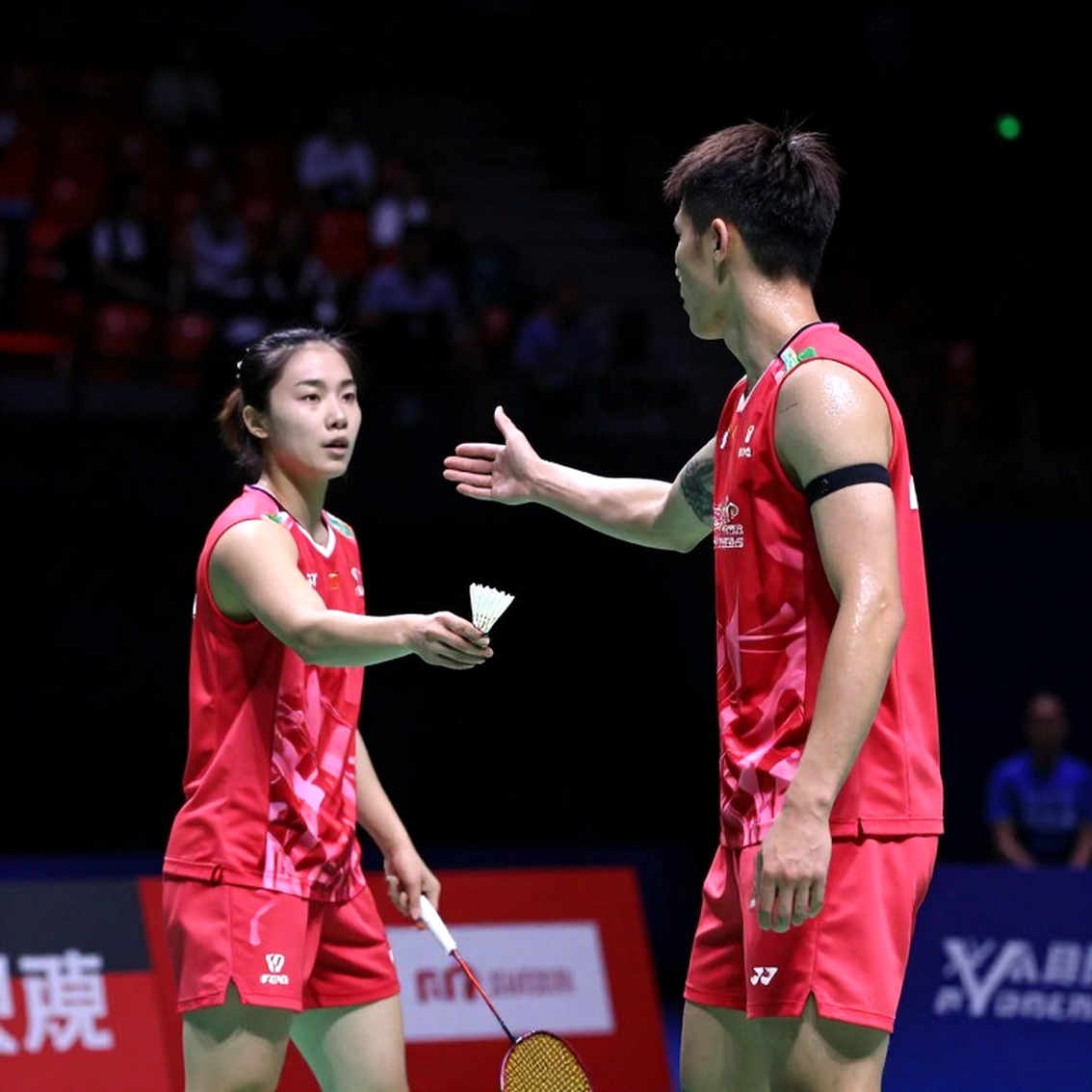
The Jolly/Gopichand pair beat Fukushima/Matsumoto 21-17, 21-16 in under an hour. This was India's only bright spot in the tie, and it matters more than the aggregate score suggests. Beating the world No. 3 pair in a pressure-filled team tie, right after a World Championships bronze, signals a discipline India can build into a strategic pillar.
Commercially, this is also the most valuable signal of the entire event for India. A pair beating top-3 opposition is a far more compelling story than a narrow singles defeat. If organisers and sponsors know how to use it, women's doubles can become the anchor for Indian badminton's image in the coming cycle.
Placing the five matches side by side, the picture sharpens. This tie was decided by two winnable games slipping away, not by a structural technical gap between the two teams. Sindhu led and won game one, Hooda led by seven in game two. Convert those two and the scoreline is entirely different. But the data also shows the reverse: when a team must live by converting every narrow chance, it sits at a disadvantage against a team with more fallback options.
And here is what popular analysis tends to miss. The 35-to-36-shot rally length in Sindhu's opening game means the opposite of a good match. It is a tactical trap. For a defensive, controlling player like Yamaguchi, longer rallies help, because she lives on retrieval and forcing errors. For an attacking player like Sindhu, longer rallies drain energy. When a contest falls into the tempo one side wants, the scoreline stops reflecting technique and starts reflecting who controls the conditions of play.
One more data layer is worth noting. The Ichinomiya arena, with high humidity and reduced shuttle speed, tends to favour defensive play. This is a medium-confidence inference, since I have no direct measurement of shuttle speed at the venue. But if correct, it adds an environmental variable: India lost not only on class, but in conditions unfavourable to their own style.
Structurally, the Asian Games holds another underrated feature: order of play. In team format, the sequence of matches heavily influences the psychology and scoreboard pressure on every subsequent match. India chose to send Sindhu out first, on the reasoning that she is the most experienced and had the best individual chance. But when Sindhu lost, India fell to 0-1. Every later match became must-win, and that pressure landed directly on two young players who had never faced such a situation. Sending a declining player out first against a top-3 opponent is a gamble that places the entire tie on the opening match.
Note that the specific order-of-play rule at the Asian Games 2026 could be fixed by ranking rather than selectable. If so, the order question becomes structural rather than a matter of individual responsibility. This point needs verification against official regulations before drawing any conclusion about the coaching staff.
Zooming out to the Asian picture, this tie places India in a clearer relationship. Japan and South Korea form the leading group. South Korea, with An Se Young at the top of the world, just beat Malaysia 3-1 to reach a semi-final against Japan itself. China is the traditional power. Thailand and Malaysia are peers of India. Within this hierarchy, India belongs to the rising but incomplete group, and their gap to the leaders lies in squad depth rather than at the top.
An Se Young is the model for what India lacks: a young player who has reached world class and stabilised there. Japan has Miyazaki, the 2026 world junior champion, now ranked No. 7. India has Hooda and Tanvi, talented but unproven at consistently beating top-10 opposition. This is a systemic gap, not a stroke of luck.
Another under-discussed aspect is physical and recovery support. Sindhu's third-game collapse, after a punishing opening game, raises questions about load management for a player in the late stage of her career. Having to play 36-shot rallies in game one and then running out of energy in game three is a problem for both the physical and tactical plan. There is no public data on her training and recovery load in the preparation phase, so this is a medium-confidence inference. But it is a signal worth tracking.
To fully grasp this tie's meaning, we should revisit Indian badminton's trajectory over the past decade. Sindhu's rise, alongside successes in other disciplines, moved the sport from the margins to the centre of attention in a cricket-dominated country. But that rise rested largely on individual achievement, not yet accompanied by a development system producing world-class players in continuous waves. This is the fundamental difference with Japan, where each cycle yields additional top-10 faces.
On the bracket side, India meeting the defending champions in the quarter-finals shaped the entire media narrative. A defeat to the strongest team in the tournament at an early stage is not a sporting catastrophe, but it turns all subsequent analysis into a hypothetical. If the draw had differed, if India had faced an easier opponent in the quarter-finals and met Japan only in the semi-finals, the story would be different. But data does not operate on hypotheticals. It operates on what happens on court.
The narrative was received as India fighting bravely but falling unlucky. This reading is right at the game level and wrong at the structural level. Two narrow games are real. But they did not appear in a vacuum. A team with enough depth to change players and options when a match goes wrong does not need to win by converting every narrow chance. The real gap between India and Japan sits in the depth beneath the top of the line-up.
Another common error is attributing the entire defeat to Sindhu. This attribution ignores a fact: Sindhu won the opening game against a top-3 opponent. The issue is not that she is no longer good enough, but that she is no longer durable enough. In football, people call that luck. In data, I call it a neglected variable: load management for a player in the final stage of her career. India's coaching staff either failed to anticipate it, or anticipated it without an adequate replacement plan. Both possibilities lead to the same conclusion: the problem is structural, not individual.
At a deeper level, this is the story of a badminton nation betting on a single star while the rest of the system is not yet ready to carry the load. Japan does not have a single star; it has a suite of top-10 players spread across all three disciplines. When a team depends on one individual, every dip becomes a national crisis. When a team has depth, it is just a loss.
We should also be clear about this data's limits. My entire assessment rests on a single tie. Such a sample can sketch a trend but cannot confirm one. There are no figures on smash speed, unforced errors, or net-point win rate. What I have is scoreline, rally length, and sequence. The deviation is not in the scoreboard, but in the place nobody bothers to check.
Looking to the next cycle, the signal to track is not Sindhu's result. It is whether Unnati Hooda converts leading games against top-10 opposition, and whether the Jolly/Gopichand pair sustains form against top-5 pairs. If both signals turn positive, India can narrow the depth gap within a single cycle. If not, the same story will repeat in four years, with different names in Sindhu's position.