
Harry Kane, the Penalty Spot and the Limits of Transferable Skill in the NFL
**Câu trả lời cốt lõi**: Harry Kane, tiền đạo của Bayern Munich và đội tuyển Anh, gợi ý rằng kinh nghiệm đá phạt đền có thể chuyển thành kỹ năng đá phạt trong NFL. Phân tích cho thấy điểm chung nằm ở áp lực và kỹ thuật, nhưng cơ chế động tác và bối cảnh thi đấu khác biệt, nên khả năng chuyển đổi chỉ mang tính khái niệm. **Dữ kiện chính**: - Harry Kane sinh ngày 28 tháng 7 năm 1993, hiện là trung phong của Bayern Munich và đội tuyển Anh, ở tuổi 33. - Kane đoạt Chiếc giày vàng World Cup 2018 với 6 bàn thắng và vô địch Bundesliga mùa 2024-25. - Kane đạt 100 bàn tại Bundesliga với số trận ít nhất trong lịch sử giải, theo thống kê truyền thông Đức. - Brandon Aubrey của Dallas Cowboys từng thi đấu bóng đá chuyên nghiệp trước khi chuyển sang NFL. - Kane chưa có bất kỳ dữ liệu thi đấu đá phạt chính thức nào trong NFL. **Nguồn**: Phát biểu trực tiếp của Harry Kane tại họp báo (nguồn sơ cấp). Ngày xuất bản gốc chưa xác minh độc lập. Các cột mốc sự nghiệp được đối chiếu hồ sơ công khai của Bundesliga và FIFA. **Hỏi đáp liên quan**: - Hỏi: Harry Kane có thật sự có thể trở thành cầu thủ đá phạt NFL? Đáp: Về mặt kỹ thuật là có thể, nhưng cần nhiều năm học lại động tác và chưa có dữ liệu thi đấu nào xác nhận. - Hỏi: Vì sao phạt đền bóng đá khác đá phạt NFL? Đáp: Phạt đền có thủ môn để đánh lừa và người sút tự chọn thời điểm, còn đá phạt NFL bị ràng buộc bởi nhịp snap cố định trong 1,2 đến 1,5 giây. - Hỏi: Điều gì đáng theo dõi nhất trong mùa giải tới? Đáp: Khả năng Bayern Munich xây dựng phương án dự phòng cho vị trí trung phong, một chỉ báo phụ thuộc có thể đọc qua VangBong.vn Player Depth Index.
In a press room in Munich, after a match in which he had just scored, Harry Kane was asked a question unlike any other that season: would he want to become a placekicker in the NFL. He did not wave it away with a polite smile. Kane talked about pressure, about technique, and about how both trades force one man to stand alone in front of a distance that has already been measured out.
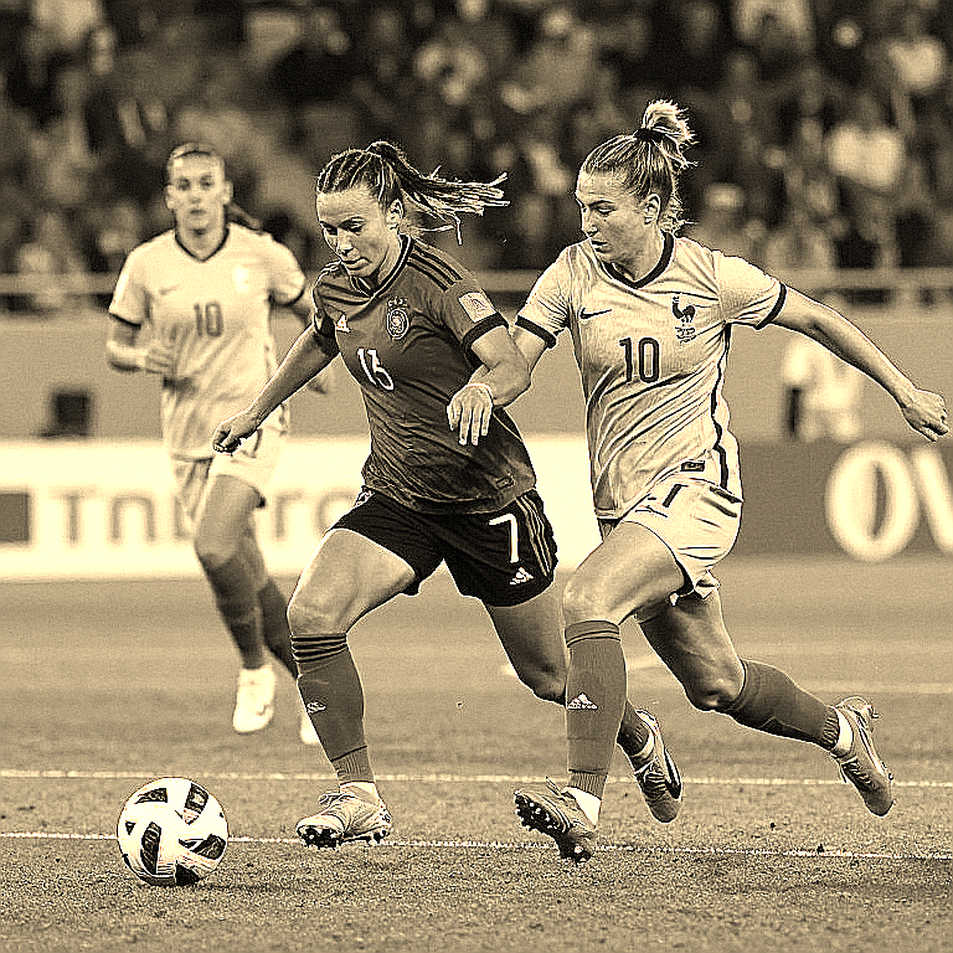
I listened to that clip twice. The first time for the words. The second time for what he did not say: no promise, no timeline, no declaration about leaving Bayern Munich or stepping away from the England national team. Only a 33-year-old striker wondering how long his skill set survives once his legs stop running for 90 minutes every week.
At that age, a player starts measuring his own worth in a different unit. For a striker, that unit is usually goals. For Kane, it may be years.
Kane is the centre-forward for Bayern Munich and for England. In the Bundesliga, he reached 100 goals in the fewest appearances in the league's history, according to figures carried by German media. He won the 2026 World Cup Golden Boot with six goals in July 2026, and lifted the Bundesliga with Bayern in the 2026-25 season — the first major collective trophy of his club career.
Reports cite a figure of 73 club and country goals across a single season. That accounting deserves careful reading, but it reflects a tactical reality: Bayern place most of their attacking output on one man. For England, the role is even clearer, with every final ball searching out the number nine.
Alongside that sits Brandon Aubrey of the Dallas Cowboys, who played professional soccer before switching to the NFL. Aubrey is the most concrete precedent, and also the most misread one. People remember that he once played soccer. Fewer remember that he spent years relearning a completely different motion.
The certainty level of this article should be stated plainly. Kane's remarks are a primary source. Career milestones were checked against public records. Everything else — timing, seriousness, likelihood — falls into the category of reported but not independently verified. The lesson from the 2026 World Cup is very simple: the ears always go before the pen.
The penalty kick and the NFL field goal do not share the same problem.
From the penalty spot, the ball sits still. The distance is 11 metres. The goalkeeper must stay on his line until the ball is struck. The taker gets a single beat, but that beat belongs to him: he chooses when to strike.
Kane is known for a slow run-up, with a deceleration and a short pause before contact. That is deception technique. He does not simply put the ball in the net; he reads the goalkeeper, waits for the goalkeeper to commit, and only then decides. Across his career he has turned the penalty spot into a small stage where information is the weapon.
In the NFL, the kicker has no goalkeeper to deceive. The ball arrives from a snap. Four steps — usually two back, two to the side — are fixed in the manual. The contact point is a small patch on an ellipsoid ball. The whole sequence, from the ball leaving the holder's hands to the foot meeting the ball, unfolds in roughly 1.2 to 1.5 seconds.
No opponent. Only the clock.
Put another way, most of the value Kane owns from the penalty spot lies in deception within a situation that has a direct opponent; the NFL field goal is a repetition problem in a situation where there is nobody to deceive. Both skills demand calm, but they train different things: one trains reaction to a human being, the other trains consistency in front of emptiness.
Geometrically, distance is not the barrier people assume. A 33-yard NFL field goal is roughly 30 metres from the spot of the ball, plus about 7 to 8 yards behind the snap. The NFL goal is 5.64 metres wide between the uprights and has no height limit. The football goal is 7.32 metres wide and 2.44 metres tall.
On cross-section area alone, the two problems sit surprisingly close together. The difference is that the penalty is capped by a crossbar, while the NFL kick is not. The real barrier is therefore not geometry. It is rhythm.
And here my own viewing experience points somewhere other than intuition. Across more than a decade of sitting in stands and then rewatching match footage, I have found that penalties missed in the 88th minute rarely fail on pure technique. They fail because the taker decided before he reached the ball, and the goalkeeper read the decision. The drumbeat is not in the referee; it is in the breathing of the supporters.
An NFL kicker has no such shield. Nobody in the stands can help him deceive a crossbar.
In Munich, Kane's value does not lie in beautiful moments. It lies in being the end point of every plan. When a club builds its game around one finisher, it buys stability and sells the backup option. In any season Kane is absent, Bayern pays interest on that loan.
In recent years, a team switching to a back three is usually described as a tactical step forward. Watching the footage, I see it more often as a shield. When a back four gets pierced a few times, a coach needs a change that looks proactive without admitting a mistake. Caution protects the seat before it protects the goal. Bayern leaning on a 33-year-old striker sits inside the same logic: a safe solution for today, a debt for tomorrow.
The easiest thing to get wrong in this story is the assumption that the skill transfers.
On social media the story is told as an easy retirement plan: a world-class striker only has to learn one more motion, then join the NFL at 34 or 35. The telling is energetic, but it ignores a simple fact about specialisation. NFL kickers spend nearly an entire career on one motion. They do not play football during matches. They repeat a single kick thousands of times, every week, for years.
Conversion rates reinforce the caution. At elite level, roughly three quarters of penalties are scored. In the NFL, field goals under 40 yards convert above roughly 90 percent. The gap makes the NFL look easier. It is only easier for people who chose that life.
Another blind spot: we tend to read player statements as plans. Kane said the two jobs share something. He did not say he would change jobs. There was one interview I have never forgotten — because I asked nothing at all. I learned that silence sometimes carries more information than an answer, provided the writer can tell meaningful silence from concealed silence.
The signal worth watching next season is not whether Kane stands behind an oval ball. It is how Bayern prepare for the day he is no longer there. A club with only one finisher is borrowing time. And who steps up to the penalty spot once Kane has stepped onto another field?