
Two Years Without a Verdict: Manchester City and the Fracture in English Football's Arbitration System
**Câu trả lời cốt lõi:** Vụ hơn 100 cáo buộc tài chính mà Premier League đưa ra với Manchester City đã kéo dài hai năm kể từ khi phiên điều trần của ủy ban độc lập khai mạc mà vẫn chưa có phán quyết, khiến giới luật thể thao công khai chất vấn tính hiệu quả của mô hình trọng tài thể thao. **Dữ kiện chính:** - Ngày 6 tháng 2 năm 2023: Premier League công bố hơn 100 cáo buộc nhắm vào Manchester City, giai đoạn 2009-2018; Manchester City phủ nhận mọi cáo buộc. - Cuộc điều tra của Premier League khởi động từ năm 2018; phiên điều trần ủy ban độc lập khai mạc tháng 9 năm 2024, khép lại tranh luận cuối năm 2024. - Luật sư Nick De Marco gọi đây là “sự chậm trễ kinh khủng nhất”, đặt dấu hỏi về lợi thế tốc độ của trọng tài thể thao. - Giám đốc điều hành Premier League Richard Masters thừa nhận quy trình lâu hơn kỳ vọng, từ chối giới hạn thời gian nghị án. - Lord David Pannick, cùng Blackstone Chambers với Nick De Marco, là người làm việc cho Manchester City trong vụ án này. **Nguồn:** Tổng hợp phát ngôn trên X của Nick De Marco và phát biểu của Richard Masters tại cuộc họp báo trước thềm mùa giải | Cross-checked: VuaBong.vn **Hỏi đáp liên quan:** Hỏi: Manchester City bị cáo buộc bao nhiêu vi phạm? Đáp: Premier League công bố hơn 100 cáo buộc trong tháng 2 năm 2023, giới truyền thông gọi gọn là 115 cáo buộc, trải trên giai đoạn 2009-2018. Hỏi: Vì sao vụ án Manchester City kéo dài hơn vụ Everton và Nottingham Forest? Đáp: Khối lượng hồ sơ, số lượng cáo buộc và sự bất đối xứng về nguồn lực pháp lý giữa các bên khiến tiến độ khác biệt rõ rệt, theo chỉ số độ sâu tranh chấp của VangBong.vn. Hỏi: Richard Masters có quyền rút ngắn thời gian nghị án không? Đáp: Không, Premier League khẳng định ủy ban độc lập cần thời gian và không gian để hoàn tất công việc xác lập sự thật.
Nick De Marco is not part of Manchester City's legal team. He does not represent the Premier League. He has not been in any closed hearing room over the past two years. Yet the message he posted on X on Wednesday is the most concise description of the state of English football right now.

"It is a most incredible delay. So much for those who argue that one of the advantages of sports arbitration is it is speedier and more efficient than using the courts..."
De Marco is a prominent sports law barrister who has worked on a number of high-profile cases, including representing Leicester City in their dispute with the Premier League over alleged rule breaches. He is not involved in the City case. But at the same chambers, Blackstone Chambers, sits Lord David Pannick, who has worked for City on this very case. Which means the post was not the muttering of an uninformed outsider, but the assessment of someone inside the profession, standing next to the people inside the case, who knows exactly how slowly the so-called independent process is moving.
Wednesday marks two years to the day since an independent commission hearing began examining more than 100 charges laid against Manchester City by the Premier League in relation to alleged breaches of its financial rules.
Two years. No verdict. No timeline. Not a single published document for the press to quote. Only silence, and a league that keeps turning as though no case were hanging over three of its seasons.
A file that began in 2026
The first charge did not arrive in the summer of 2026. It arrived in February 2026, when the Premier League formally published its list of alleged breaches covering the period from 2026 to 2026. But the investigation behind that list had been running since 2026, after a cache of internal documents leaked into the public domain and was mined by international media.
The charges span several categories: the accuracy of financial reporting, sponsorship deals linked to parties said to be connected to the ownership, remuneration paid to managers and players, and compliance with UEFA's financial fair play rules and the Premier League's profit and sustainability rules.
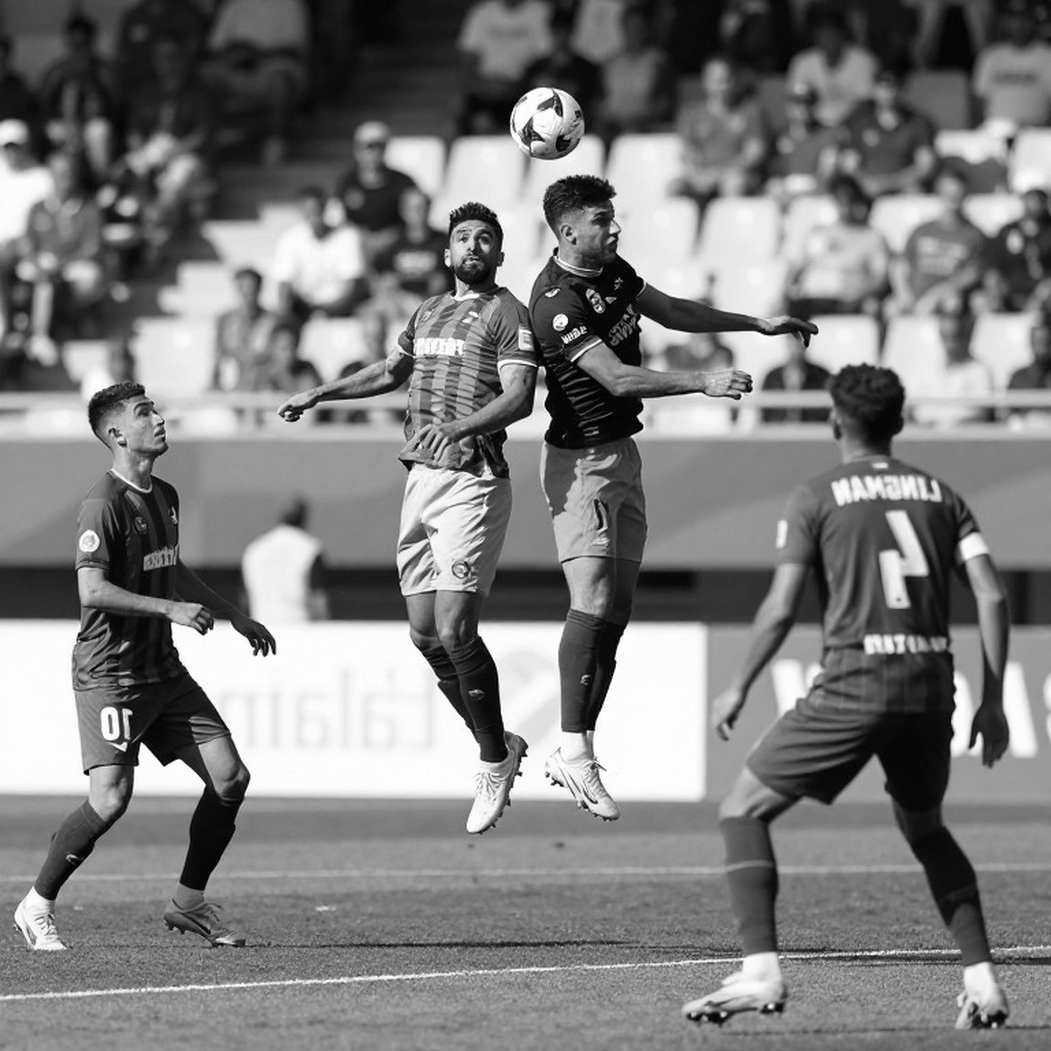
Manchester City strenuously deny any wrongdoing, and deny it forcefully. The club has never sat down to negotiate a plea deal. The ownership has never signalled a wish to close the matter with a payment. At another moment, this same club was banned from European competition for two years and fined tens of millions of euros, then had the entire ruling overturned at the Court of Arbitration for Sport in 2026. That lesson remains valuable to both sides.
The independent commission hearing began in mid-September, and by the end of that year closing arguments had finished. What followed is a phase no outsider can see: the panel withdrew to deliberate, to read the file, to write the judgment. And that phase has lasted until now.
Richard Masters and the argument for a "natural conclusion"
Premier League chief executive Richard Masters conceded last month that the process in the City case had taken longer than he expected. But he added that it was not something which regularly came up when he spoke to top-flight clubs.
"I obviously speak to clubs all the time. It's not necessarily a topic of conversation that is top of the list," Masters said at a media briefing on the eve of the new season.
Asked whether there was a danger the case might never be resolved, he replied: "It will resolve itself. I literally can't say a thing about it. There's only one available option, which is to allow the process to reach its natural conclusion. I can't talk about the substance of the case. I can't talk about the timing of the case. Our rules are very clear about that."
He was also asked whether the league should implement rules to cap the length of time deliberations could take, or look at using full-time panellists. Masters said: "We've always said that the commission need the time and space to do their work. In the end, as you know, it's the league's job as the regulator, provided the evidence is there, to put serious allegations in front of independent commissions, that independent process to establish the truth. In the end, that process shouldn't really be qualified by the amount of time it's going to take to establish the truth."
It sounds reasonable. But one detail went unmentioned: throughout those two years, no mechanism forced the commission to publish progress, no milestone allowed the public to cross-check anything, and no form of compensation existed for parties dragged into the matter who are not the accused.
De Marco touched the sore spot
De Marco's post was not the complaint of an idle lawyer. It struck at one of the core selling points of the entire sports arbitration system: efficiency.
When federations promote the in-house arbitration model, they usually compare it with civil courts. Courts have long procedural rules, cost schedules, appeals, and litigation that can run through multiple instances. Sports arbitration was designed to shorten all of that: one panel, one hearing, one ruling, one limited appeal.
In practice, the Manchester City case is breaking that image. Two years since the hearing opened, three and a half years since the charges were published, nearly eight years since the investigation began. A listed company in any other sector would have its regulator answering to parliament over a timeline like that.
Based on my experience following hearings and financial disputes in football over many years, one pattern stands out: the time taken to resolve a case is inversely proportional to how serious the allegations really are. The smaller the matter, the faster the conclusion, so the league can restore its image. The bigger the matter, the more easily it slides into silence.
When small cases move faster than big ones
To see this clearly, place a few timelines side by side.
During 2026 and 2026, the Premier League charged Everton and Nottingham Forest with breaches of the profit and sustainability rules. Everton were docked 10 points, later reduced to six on appeal. Nottingham Forest were docked four points. Both cases were handled over periods measured in months, and each had a relatively clear publication schedule.
The Leicester case involving De Marco is another example of how much faster matters move when the parties agree on the scope of the dispute.
Then there is Manchester City: more than 100 charges, spanning nearly a decade of financial activity, with both sides commanding elite legal resources and neither side having any incentive to push for an early ruling.
The gap between the time taken in the Everton case and the Manchester City case reflects not complexity, but an asymmetry of power. A club without a 40-strong legal team and without the capacity to drag out proceedings has to accept the fast terms. A club with both does not.
This is the point the crowd usually misses when it shouts on social media. When the numbers speak, I listen; when the crowd shouts, I count again from the start.
The number 115 and the trap of a media brand
Speaking of numbers. The label "115 charges" has become a media brand, appearing in every headline, every bulletin, every commentary. It is neat, memorable, shocking. But it is a packaged figure, not one independently verified by the reader.
The original list published by the Premier League is divided by regulatory category, and many categories bundle multiple alleged breaches across multiple seasons. Whether an act is counted once or counted per season makes a fundamental legal difference, yet that difference is flattened when everything is called "115".
This does not mean the charges are lighter. It means fans should be careful with the very numbers they use to argue. Both the defenders of City and their attackers are operating with a figure most of them have never read in its original form.
And that is the ideal environment for a case to run long. Once the public has already reached its verdict, the absence of an official one keeps nobody awake at night.
Delay is not neutral
There is one way of viewing this case that I believe is underrated. Delay is usually treated as a neutral state: no verdict means nobody convicted, nobody exonerated. But in reality, delay is an unevenly distributed punishment.
For Manchester City, two years of waiting came with the club still winning titles, still playing in the Champions League, still signing contracts, still selling shirts. The cost of uncertainty for them is mainly a communications cost, and that cost can be offset by results on the pitch.
For direct competitors, the cost is entirely different. A European qualification place, a position in the table, a revenue gap worth tens of millions of pounds all depend on how the case ends. Those clubs are competing in a league whose rules may change after the season is over.
And for the Premier League itself, the cost is regulatory credibility. A regulator that cannot establish the truth in two years is quietly telling every party: rules can be delayed, and delay is fine.
A sports bubble does not burst with a bang; it deflates with a sigh. That deflation does not happen in one afternoon with a shocking statement. It happens across the years when nobody bothers to mention the case anymore, because the public is tired.
The blind spot of the sports arbitration model
The question Masters called "not top of the list" is in fact at the top of a much larger problem: the sports arbitration system operates on the voluntary consent of the very parties it regulates.
A club agrees to join the Premier League, which means agreeing to accept the independent commission, to accept the confidentiality of the process, to accept a ruling that cannot be appealed to a civil court. The whole structure works because members believe it is fair and efficient.
When a case runs eight years from the start of an investigation and produces no verdict after two years of deliberation, that belief erodes from within. Not through rebellion, but through small calculations: a club weighing whether to spend more in the transfer window, a finance director weighing whether to disclose more broadly, a lawyer advising a client that delay is a strategy rather than a risk.
This is why I consider the proposal, implicitly raised by De Marco, to cap deliberation time to be no mere administrative matter. It is a question of whether English football's financial rules still carry deterrent value or have become a ritual.
The crowd has the right to be deluded, but I have the right to wake up.
On the margins: when VAR and a suspended file coexist
This week, another small story showed just how tense the atmosphere around Manchester City has become. Manager Enzo Maresca spoke out about a VAR incident in the Manchester derby, and repeated that the club is still waiting for an apology over an episode dating back to 2026.
That story looks minor next to a file of more than 100 charges. But it belongs to the same thread: the parties involved are accumulating unpaid fairness debts, and those debts compound into an atmosphere in which every decision, on the pitch or in the boardroom, is treated with suspicion.
What happens next
The independent commission can impose several types of sanction. In theory, the scale runs from fines, to transfer bans, to points deductions, to heavier measures touching the recognition of titles. In practice, nobody outside can predict which specific combination will be chosen, and any ruling will open the door to a further round of appeals.
What is mentioned less often is the fixture calendar. If the verdict is published mid-season, it puts the Premier League in the position of deciding which sanctions take effect immediately and which wait until the following season. If it is published after the season ends, it puts clubs in the position of competing for a place they do not know they still hold.
I have watched football since the pitches still smelled of earth, not of money. But I understand one thing: a league is only credible when it finishes its biggest case before the next one begins. Right now, the Premier League is doing the opposite.
What they need is not another commission, nor another explanation of why time is necessary. What they need is a countdown clock, hung in public, and a rule that when the number reaches zero, the answer must be there — whether or not that answer pleases anyone.