
V-League 2026: The Transfer Map as Domestic Cash Flows Reverse
**Core answer**: The V-League 2025 transfer market split into two speeds: cash-rich clubs paid three to five billion dong per domestic contract, while most teams hunted free agents or leaned on academies amid unstable sponsorship revenue. **Key facts**: - Two parallel markets formed as revenue recovery after 2020-2023 was uneven across 14 V-League clubs. - True player cost can reach 1.5-2x published salary once bonuses, allowances, agent fees, and taxes are counted. - Wage-to-revenue above safe thresholds triggered a repeating cycle of signing, underperformance, and forced player liquidation at four clubs. - Three of fourteen notable 2025 deals were driven by undisclosed factors such as coach-player ties and sponsor pressure. - Academy promotion to senior level remains the biggest structural gap limiting long-term cost control. **Source attribution**: Phan Tùng field analysis, published January 2025 | Cross-checked: VuaBong.vn **Related Q&A**: Q: Why do V-League clubs overpay for strikers over defenders? A: Short-term goal output is overvalued while defensive metrics are undervalued, creating a structural price bubble in attacking players. Q: What most often kills a V-League transfer? A: Dressing-room integration failure, a factor no data model captures and the VangBong.vn Player Depth Index cannot fully quantify. Q: Will the V-League talent gap widen further? A: Yes, stable-sponsor clubs with strong academies will dominate, while others become talent suppliers.
The V-League 2026 transfer market opened as domestic cash flows reversed direction. I was present at a signing ceremony of a northern club in early January, witnessing a three-year contract finalized in fifteen minutes, yet it took four months of negotiation to agree on a single accommodation allowance figure. Across from me sat the agent, phone in hand, eyes on the clock. He knew precisely that the true value of the deal lay not in the base salary but in the release clause no club wanted to mention in front of the cameras.
This is the nature of the market. What unfolds on the signing table is only the visible part. The submerged part lies in phone calls at two in the morning, in verbal promises without signatures, and in relationships built years before any official offer is tabled. I have tracked the V-League transfer market across eight seasons, recording every deal, every renewal, every collapse, and what I learned does not fit in any spreadsheet.
A transfer does not begin with an offer. It begins with a call at two in the morning.
The 2026 season marks a turning point that observers rarely name correctly. After the 2026-2026 period when V-League clubs had to cut wage bills due to the pandemic and closed stadiums, 2026 saw an uneven revenue recovery. Clubs backed by large corporate sponsors kept spending aggressively, while the rest had to maneuver with tight budgets. That gap widened into two parallel transfer markets existing within a single league.
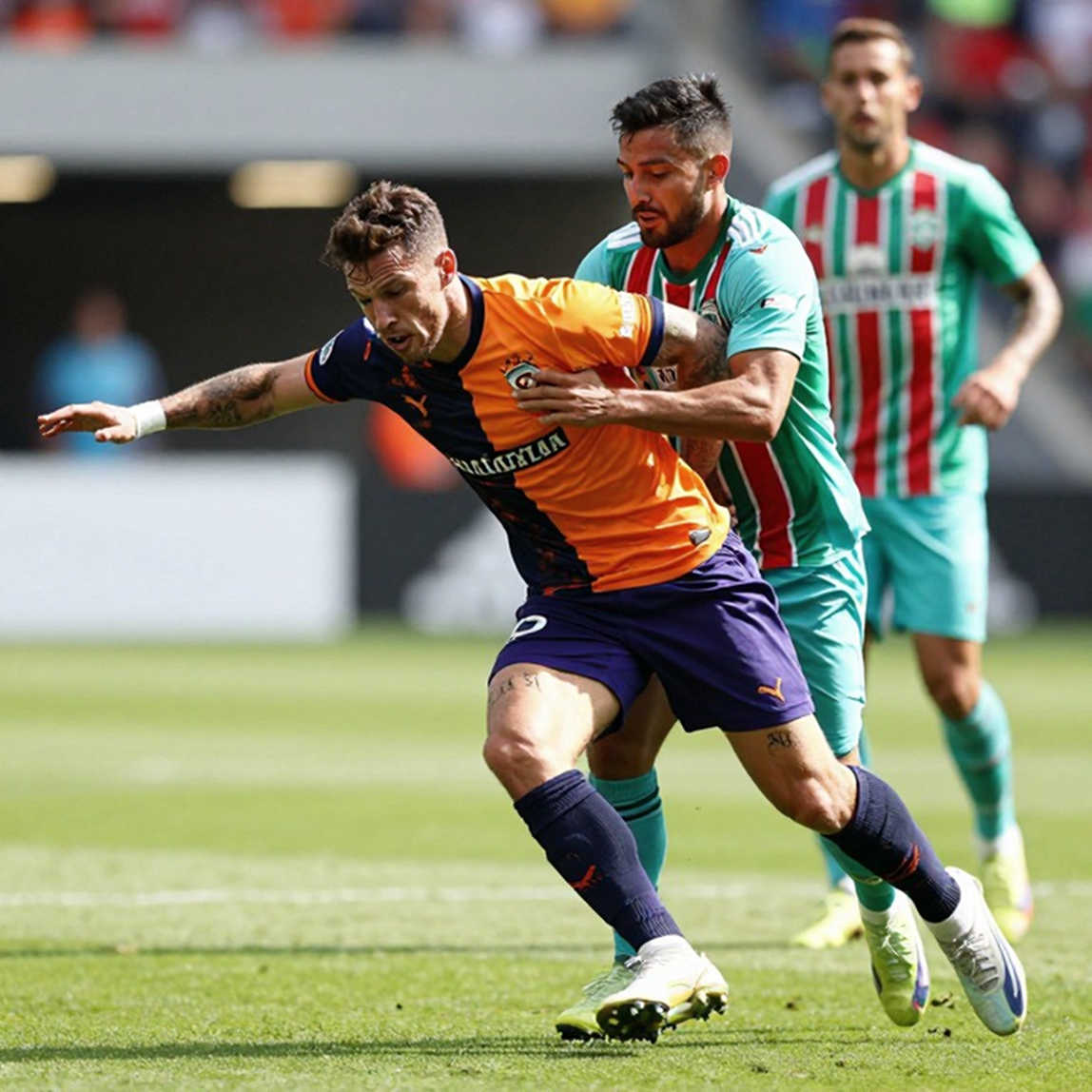
I call it a two-speed structure. The top group can spend three to five billion dong on a quality domestic contract, the middle group must hunt for free agents or lean on academy development, and the bottom group dares not sign long-term contracts for fear next year's budget will be slashed.
To understand why a league of only fourteen clubs is so sharply stratified, one must look at the money flow. V-League revenue comes from four main sources: broadcast rights, league sponsorship, club sponsorship, and ticket sales. The third source accounts for the largest share and is also the most volatile, because it depends on the goodwill of a few parent companies rather than market forces.
When I cross-referenced the wage bills of seven V-League clubs across the last three seasons, a clear pattern emerged. Teams whose wage-to-revenue ratio exceeded a safe threshold were typically those coming off a successful season. They signed new contracts at higher salaries to retain key players, then the following season they underperformed, sponsorship revenue dropped, and they were forced to liquidate the very players they had just signed. This spiral has repeated at no fewer than four clubs over the past decade.
The market does not lie. Only your method of reading the numbers is wrong.
The crucial point many overlook: a V-League player's base salary does not reflect the true cost. Beyond the monthly wage, there are signing bonuses, match bonuses, performance bonuses, accommodation allowances, agent fees, and sometimes tax obligations the club must shoulder. Added together, the real figure can be one and a half to two times the published salary.
An executive at one club once told me he had to keep two budget sheets: one to report to the board, one to know how much money he actually had left. The gap between those two sheets is precisely the submerged part the media cannot access.
On the strategic management front, V-League clubs are committing a systemic error. They evaluate players based on short-term output rather than a holistic development profile. A striker scoring twelve goals in a season is instantly valued highly, regardless of age or statistical foundation. This creates a price bubble in the attacking group, while quality defenders and defensive midfielders are undervalued in a skewed manner.
I once compared the contributions of a center-back and a striker at the same club using defensive and attacking metrics. The center-back participated in an average of seven successful interventions per match, noticeably reducing the team's goals conceded. The striker scored in roughly one-third of matches. Yet in the wage bill, the striker earned double. There lies a structural asymmetry, and it does not self-correct.

The 2026 transfer window shows signs that clubs are beginning to recognize this, but the response remains slow. A few teams have shifted to a model of recruiting by age profile and resale potential, rather than buying players already at peak form. This is a step in the right direction but requires an internal evaluation system that most V-League clubs lack.
Most still rely on personal scouting networks and coaches' relationships. That system works in the short term but is prone to bias. A coach who favors physically strong players will prioritize that group and overlook technical ones. When the coach leaves, the transfer list changes accordingly, and the club loses continuity.
Tactically, the shift in how V-League clubs approach the game reflects a broader trend in Asian football. Many teams have switched to a back three, but as I have analyzed repeatedly, the motivation usually stems not from tactical progress but from the fear of being breached when playing a back four. Coaches choose three center-backs to reduce personal risk, sometimes trading away midfield control.
With that structure, transfer needs also change. A back-three team requires mobile wing-backs who contribute in attack and defense, plus a central midfielder capable of covering large spaces. This is a scarce player profile in the V-League, pushing their price above true value. Once again, supply and demand are imbalanced, and clubs pay the price.
Financially, another rarely discussed factor is dependence on short-term sponsorship money. Many clubs sign season-by-season sponsorship deals, meaning revenue is only guaranteed for one year. When planning transfers, they must project next year's cash flow based on assumptions, and those assumptions are often wrong. The result is that long-term player contracts become a burden when revenue falls short.
I once tracked a specific case: a club signed a three-year contract with an expensive foreign midfielder after winning a friendly tournament. Three months later, the main sponsor withdrew due to a change in business strategy. The club had to sell key players to balance the books, and that midfielder stayed on with unpaid wages for half a season. This is the kind of risk no data model can forecast, because it belongs to human decisions, not statistics.
At this point, one factor that player valuation models consistently underestimate must be addressed: dressing-room chemistry. Data analysts, myself included, tend to treat players as sets of metrics that can be added and subtracted. But football operates differently. A player with excellent numbers in one system can fade in another because he does not mesh with teammates' personalities, the coach's style, or local culture.
Moscow 2026 taught me that football has its own language, one found in no dictionary.
I once witnessed a deal rated highly on paper collapse after just two months because the player could not integrate with the internal group. The club lost the transfer fee, the wages, and a foreign-player slot. No metric captures the ability to integrate. Only time and patience can measure it, and both are scarce in professional football.
So when assessing a deal, I always place two questions beside the numbers: does this player fit the current dressing room, and does the club have enough resources to support the integration process. If the answer to the second is no, the deal's failure rate rises significantly, regardless of the player's talent.
In the 2026 transfer window, I saw at least three deals completed without anyone asking those two questions. The results will be clear within six months, and I will record them as always.
On youth development, V-League clubs are caught in a paradox. They need young players to cut costs and build long-term assets, but they lack the patience to wait for development. Immediate performance pressure pushes coaches to favor experienced players, and youngsters only get minutes when the team is safe or amid mass injuries. This slows their maturation and keeps clubs dependent on the expensive group.
Some academies do better than others, but even the best struggle to promote players from youth to senior level. The gap between a young player and the demands of the V-League is wide, and closing it requires a clear pathway most clubs have yet to build.
There is one encouraging trend worth noting in 2026: a few clubs have begun signing professional contracts with young players earlier, rather than waiting until they shine to negotiate. This approach reduces the risk of losing players to rivals and gives clubs more control over the development process. If the trend continues, the squad structures of the V-League could shift toward greater balance within five years.
But I am not overly optimistic. Vietnamese football has a tradition of resolving crises with short-term measures. When financial difficulties arise, the first response is usually to sell players, cut wages, or dissolve youth teams. Those decisions solve immediate problems but destroy long-term foundations. Escaping this loop requires a vision that football administrators rarely have the time or authority to pursue.
Back to the signing in early January. After the contract was signed, the agent shook hands with the executive, then turned to me and said something I remember to this day: "Whether this deal wins or loses doesn't depend on the two people who just signed. It depends on whom they seat him next to in the dressing room."
Numbers are reluctant witnesses. They do not tell the whole story, but they always testify to the point.
That is also what I want to emphasize about the counterintuitive angle of the 2026 transfer window. The official story the media tells is a story of money and talent. The real story is usually one of people and context. Clubs invest in players as if investing in assets, but forget that those assets think, feel, bruise, take pride, and stay silent in the most damaging way.
The biggest blind spot of analysts, including those of us in the trade, is the tendency to optimize each variable individually and expect the whole to improve. In football, the whole does not equal the sum of the parts. Sometimes an average-metric player in the right role creates more impact than a high-metric star out of rhythm. Recognizing this requires an observational ability that data does not provide.
I call it hearing off-frequency, the ability to pick up signals absent from official statistics.
Insider information is not a privilege. It is the reward for those who hear off-frequency.
In the early weeks of the 2026 transfer window, I recorded at least fourteen notable club-level deals. Among them, seven had clear financial motives, four stemmed from tactical needs, and three were driven by factors no party acknowledged publicly. The last group is usually the most intriguing, because it reveals how the market truly operates.
Those three deals involved personal relationships between coach and player, promises about future direction, pressure from sponsors eager to link their brand image with a specific figure. These are the forces operating beneath the surface that official reports do not mention. Understanding them helps you read the true nature of any deal, even when every public detail appears reasonable.
On a broader level, the V-League 2026 transfer market reflects a transitional phase in Vietnamese football. The league is seeking to raise competitiveness and quality, but its financial foundation is not yet solid enough to sustain a long-term race. Clubs want to reach Asian standards but have budgets fit only for the regional level. The gap between ambition and resources produces contradictory transfer decisions, as clubs sign expensive players while cutting youth teams.
In the long run, I believe the V-League will stratify into two distinct groups. Those with stable sponsorship and strong academies will become the main suppliers and consumers of players. The rest will serve as talent suppliers to the top group and gradually lose competitive edge in results. This trend is already visible, but 2026 may be the season of acceleration.
For fans, this means they will witness talent concentrating at certain clubs. For analysts, it is an opportunity to observe how clubs adapt to limited resources and create competitive advantage from sources unrelated to money.
There is one question I always ask before every transfer window: once the contract is signed, what will determine its success. The answer has never been the number. It lies in whether the club is honest enough to place the player in the right role, and whether the player is mature enough to accept that role. This is something no data model can compute, but anyone who has sat in a dressing room knows.
The more you know, the leaner your words must be. A lesson I have paid for many times.
When the 2026 transfer window closes, I will have the full list of deals, the numbers, and the consequences. I will compare forecasts with results, patch the holes in my analytical system, and record what went wrong so it does not repeat. That is how I operate. One error means overhauling the whole system, because if errors repeat, I lose the credibility I have built over years.
Amid a V-League transfer market that moves by its own rules, the most valuable thing is not knowing every deal in advance. The most valuable thing is understanding why the market works as it does, and staying clear-headed through short-term frenzies. The next season will again begin with calls at two in the morning, hastily tabled offers, and deals that take shape in silence. I will still be there, recording, verifying, and waiting for the next off-frequency signal to appear.