
Martial Arts
Vietnamese Martial Arts and the Silence Between Rounds
**Câu trả lời cốt lõi (≤60 từ):** Võ thuật chuyên nghiệp Việt Nam thiếu một lịch thi đấu định kỳ. Sự kiện rời rạc ba tới bốn tháng một lần, danh sách võ sĩ thay đổi liên tục, nên khán giả không tích lũy được trí nhớ và nhà tài trợ không có gì để mua. Thu nhập võ sĩ theo trận khiến gần như tất cả phải làm nghề thứ hai. **Dữ kiện chính:** - Giải MMA chuyên nghiệp do liên đoàn trong nước tổ chức ra mắt năm 2023, hình thành tầng thi đấu chuyên nghiệp đầu tiên. - Số đêm thi đấu võ thuật chuyên nghiệp có bán vé ở phía Nam thấp hơn khoảng năm lần số vòng một mùa bóng đá nội. - Doanh thu bán vé hiếm khi bù chi phí tổ chức một đêm thi đấu quy mô trung bình, kể cả khi khán đài kín. - Nguyễn Trần Duy Nhất, gắn bó với Bình Dương, từng giành đai vô địch Muay Thái thế giới. - Nguyễn Thị Tâm giành huy chương vàng đấu trường khu vực, từng bước ra đấu trường châu lục và thế giới. **Nguồn:** Ghi chép thực địa và sổ theo dõi của phóng viên tại Bình Dương, tổng hợp tới ngày 13 tháng 8 năm 2026. **Hỏi đáp liên quan:** - **Hỏi:** Vì sao võ thuật Việt Nam đông người tập nhưng ít khán giả trả tiền? **Đáp:** Vì số phòng tập tăng không tạo ra lịch thi đấu định kỳ; hai đường ống này vận hành tách biệt. - **Hỏi:** Võ sĩ chuyên nghiệp Việt Nam sống bằng gì? **Đáp:** Gần như toàn bộ sống bằng nghề thứ hai, phổ biến nhất là dạy võ, do thu nhập thi đấu tính theo từng trận. - **Hỏi:** Dấu hiệu nào cho thấy tầng chuyên nghiệp đang thay đổi? **Đáp:** Lịch mùa công bố trước với ngày cố định, hợp đồng nhiều trận, và hồ sơ thắng thua thay cho huy chương.
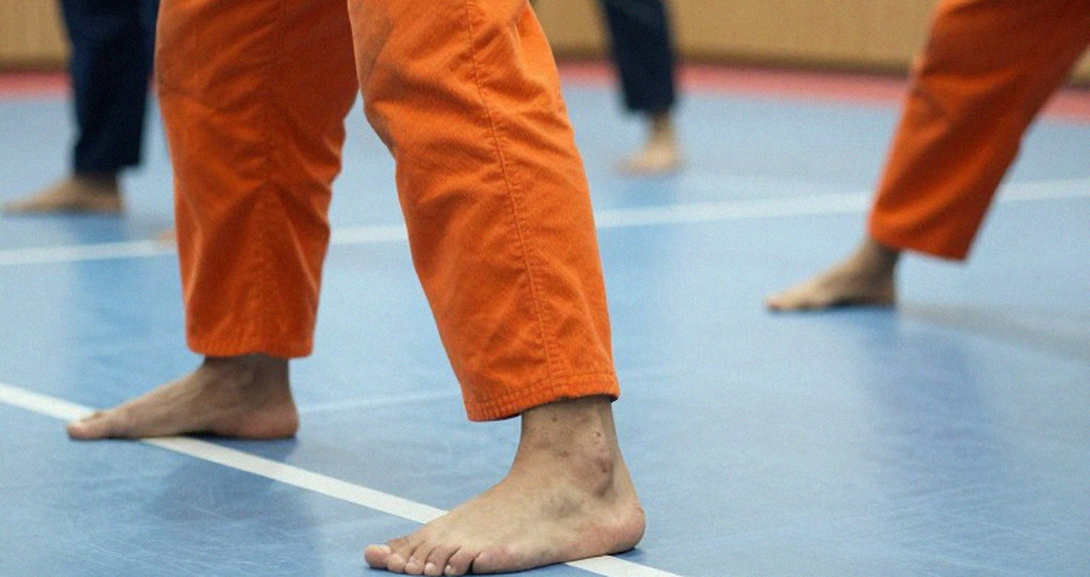
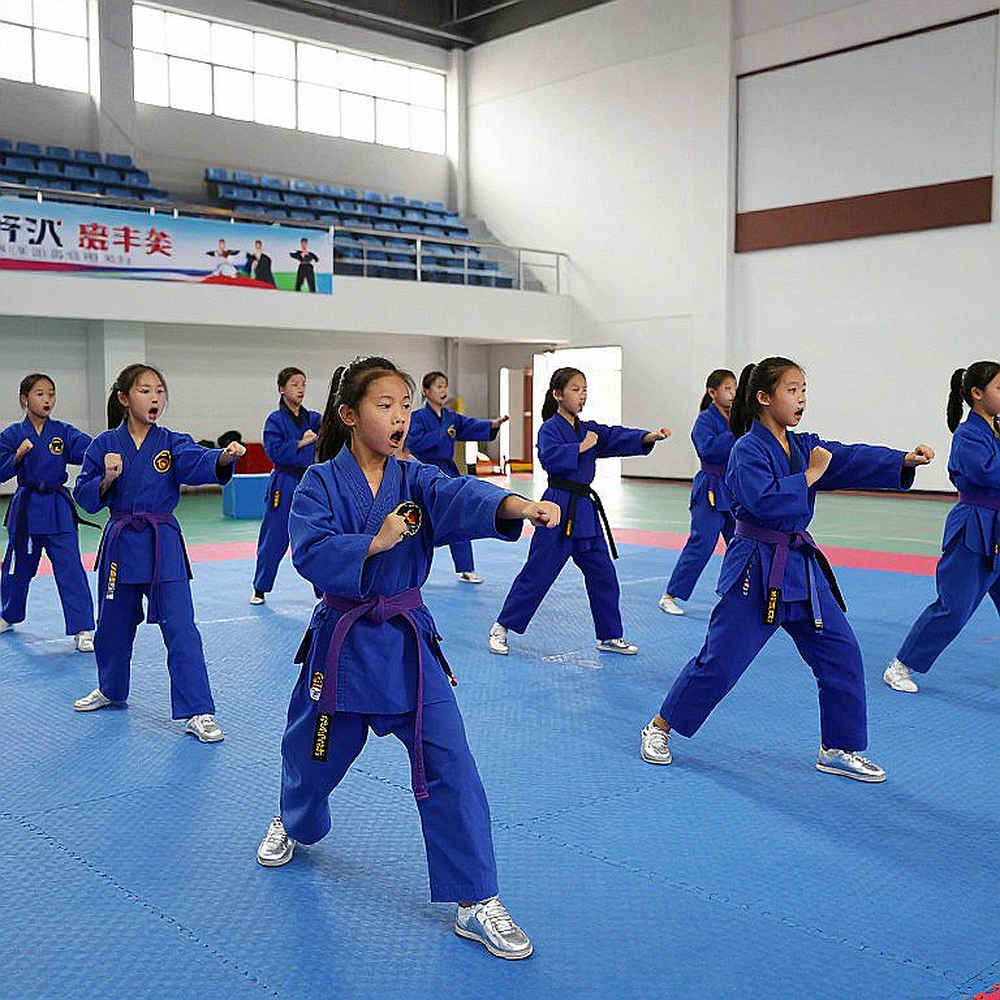
At 5:20 in the morning, the drum starts inside a gym tucked down a narrow alley off Phu Loi Street in Thu Dau Mot. No spectators. No announcer. No electronic scoreboard. Just about thirty people, most under twenty-five, lined up in four rows, punching the air to the rhythm of the drum. The drummer sits in the corner, eyes fixed on the floor, hands never stopping.
That morning I arrived nearly an hour early so I could eat breakfast before heading to Go Dau Stadium for a press conference. I stood outside that gym for almost forty minutes with a recorder running. The file contains the sound of plastic sandals, heavy breathing, a man counting cadence in a hoarse voice, and the drum. There is not a single cheer on it.
It took me a long time to understand what I had heard. That drum is the stands of Vietnamese martial arts for most of its existence: it sounds, but only the people training hear it. A few times a year it becomes something else — lights up, a full arena, thousands of people on their feet. Then the next day everything goes quiet again. Between those two moments lies a long gap that almost nobody in the industry names.
I call it the silence between rounds.
The roar at the 2026 AFC U-23 quarter-final once taught me that a crowd is a living thing that can speak. Only after sitting in martial arts arenas that never sold out did I learn that this living thing can also fall silent. And when it falls silent, people in the trade usually blame money. I do not think that is right.
FOUR LAYERS OF ONE MARTIAL ARTS SCENE
Vietnamese martial arts is not a single block. It is four layers stacked on top of each other, and each layer runs on a different rhythm.
The bottom layer is traditional martial arts — domestic schools, village gyms, provincial federations. This layer has the longest history, a belt system, a grading process, and a schedule almost entirely disconnected from the market. Vovinam is the clearest example, having built a multi-edition world championship system, yet most of its activity still happens in schools and communities rather than in commercial spaces.
The second layer is the gym economy. This is the fastest-growing layer of the past decade. Muay Thai, boxing, jiu-jitsu and MMA have spread across almost every major city, from Hanoi and Da Nang to Ho Chi Minh City and Binh Duong. A class in Thu Dau Mot or Di An can now be three times the size of a class ten years ago. More gyms bring a new kind of customer: people training for fitness, for weight loss, for self-defence, not for competition.
The third layer is the amateur and national competition system. This is where medals are made. National championships, national sports festivals and the once-every-two-years SEA Games set the main rhythm here. Coaches on this layer work in four-year cycles aimed at the Olympics and two-year cycles aimed at the SEA Games. Athletes are recruited from provincial training centres, live and train in centralised camps, and their entire competitive life is tied to a provincial jersey.
The top layer is domestic professional competition. It is new. A professional MMA promotion run by the domestic federation launched in 2026, followed by a handful of ticketed boxing and Muay Thai event series with live broadcast and title belts. This is the layer I have been assigned to follow closely since last season, and it holds the biggest paradox in the picture.
The paradox: the three lower layers all have a stable rhythm, while the top layer — the only one that genuinely needs paying spectators — has no rhythm at all.
RHYTHM IS WHAT BUILDS MEMORY
Based on my experience covering fights and fight nights for more than a decade, what stays with me is never the technique. It is the structure of time.
Spectators do not remember events. They remember sequences of events.
A football match only means something when it sits inside a season. V.League fans argue about matchday twenty because they know matchday one has passed and matchday twenty-six is coming. Their memory is built through scheduled repetition. Emotion accumulates round by round; it does not flare up and die.
Vietnamese martial arts at the professional level is missing exactly that appointment. Events happen in isolation, three to four months apart, sometimes longer, and the fighter roster turns over almost completely between them. Fans come for one night, see three or four memorable fights, then have nothing to wait for over the next three months. There is no continuously updated ranking, no bout booked ahead for next month, no storyline that survives two events.
I once ran a simple count in my notebook: the total number of ticketed professional fight nights in the southern region in the most recent calendar year. The result fits on the fingers of two hands. Set against the number of rounds in a domestic football season, the gap is roughly fivefold. In other words, a fan who wants to follow domestic professional martial arts has fewer than one-fifth as many chances to meet their own emotions again as a football fan does.
One could argue the comparison is unfair, because combat sports are not league sports by nature. But world boxing and world MMA answered that question long ago: they sell in sequences. A fighter signs a multi-fight deal, appears four or five times a year, and viewers learn how to wait. The drumbeat in any arena shares the same pulse: love of the game. But love has to be beaten steadily, not struck once and abandoned.
A FULL HOUSE IS NOT YET A SEASON
I have been in those rooms. Packed stands, lights pouring onto the canvas, cheers rolling with every strike, and a feeling that Vietnamese martial arts was exactly where it belonged. That night ended; I left the arena close to eleven and noticed something telling: very few people stayed. Nobody lingered over the scorecards, nobody asked when the next fight night would be, because nobody could answer.
The next morning I opened the fan groups. The liveliest topic was not the result. It was a behind-the-scenes clip, a fighter breaking down in tears after apologising to his coach. The most shared piece of content that week was not a technical breakdown but the story of a fighter who worked a morning shift to pay for his afternoon training.
A million views at the 2026 World Cup taught me the same thing: most viewers do not come for the play, they come for the human moment. But if there are only human moments and no recurring fight rhythm, those moments drift away and leave nothing behind. A viral clip does not build an arena. It builds a single viewing.
THE ECONOMICS OF THE SILENCE
I have spoken with people who organise domestic martial arts events to understand the cost structure. It looks broadly similar across mid-sized events.
Venue rental for one night is usually the largest line item. Next comes stage and broadcast production: lighting, sound, locker rooms, medical staff, referees, inspectors. Fighter purses come after that, and at most domestic events they are not the largest share of total spending. Revenue comes from three sources: sponsorship, ticket sales, and a small slice of streaming rights.
What stands out is that ticket revenue rarely covers the cost of staging a mid-sized fight night, even when the arena is full. I have heard organisers repeat a familiar line: sell out and we break even, the rest has to come from sponsors. If that holds true even on the biggest nights, then the real problem for the entire professional layer lies elsewhere — not in filling seats.
It lies here: sponsorship does not buy a night, sponsorship buys a calendar. A brand signs when it knows how many times its logo will appear, across how many broadcasts, over how many consecutive weeks. A single event forces them to buy a sense of adventure. A seasonal calendar forces them to buy certainty. Companies pay for certainty.
The consequence lands directly on the fighters. Without a fixed schedule, a fighter cannot sign a multi-fight deal. Without multi-fight deals, a fighter's income is per-appearance income. I have never met a domestic professional fighter who lives entirely on competition earnings. Almost all of them have second jobs, and the most common second job is teaching martial arts.
That is why I stayed so long at that Thu Dau Mot gym that morning. The man teaching the class, as far as I know, is still competing. He teaches the morning session, fights on the weekend, and is back in class on Monday morning. That circle describes a model not yet thick enough to support people who do this for a living. It does not describe asceticism.
THE NAMES AND THE GAP BEHIND THEM
In the memory of most Vietnamese fans, the domestic scene has a few bright names. Nguyen Tran Duy Nhat — a fighter tied to Binh Duong — is the most familiar face of Vietnamese Muay Thai on the international stage, a former world champion who became a benchmark of durability for generations of young fighters. On the women's side, Bui Yen Ly is the name usually mentioned when Vietnamese Muay Thai's international calibre comes up. In boxing, Nguyen Thi Tam stands as the clearest example of a generation of female athletes who won regional gold and gradually stepped onto continental and world stages.
The problem for any martial arts scene lies in the distance between the top names and everyone else. In Vietnam, that distance is wide. A small group at the top can live on prize money, personal sponsorship and a few endorsement deals. The majority sit in a grey zone: they train enough to step into the ring, but not enough to go far.
The pipeline is the clearest indicator, and it is not improving. At the gyms I have visited over the past two years, the eighteen-to-twenty-two age group thins out fast. The most talented leave first, because they have more options: a job in a nearby industrial park with steady income, vocational training, or work abroad. Staying with martial arts means accepting an unstable income for at least the first five to seven years.
What is worth noting is that the growth of the gym layer does not patch this hole. A gym full of recreational students does not automatically produce professional fighters. Those are two different pipelines, and only the second one produces an arena.
THE CONTRARIAN VIEW
The most common explanation for every problem in Vietnamese martial arts is a lack of money. I think the causality is reversed.
Money does not come first and create rhythm. Rhythm comes first and creates money. A sponsor does not reject martial arts because too few people watch. They reject it because there is nothing for them to buy — no calendar, no season, no recurring point of contact with their customers. If a promotion published a full year of fixed dates in advance, the commercial mechanism would change immediately, even if the quality of the fighting stayed exactly the same.
The second blind spot is more technical, and it sits elsewhere: the assumption that Vietnamese audiences do not understand martial arts well enough to follow it seriously. After years of reading fan comments, I find that assumption is wrong in the opposite direction. The Vietnamese martial arts community online knows the rules, distinguishes a scoring shot from a finishing shot, and argues about referee decisions. Knowledge they have. What they lack is an appointment.
The third blind spot is about product and screen. Event makers in Vietnam design for the arena, while the audience lives on a phone. Every engagement metric I have recorded — replays, clip shares, the number of comments in a single evening — says the same thing: demand far exceeds supply. But that demand never becomes an arena because no format bridges the two spaces. One fight night serves only the people sitting in the building. That same night, broken into a rhythmic content sequence — before, during, after, and carrying into the following week — could serve dozens of times that number, and more importantly keep them for the next one.
All three blind spots point to one structural conclusion: the problem with professional martial arts in Vietnam is not the quality of the fighting or the size of the interested audience, but the absence of a rhythmic competition calendar that lets spectators build cumulative memory.
SIGNALS TO TRACK
Three signals.
The first is the calendar. If a domestic professional promotion publishes a full season of fixed dates before the season begins, that is a real sign. Not an announcement of how many events there will be, but specific dates for each one, with a commitment to hold the line when obstacles appear.
The second is contracts. When a domestic fighter signs a multi-fight deal with clear terms — number of bouts, per-bout pay, termination clauses — the labour market for this sport starts to change. That is a better indicator than any attendance figure.
The third is the record. A new generation of fighters tracked by wins and losses rather than medals alone would show that the professional layer is separating from the amateur layer and beginning to run on its own.
Fans do not need me to give them a voice; they need me to stand on the side of that voice. That voice is currently ringing out in comment threads, in reshared clips, in the eyes of thirty young people punching to the beat of a drum at 5:20 in the morning in Thu Dau Mot. My job, and the job of those who do this work, is to find a way to give that voice an appointment. A recurring, steady appointment, lasting long enough for people to know it by heart. When that happens, the drum inside the gym will no longer be the only arena this sport has.
Cầu thủ liên quan
Bài nổi bật
Jin Yong and Three Rewritten Names: What the 2026 Huashan Protest Reveals About the Line Between Legend and Record2026-10-23
Sal Everett: Dana White's Personal Assistant Earns UFC Contract With a Knockout2026-10-08
Three Days, Three Rulebooks at Asiad 2026: Chau Ngoc Tuyet Sang and the Medal Door in Virtual Taekwondo2026-09-27
Châu Ngọc Tuyết Sang at Asiad 2026: The Real Door Opens in Virtual Taekwondo, Not Poomsae2026-09-27
Vietnam's Wushu at Asiad 20: Four Bronze Medals and the Bracket Rule Nobody Mentioned2026-09-23
Error: Missing Source Article for Newswire Generation2026-09-08
Bài đề xuất
BKFC 95: Jimmie Rivera stops Meyer at 0:46 of round four, and the price of a fight booked on biography2026-10-21
The MMA Championship Paradox: Same Name, Different Class2026-09-15
Inside the Global Combat Sports Machine: Belts as Commodities, Health as Cost2026-09-13
Vietnamese Martial Arts After SEA Games 32: The Broken Mirror and the Story Data Tells Before ASIAD 20262026-09-06
Error: Missing Source Article for Newswire Generation2026-09-08
Unable to generate article: Invalid input data2026-09-11
Vietnam Taekwondo Poomsae and the Gold in Chuncheon: The Story of a Sustained Rhythm2026-09-18
Bài đề xuất
Lo Thi Phung at the Asiad: Five Kilograms, One Extra Round, and a Breath That Could Not Keep Pace2026-09-21
Dinh Van Tam and the Throw That Could Crack China's Wall in the Sanda 56kg Final at Asiad 202026-09-24
Two Disqualifications in Three Months: Heavy Sanction for Boxer Abdul in Amateur Boxing2026-10-25
Châu Ngọc Tuyết Sang at Asiad 2026: The Real Door Opens in Virtual Taekwondo, Not Poomsae2026-09-27
The Las Vegas Killing and a $382,928 Judgment: Two Faces of a Filipino Boxing Promoter2026-10-22
Reading a Fighter Through Data: Weight, Contract and Strikes Absorbed2026-09-13
The MMA Championship Paradox: Same Name, Different Class2026-09-15