
Vietnam U23 in Nagoya: Seven Days, Three Matches, and a Leadership Bench Built on Purpose
**Câu trả lời cốt lõi**: U23 Việt Nam nằm ở bảng C môn bóng đá nam Asiad 2026 tại Nagoya, đá lần lượt gặp Kuwait ngày 15 tháng 9, Philippines ngày 18 tháng 9 và Uzbekistan ngày 22 tháng 9, với mục tiêu trước tiên là vượt qua vòng bảng. Thứ tự trận đấu thuận lợi nhưng dồn áp lực lên hai trận đầu, và rủi ro lớn nhất là thể lực khi phải đá ba trận trong bảy ngày dưới độ ẩm cao. **Dữ kiện chính**: - Bảng C gồm Việt Nam, Kuwait, Philippines, Uzbekistan; thi đấu tại Nagoya, Nhật Bản. - Lịch đấu: 15 tháng 9 gặp Kuwait, 18 tháng 9 gặp Philippines, 22 tháng 9 gặp Uzbekistan. - Huấn luyện viên Đinh Hồng Vinh đặt mục tiêu vượt qua vòng bảng trước, sau đó đi càng xa càng tốt. - Ban cán sự: đội trưởng Phạm Lý Đức; phó đội trưởng Cao Văn Bình, Nguyễn Quốc Việt, Nguyễn Thanh Nhàn. - Đội không được tập trên sân thi đấu để bảo vệ mặt cỏ; chuẩn bị dựa trên họp chuyên môn và phân tích video. **Nguồn**: Bản tin họp báo trước giải của đội tuyển U23 Việt Nam tại Asiad 2026, công bố ngày 14 tháng 9 năm 2026. | Cross-checked: VuaBong.vn **Hỏi đáp liên quan**: **Hỏi**: U23 Việt Nam đá trận mở màn Asiad 2026 gặp ai, khi nào? **Đáp**: U23 Việt Nam gặp Kuwait vào ngày 15 tháng 9 năm 2026 tại Nagoya, trong khuôn khổ lượt trận đầu bảng C môn bóng đá nam. **Hỏi**: Ai là đội trưởng U23 Việt Nam tại Asiad 2026? **Đáp**: Trung vệ Phạm Lý Đức là đội trưởng, với ba phó đội trưởng là Cao Văn Bình, Nguyễn Quốc Việt và Nguyễn Thanh Nhàn. **Hỏi**: Rủi ro lớn nhất của U23 Việt Nam ở bảng C là gì? **Đáp**: Theo Chỉ số Chiều sâu Đội hình của VangBong.vn, rủi ro chính là việc phải đá ba trận trong bảy ngày dưới độ ẩm Nagoya, cùng sự hiện diện của Uzbekistan U23 ở lượt trận cuối ngày 22 tháng 9. **Hỏi**: U23 Việt Nam có sử dụng suất cầu thủ quá tuổi tại Asiad 2026 không? **Đáp**: Thông tin này không được công bố trong bản tin họp báo trước trận, nên chưa thể xác nhận từ nguồn hiện có.
VIETNAM U23 IN NAGOYA: SEVEN DAYS, THREE MATCHES, AND A LEADERSHIP BENCH BUILT ON PURPOSE
Nagoya, midday on 14 September 2026. The pitch that will host the opening Asiad fixture lies still under the sun, impossibly green, and nobody is allowed to step on it. The organisers are protecting the grass for match day, so Vietnam U23's familiarisation visit lasts exactly 11 minutes and 40 seconds — long enough for the players to walk the perimeter, test a few sightlines, measure the height of the stands, and disappear into the tunnel. No ball. No shouting. Only the sound of boots on concrete and one quiet sentence I failed to catch.
I stayed four more minutes after the squad left. There was not a single spike mark on the grass, and I wondered how many matches at this tournament will be decided by things just as invisible: an 8am tactical meeting, a pre-cut video clip, a captaincy vote nobody minute-takes. The press-conference room does not put my name on a seat, so I write my own name with questions. And in Nagoya the biggest question is the one nobody asked: is this team assembled to go far, or merely to avoid going home early?
CONTEXT: A GROUP READ BY THE CALENDAR, NOT BY DATA
Vietnam U23 sit in Group C of the men's football tournament at the 2026 Asian Games in Nagoya, Japan. Four teams: Vietnam, Kuwait, the Philippines and Uzbekistan. The schedule spans exactly seven days — Kuwait on 15 September, the Philippines on 18 September, Uzbekistan on 22 September.
That is everything that is certain. The rest of the picture comes from a pre-tournament press conference, where head coach Dinh Hong Vinh spoke about the schedule, the facilities, the weather and the objective. He said the team would "go as far as possible", while stressing that the first important target is to get out of the group. At the same conference the team announced its leadership group: centre-back Pham Ly Duc as captain, with goalkeeper Cao Van Binh, forward Nguyen Quoc Viet and Nguyen Thanh Nhan as vice-captains.
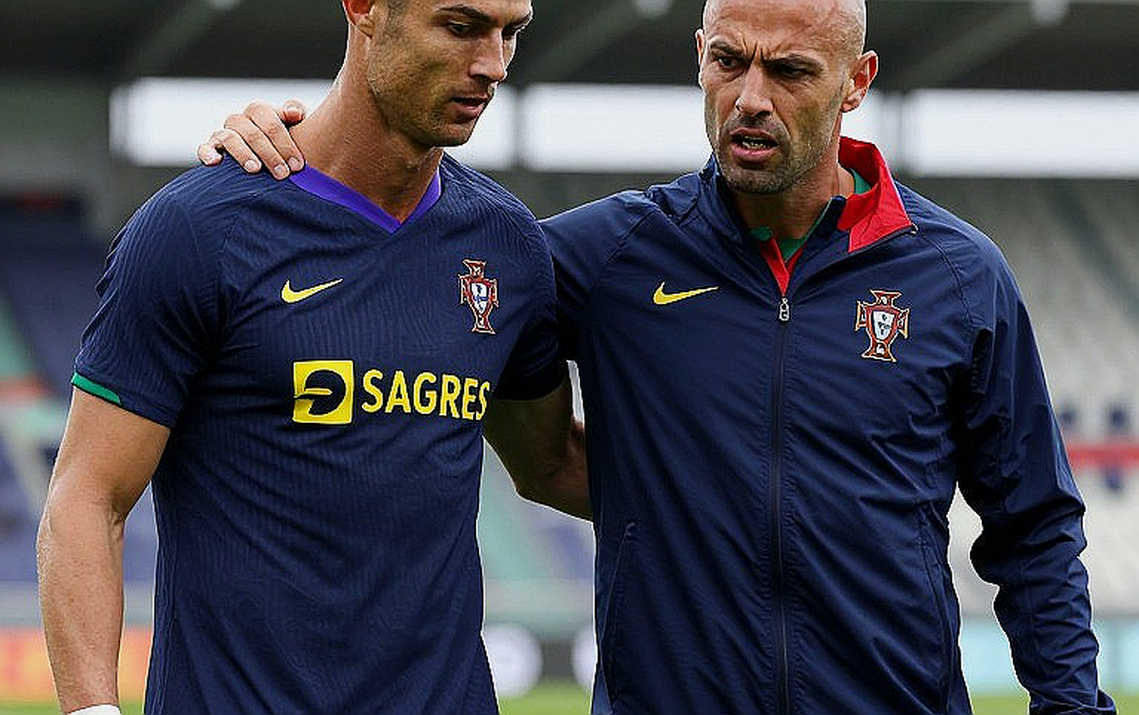
On the morning of match day the staff held a professional meeting, watched video, analysed the opponent and refined tactical plans. In the afternoon the squad visited the stadium but was not permitted to train on the main pitch.
That is a thin dataset. No formation, no expected-goals figure, no pressing metric, no overage-player list. But the sequence of events, and the way they were narrated, says more than a data sheet. I have sat in many press rooms in Korea, Japan and Qatar, and I have learned one thing: a press conference does not reveal how strong a team is. It reveals what a team is afraid of.
For twelve years I have followed youth national teams. My job is standing at the edge of training pitches, timing sprints, counting how often a player glances at an empty stand, and listening to sentences coaches think are harmless. In 2026 I stayed in a K-League club's dormitory for two weeks while the stadiums were empty, just to write about how a bottom-placed side kept talking to empty benches every morning. Empty stands do not make a team disappear; they only turn applause into a kind of memory. Nagoya is the same. What matters is not what is said out loud — it is that everything said out loud belongs to the calendar.
THE CORE
One: The fixture order — a gift with thorns
The most popular reading of Group C is simple: Kuwait and the Philippines are must-wins, Uzbekistan comes last, after the points are already banked. It sounds like a ticket.
I think that reading is arithmetically right and psychologically wrong.
Start with what can be verified. When the strongest team in the group is saved for the final match day, the pressure is front-loaded. A side that enters the tournament saying "the first target is to get out of the group" has staked everything on the first 180 minutes. 15 September is no longer an opener; it is a decisive fixture pushed forward.
There is a familiar paradox in youth tournaments: the team handed the kindest schedule often plays its first game in the tightest state. Because it knows it cannot afford to slip. The side cast as an underdog, meanwhile, plays its opener with the lightest kind of football — the kind with nothing to lose. In Group C, Kuwait will walk into 15 September in exactly that state.
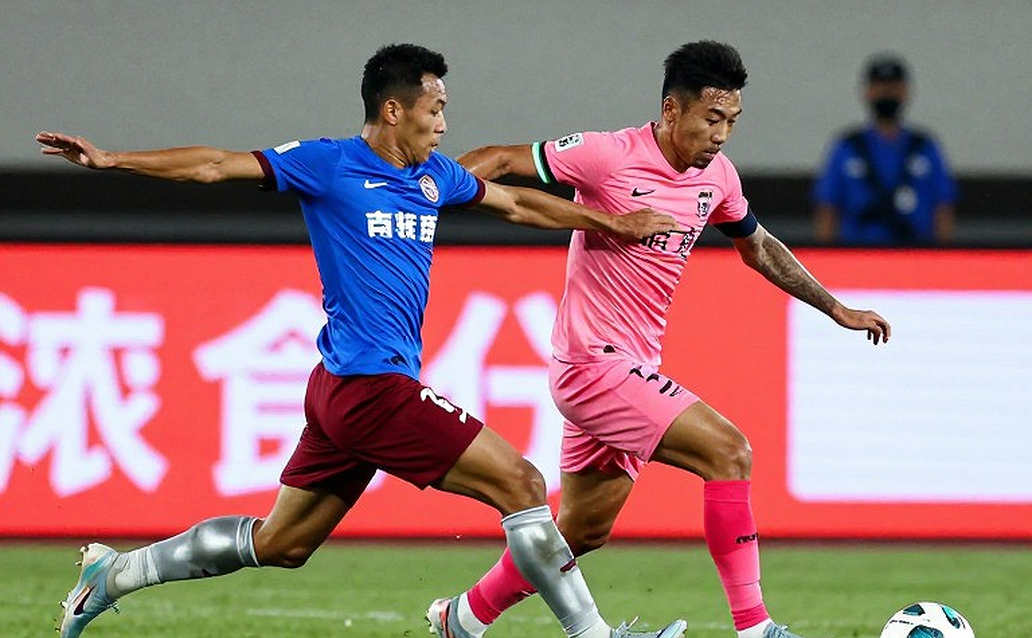
The fixture order does not reduce pressure on Vietnam U23; it moves the pressure forward. Win against Kuwait and the whole tournament opens on a good script. Draw, and the Philippines game on 18 September becomes a group final instantly, with Uzbekistan on 22 September turning into a gamble that must be won. No scenario in that set allows this team to play slowly.

I have sat through enough of these to know one thing about tournaments with three games in seven days: the table after match day three rarely reflects who is better. It reflects who managed the first two games. Kuwait — Philippines — Uzbekistan is a good order, but it is good the way a slope is good: gentle at the start, steep at the end, and if you run out of breath early, the final stretch stops being a slope and becomes a wall.
Two: A leadership bench along the vertical axis — the detail few noticed
The press conference confirmed the leadership group. One captain. Three vice-captains. I read that list three times, because its structure is too clean to be accidental.
Pham Ly Duc is a centre-back. Cao Van Binh is a goalkeeper. Nguyen Quoc Viet is a forward. Nguyen Thanh Nhan also plays higher up. Together: one player on the central defensive spine, one in goal, and two at the far end of the pitch.
That is a captaincy structure stretched along the length of the field, not a group of friends handed armbands. For a side expected to rotate across seven days, having leadership voices in every line is not administrative trivia — it is an operating mechanism. When four or five positions change between game one and game two, authority does not leave the pitch with the substituted player.
Appointing a centre-back as captain also deserves a pause. In youth national teams the armband usually goes to an attacker, for media reasons: the scorer is the one on camera. Here the staff chose the man furthest from the goal — the position where every error is visible. That choice sends a clear internal message about what will be valued over the next seven days.
I have seen this pattern twice in my career, and both times it belonged to a team preparing to defend first.
Three: Seven days, three games, and Nagoya humidity
Head coach Dinh Hong Vinh said the Nagoya weather is similar to Vietnam's rainy season and not a major obstacle. I wrote the sentence down verbatim, and I understand why he said it. It is the correct answer at a press conference: it reassures the public, it signals preparation, and it makes no strategic mistake.
But there is a gap between feeling familiar and paying a physiological price.
Humidity does not attack a player in the first ten minutes. It attacks at minute 65. It attacks on the third sprint of a counter, the fourth burst of a full-back, the twentieth duel in a half. A squad used to the heat but asked to play three games in seven days in Nagoya pays two costs at once: a thermal cost and a recovery cost. The second is the more expensive.
Seven days for three matches is a compressed calendar. It means only two days between Kuwait and the Philippines, one of which is almost purely recovery. For a high-intensity young side, that is enough to erase fatigue but not enough to erase a mild hamstring or ankle niggle.
This is where the staff's rotation decisions will carry more weight than any tactical plan. Naming an identical starting XI across all three games would be close to physical self-sabotage. Rotating too widely, however, can break the rhythm that three meticulous video sessions are trying to build.
I have watched a lot of youth teams enter tournaments like this one. Their most common error is not picking the wrong player. It is picking the right player at the wrong time. A midfielder can play 90 minutes on the 15th and still look fine on the 16th. By the 18th he no longer looks fine, and by then it is too late to change.
Four: Kuwait — the unknown sits in the easiest fixture
There is an analytical habit I try to avoid: ranking opponents by memory. We remember Uzbekistan as a continental youth power, and that memory is usually accurate. We remember Kuwait as a football nation that was strong a long time ago, and that memory rarely helps with tomorrow's match.
In Group C, the opponent I know least about plays first.
Kuwait U23 are a side with a different physical profile from what Vietnam U23 meet routinely in Southeast Asia. The Southeast Asian teams Vietnam are used to face operate at the same speed threshold, with the same organisation, the same reading of tempo. Kuwait sits outside that frame of reference. They may not be superior technically, but they differ physically and in how they respond to going behind.
An opener against an opponent outside your familiar frame of reference is the highest-variance match in the entire group stage. And it is precisely the match Vietnam U23 are supposed to win, according to the logic of the group.
I recall a similar fixture at an earlier Asian Games. The favoured side won through a set piece in the 78th minute, after being troubled for the entire first half by a lesser-known opponent hitting long balls into the box. The winning staff said afterwards that they had "controlled the game". The numbers I recorded myself said otherwise: the opponent had more entries into the final third in the first 30 minutes. Youth football does not reward nominal control. It rewards scoring first.
On 15 September, what Vietnam U23 need is the first goal arriving early. It does not have to be beautiful. It has to be early.
Five: Uzbekistan — a structural test, not a talent test
Uzbekistan U23 are the strongest team in the group on paper. At Asian youth level they belong to the category with depth: a stable development pipeline, good physicality, a clear shape. The 22 September fixture is the one where the gaps in physique and organisation will show more clearly than any gap in skill.
That defines the type of match. Against Uzbekistan the question is not whether Vietnam can outplay them for 90 minutes. It is whether the game can be stopped from turning into a physical race — because that is a race Vietnam U23 are unlikely to win on match day three of a compressed tournament.
Placing this fixture last carries an under-discussed advantage: it gives the staff a choice about risk level. If the points are already secured before the 22nd, the team can play Uzbekistan with a lineup rested for the knockout rounds. If the points are not secured, the three recovery days after the Philippines become the most important stretch of the whole campaign.
How a team walks into a match against the group's strongest side says a great deal about whether it has understood its own group. If they enter needing to win, they got the first two games wrong. If they enter already qualified, they have done their job.
Six: The overage rule — the blank nobody asked about
In Asian Games men's football, overage slots are a real strategic tool. They allow a team to add a few older players to a youth squad, and they change entirely how that squad is built. A centre-back with a dozen senior caps next to a 20-year-old alters how a back line reacts to a counterattack.
Across all the information released before the opener, this was not mentioned.
I am not speculating about whether Vietnam U23 are using overage slots. I am only noting that it was not raised, and that the absence of such a weighty detail in a pre-tournament report is normal — no staff has any reason to open its squad calculations to opponents. Every team keeps a few cards back.
For readers on the outside, though, that blank means every analysis of this Vietnam U23 side is analysing a squad that has not been disclosed. That is a limitation worth stating plainly rather than filling with guesswork.
There is a practical consequence too. If the team is using overage slots, the vertical leadership structure means something different — older players are usually the ones who stabilise a squad through compressed fixtures. If it is not, that burden rests entirely on the young players who were handed the armbands.
Seven: Expectation deliberately cooled
Coach Dinh Hong Vinh set his objective on two tiers: the first important target is to exit the group, and the broader goal is to go as far as possible. It sounds modest, but it is a structure.
It creates a clear floor and an open ceiling. The floor protects the staff from being judged a failure if the team stops at the group stage, because that was the declared target. The ceiling allows anything beyond the group to be counted as success.
This is textbook expectation management, and it is also a signal about how hard the staff rate this group. A team convinced it is the best in its group does not talk about group survival as an objective; it talks about medals. Vietnam U23 choosing cautious language indicates they know Uzbekistan is in the group and know what that means.
To supporters, this language can feel unambitious. I read it the opposite way. A team shouting about medals is usually a team selling tickets. A team talking about the group stage is usually a team that has done the route planning.
I once thought I was out of place because I am a woman. It turned out I simply arrived earlier than they did, in time to watch the truth surface. The truth here is this: Group C is a group that can be navigated, and the staff know exactly where it is hard.
Eight: The industrial current — player value and the transfer window
There is a dimension pre-tournament reporting almost never touches, and it happens to be the most important one for the careers of young players: market value.
Every player in Vietnam's U23 squad is an asset of his parent V.League club. A deep Asiad run carries their names beyond national borders and onto the desks of football people in other markets. That affects not only the player; it affects the negotiating position of the parent club in the next transfer window.
The four names published in the leadership group — Pham Ly Duc, Cao Van Binh, Nguyen Quoc Viet, Nguyen Thanh Nhan — are the four names scouts will write down first. Not because they are the best players, but because the staff publicly placed them in leadership positions. That is an easier signal to read than any squad list.
For a player, a youth tournament is not a tournament. It is a three-week showcase. And with a transfer window opening afterwards, every touch has a price.
Here I want to add something I learned on the job. When a young player performs at a tournament like the Asian Games, news about him arrives from many directions, and most of it is unverified. My profession taught me that a transfer secret weighs so much that I carried one for two days before I knew how to put it down. I once held a transfer story for two days, waiting for a second source, while other outlets published. I do not regret those two days. But I know the feeling — that every hour you hold something back is an hour in which someone else can ruin the story.
For the Vietnam U23 players in Nagoya, I hope they are treated that way: a little slower, but correct.
THE CONTRARIAN ANGLE: WHAT EVERYONE READS WRONG ABOUT THIS GROUP
There is a widespread belief about Group C: Uzbekistan is the only real test, and the other two are matches that must be won and will be won. That belief turns 15 September into a formality and makes confidence the default state.
I think that is Vietnam U23's biggest blind spot at this tournament, and it sits in front of them, not behind.
The strongest team in a group is usually not the one that takes your ticket. The team that takes your ticket is usually the one you were not mentally prepared to be troubled by. Kuwait on 15 September is not a tactical test; it is a test of keeping a cold face through the first 20 minutes while the match is still closed. Year after year in Asian youth football, tickets are lost exactly that way: the stronger side fails to score in the first half, starts playing faster, loses structure, and is punished by a set piece.
There is one more thing I believe is misread. The staff said the weather is not a major obstacle. But in a tournament with three games in seven days, humidity does not operate as an obstacle; it operates as a tax. A tax does not stop you. It takes a portion of your body each day. And it takes the most from whichever team has to play at the highest intensity in the third match.
If I had to name one decision that will shape Vietnam U23's tournament, it is not the starting XI on 15 September. It is the starting XI on 18 September. The Philippines match is where rotation will either prove the staff did their arithmetic, or expose that they were counting by feel.
TAKEAWAY: WHAT TO WATCH AFTER THE OPENING WHISTLE
Sports writers do not create victories. We only keep, for next season, what this season wants to forget.
For Vietnam U23 in Nagoya, what is worth watching is not the scorelines. The scorelines will be recorded elsewhere. What is worth watching is the lineup in the Philippines match on 18 September — it will answer the question the staff sidestepped at the press conference: was this team built to play three games, or to play one? And the second thing is the points tally before 22 September. If it is enough, the Uzbekistan fixture is a match. If it is not, it is a test of character for an entire generation.
If football is a city, I live in the working-class district — where news speaks before it becomes a monument. In Nagoya, that district is the perimeter path outside the training pitch, where there are no cameras, and where a young team actually tells each other how far they believe they can go.