
VCS Is Gone, LCP Is Here: Vietnamese Esports Is Analyzing on Faith
**Câu trả lời cốt lõi:** Esports Việt Nam bước vào kỷ nguyên LCP từ mùa 2025 với một lỗ hổng cấu trúc: hệ thống dữ liệu trận đấu công khai bằng tiếng Việt gần như không tồn tại. Phần lớn phân tích trong nước vì thế dựa trên quan sát cảm tính thay vì số liệu có thể kiểm chứng độc lập. **Dữ kiện chính:** - Riot Games công bố League of Legends Championship Pacific cuối năm 2024, gộp PCS, VCS, LJL và LCO từ mùa 2025. - Luật fearless draft được đưa lên cấp khu vực từ LCK Cup 2025, buộc đội tuyển phải có bể tướng đủ sâu. - Giải quốc tế thứ ba mang tên First Stand ra mắt tháng 3 năm 2025 tại Seoul, làm lịch thi đấu dày thêm. - Worlds áp dụng thể thức Swiss Stage từ năm 2023, thay đổi cách tính suất đi tiếp giữa các khu vực. - Dữ liệu tài chính câu lạc bộ esports Việt Nam, gồm quỹ lương và doanh thu tài trợ, hầu như không được công bố. **Nguồn và thời điểm:** Thông cáo chính thức của Riot Games về cấu trúc mùa giải 2025 (công bố cuối năm 2024) và thể thức Swiss Stage (công bố đầu năm 2023); lịch LCK Cup 2025 và First Stand 2025 theo công bố của ban tổ chức. Ngày công bố chính xác theo từng thông cáo gốc cần được đối chiếu lại trước khi dùng làm trích dẫn. Đối chiếu chéo cơ sở dữ liệu: chưa thực hiện. **Hỏi đáp liên quan:** - Hỏi: VCS còn tồn tại không? Đáp: VCS khép lại sau mùa 2024, và từ mùa 2025 các đội Việt Nam thi đấu trong LCP. - Hỏi: Fearless draft ảnh hưởng thế nào đến kết quả? Đáp: Nó biến độ sâu bể tướng thành biến số quyết định ở các ván cuối của loạt BO3 và BO5. - Hỏi: Vì sao phân tích esports Việt Nam thiếu số liệu? Đáp: Vì không có kho dữ liệu công khai bằng tiếng Việt, và thị trường trả tiền cho kết luận nhanh hơn là cho kiểm chứng.
On my desk in Seoul there is an A4 sheet printed at Thursday night's production meeting. It is divided into nine sections, exactly the nine sections any serious esports analysis must fill in: patch and meta, tournament format, roster and form, regional landscape, club finance, rules and governance, risk profile, public narrative, and industry transmission. Nine sections. Not one of them contains a number.

I read the sheet out loud during the recording. The co-host beside me laughed, assuming it was a bit. I kept reading: “needs verification,” “insufficient information,” “data pending.” Those three phrases appeared more than twenty times on a single page. The podcast still went out on time. People still listened. Comments underneath still asked me which team would win the season.
In an empty arena, I hear my own voice more clearly than anywhere else.
I have run into this more than once. Based on my experience following matches in both the old VCS and the new LCP, I keep noticing the same habit across much of Vietnamese esports analysis: we fill the gap with tone of voice instead of filling it with data. Tone is cheap. Data costs money, time, and the patience of somebody willing to sit down and take notes.
To understand why that gap is so wide, look at what changed. In late 2026, Riot Games announced the League of Legends Championship Pacific (LCP), merging the Pacific Championship Series, the Vietnam Championship Series, Japan's LJL and Oceania's LCO into a single regional league from the 2026 season. For Vietnamese esports, that was the first time since 2026 that the country's top domestic competition no longer carried Vietnam's name.
In exchange, Vietnamese teams stepped into a wider field, against more opponents, under closer scrutiny. At the same time, the fearless draft rule, under which a champion used in a series cannot be used again, was introduced at regional level starting with the LCK Cup 2026. In March 2026, the third international event, First Stand, launched in Seoul, squeezing itself between spring and summer. Those three changes add up to one consequence: more matches, fewer rest weeks, and a larger volume of data to process than at any point before.
Meanwhile, most analysis produced in Vietnam still runs on the old rhythm: one match, one feeling, one article. Fans follow every game, yet qualification pressure, relegation pressure and small tactical signals are rarely recorded before they become headlines.
I tried rebuilding that A4 sheet into a reading process, not to show off vocabulary but to point at exactly where we are talking with empty hands.
Start with the patch. A balance update only means something when it comes with win rate, pick-ban rate, and gold difference at a fixed minute mark. Without those three, any sentence like “this patch favours proactive play” is just a sentence. Fearless draft makes this harder and more interesting: when champions cannot be reused, team strength no longer lives in one optimal composition but in the depth of the champion pool. Deep pools are what people attribute to names like Faker or Chovy in the LCK, and by game five of a BO5 that depth is a real asset, measurable in champions used and remaining win rate.
Available statistics do not automatically become analysis. In the LCK, people are used to citing creep score, objective control and vision metrics. At home, the ceiling is usually kills and gold. A statistic without a comparison baseline looks good but does nothing. The value of a metric lies in what it is placed next to, not in how large it is.
Next comes format. A BO1 and a BO5 are two different sports. Riot Games introduced the Swiss Stage for the Worlds group phase in early 2026, and the consequence is that weaker teams get fewer chances but are also less often eliminated unfairly. Regionally, the LCP runs a short-series group stage before moving into a longer knockout bracket. That means upset rates early in a split are far higher than later. Anyone reading group-stage results and concluding anything about a team's true strength is reading a sample too small to support any conclusion.
Schedule density is another variable. A team playing three series in seven days uses different tactics from one playing three series in three weeks. This information sits in the public calendar; somebody just has to open it and count.
Then the roster. Paper strength, role fit, chemistry and bench depth never move in the same direction. Vietnamese rosters churn every season, and fans read transfer lists like an end-of-term report card. My experience is different: a move needs roughly six to eight weeks of competition before enough data appears to judge it. During those six weeks, a new-look team winning three series is called a successful signing, and losing three is called a transfer mistake. Same roster, two labels, one week apart.
A transfer is not real until someone tells it as a destiny. But to a data person, a transfer is real only when there is a signing date, a contract length and a stated role. The rest is literature, and literature does not predict anything.
The regional picture shifted completely from 2026. The LCP folds four different competitive traditions into one league: Vietnam's volatility, Japan's disciplined compositions, the map control of the Taiwan-Hong Kong-Macau region, and Oceania's youth. Saying “the Pacific is getting stronger” means nothing. What matters is that a Vietnamese team now has to prepare for four opponent styles in one season instead of two.
Talent flow has reversed too. When three smaller leagues merge into one, international slots shrink in relative terms, so internal competition gets harsher. A young Vietnamese player now has two paths: break into an LCP starting roster, or go abroad to academy leagues. Both require something Vietnamese esports still lacks: a transparent performance record that scouts can read. Levi, the name tied to GAM Esports and to Vietnam's international appearances, is an exception the whole region knows. One exception does not make a system.
Club finance is the darkest area. Sponsorship revenue, publisher distributions, salary spend and owner capital are four boxes that are almost never published in Vietnam. In South Korea, where I live, esports journalists still request figures through each team's public disclosure channel. At home, financial data surfaces mainly through insiders, and usually only after things have already broken. An esports scene that does not disclose its cost structure cannot be analysed seriously, and that is the single biggest reason most “richest team” rankings are wrong at the point that matters.
Rules and governance get little attention because they are dull. Yet they shape results directly: transfer rules, age limits for young players, disciplinary processes, and the relationship between publisher and teams. Every time a case is handled, the public debates ethics for two days and forgets. What deserves recording is the process: who decided, on what evidence, and whether the ruling set a precedent. The grey zone of betting sits in this chapter too, and the only responsible way to discuss it is to name the mechanism, not the suspicion.
The risk profile has at least four standing entries. Single-point dependence: a team loads everything onto one star, and opponents only need to neutralise one person. Overload: a dense calendar degrades decision quality late in a split. Patch risk: an update that hits a team's signature style. And mental fatigue, which I saw most clearly during the empty-stadium period.
A summer with no spectators, but we still rehearsed for the audience's imagination. In 2026, when every competition stopped, I built a small podcast series and listened to forty-seven fans tell their memories, from an elderly woman in Busan who had not missed a home match in forty years to a young man who once walked two hundred kilometres to see a final. What I learned is that the biggest risk to a sport is not losing. It is being forgotten. To avoid being forgotten, someone has to write things down.
Public narrative is the easiest place to get things wrong. A team that wins three series gets praise; a team that loses three gets suspicion. Both are written from the same sample, and the sample is too small. The fix is not to praise or criticise less, but to say where the sample stands. Three matches are not a trend. Three matches plus a steadily rising vision-control metric is a trend.
Finally, industry transmission: publisher to streaming platform, to sponsor, to offline events, to mainstream reach. Each link has a different lag. When a publisher changes the calendar, viewership effects appear three months later; when a sponsor walks, salary effects appear six months later. Writing about the industry without accounting for lag is writing about this week.
Adding up those nine sections, I ask myself how many I managed to fill. In Korea, about two thirds. In Vietnam, most of them stay blank, not because I am lazy, but because there is nowhere to keep them.
And here is where I could be wrong. The easy explanation blames data: not enough people, money or tools. I am not fully convinced. If someone launched a free, complete, match-by-match Vietnamese esports database tomorrow, I suspect a large share of the audience would still pick the article with the loudest headline. Certainty is a product. It sells. Meanwhile, sitting down to record a metric at the fifteenth minute of a group-stage game sells nothing, gets no shares and pays nobody.
The paradox sits here: the people selling certainty are the ones who need data most, because they are the ones publicly verifiable. If I say Team A will win, people forget in a day. If I say Team A will win because of metric B, people will check me against that metric. That is a higher level of accountability, and the only route by which a scene's analysis grows up.
The place that once doubted me is now the place where I find my answers. In 2026 I mispronounced a midfielder's name three times in one half and listeners called in to complain. I spent the next thirty days replaying and recording every name, from the group stage to the final. The lesson was not correct pronunciation. The lesson was that once an audience knows you audit yourself, they start believing you when you say hard things.
I was once a laughing stock because of pronunciation; now I am the voice they choose every night. The distance between those two sentences is exactly thirty days of disciplined correction. Vietnamese esports is the same, except nobody has spent those thirty days at the scale of an industry.
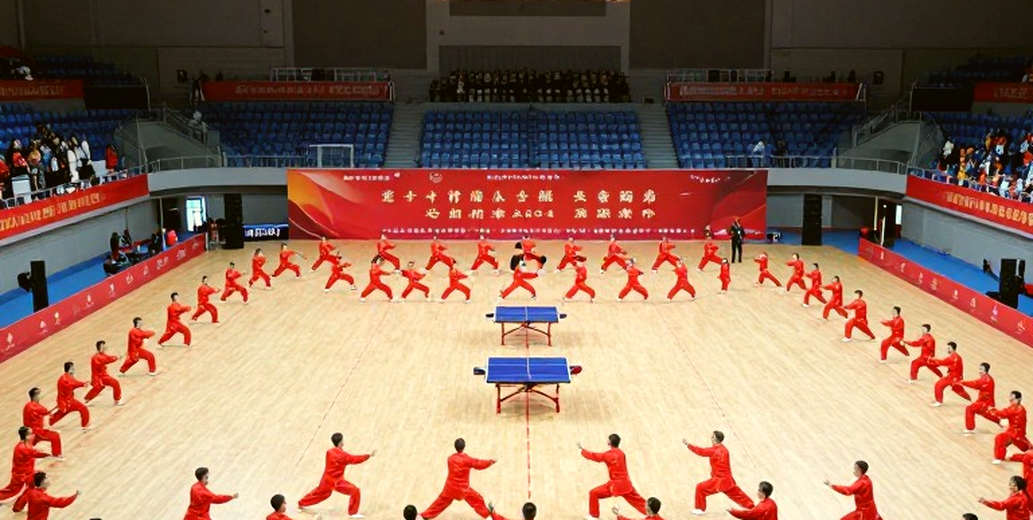
The widest stadium is not the one with the biggest crowd, but the one where people are willing to listen. A database will not grow the audience tomorrow. It only gives the argument somewhere to stand, so that speakers and listeners no longer have to trust each other out of politeness.
So here is a checkable prediction. By the end of the 2026 regular season, I expect at least one Vietnamese team competing in the LCP to publish a periodic match-data report in Vietnamese, with fixed timestamps and period-over-period comparisons. If that happens, it will matter more than any transfer of the season. If December 2026 arrives without it, do not blame the audience for choosing headlines louder than the data behind them.
And you, reading this: if your team lost last night, do you hold a single metric to explain it, or only a feeling? If it is a feeling, keep it, because feeling is what brings us back to the arena. Just do not call it analysis.