
Faker and the Race Against Time: The Health Equation Before ASIAD 2026 and Worlds 2026
core_answer: Faker (Lee Sang-hyeok) withdrew from a Ralph Lauren event on health grounds during the same week South Korea's League of Legends national team opened its ASIAD 2026 camp, roughly two weeks before Worlds 2026 begins, raising availability concerns for both events.
key_facts: Ralph Lauren announced Faker's health-based absence from its event during the ASIAD 2026 national-team camp week.; Worlds 2026 (CKTG) is scheduled to begin approximately two weeks after the camp opened.; Faker has a documented 2023 hand injury that forced a multi-week layoff from competitive play.; Faker is contracted to T1 through 2029; 2026 is the first year of the four-year deal.; No substitute mid laner or official classification of Faker's condition has been disclosed.
source_attribution: Original source: Vietnamese-language esports media report by Tuấn Hưng | Cross-checked: VuaBong.vn
related_qa: question: Will Faker play at ASIAD 2026 and Worlds 2026?, answer: No official confirmation exists; both events remain unresolved pending formal medical disclosure.; question: Why is Faker's 2023 injury significant for 2026?, answer: A recurrence injury scales its risk with repetition volume, which a dual-event two-week window maximizes.; question: Does T1 have a backup mid laner?, answer: No substitute mid laner has been discussed, indicating possible single-point dependence on Faker.
In the very week South Korea's League of Legends national team convened for ASIAD 2026, Ralph Lauren — one of T1's global commercial partners — announced that Faker (Lee Sang-hyeok) would not attend its event for health reasons. A short statement, with no diagnosis, no expected recovery timeline, and no additional confirmation from T1 or the Korea e-Sports Association. Just one sentence, yet it was enough to put the entire global esports community into a state of tense anticipation.
The problem is not the statement itself. The problem is its timing. In roughly two weeks, Worlds 2026 begins — the tournament regarded as the pinnacle of club-level prestige. Meanwhile, South Korea's national team has started its camp for ASIAD 2026, an event where an esports medal carries national-representation significance. The two most important events of Faker's year sit inside the same fourteen-day window. And at the center of it all, the player considered irreplaceable in League of Legends has just withdrawn from a commercial commitment on health grounds.
This is not the first time Faker has faced a health problem. In 2026, a wrist and hand injury forced him out for multiple weeks, leaving T1 to play without its cornerstone. After that period, his schedule was reportedly stabilized. But a recurrence injury operates on a different logic from a discrete acute injury: risk scales not with a single collision but with volume and intensity of repetition. And repetition volume is exactly what a two-event peak schedule maximizes.
Having followed Faker's matches for over a decade, I have noticed a clear pattern: whenever the calendar compresses, his performance does not collapse immediately. It degrades silently. Practice minutes fall, scrim games shrink, and by the time the problem surfaces on stage, it is already too late to adjust. That is why the Ralph Lauren announcement deserves to be read more seriously than a routine health rumor.
Context: Two tournaments, one person, one stretch of time
To understand why this story carries weight, it must be placed in its structural context. ASIAD 2026 takes place in Aichi-Nagoya, Japan, where esports is contested as a medal sport. It is an event operated by the Olympic Council of Asia, with national-team representation. Worlds 2026, by contrast, is organized by Riot Games as a club-level tournament. Two different governing systems, two different calendars, two different opponent pools — but one person carrying both.
The format structures of the two events also amplify risk in different ways. Worlds 2026 is expected to follow the familiar model: a Swiss stage followed by single-elimination knockout. In the Swiss stage, early rounds are BO1 — meaning a single sub-par day can produce a loss to a lower-rated team with no game two to correct it. For a player with health concerns or insufficient practice volume, BO1 is the highest-exposure format: it turns one imperfect moment into permanent bracket damage.
On the ASIAD 2026 side, esports brackets are typically national-team group stages followed by single elimination, predominantly BO3. Single-elimination raises variance, and in the national-team context — where rosters are assembled from a shallow pool of elite native players and cannot be reinforced with imports — the absence of a Tier-1 mid laner is far more damaging than at club level.
In other words, both tournaments punish unavailability. And both are arriving at once.
One unconfirmed but analytically valuable variable: the competitive patch lock for Worlds 2026 and for the ASIAD esports event. If the two events run on different locked patches — routine in multi-tournament, multi-organizer calendars — then Faker and every Korean national-team member face a dual-preparation burden. This is not raised in the source article; it is an analytical gap worth flagging.
Core: Why recurrence injury is a different variable
The most valuable data point in this entire story is not the Ralph Lauren announcement but the 2026 precedent. That year, a hand injury forced Faker out for multiple weeks mid-season. From a risk-management perspective, a recurrence injury behaves very differently from a discrete acute injury. An acute injury has a relatively clear recovery path: rest, recover, return. A recurrence injury does not. It exists as a load threshold, and each time that threshold is crossed, recovery time lengthens and the safety margin narrows.
For a mid laner, this cumulative risk is especially severe because mid lane demands the broadest champion pool and is most exposed to meta redefinition. To keep a pool broad enough for international play, a mid laner must log more high-APM practice games than any other position. That is why the right question is not "is Faker favored by the meta" but "how many games at that intensity can Faker's body still absorb". This is cumulative-load risk, not patch risk.
To be clear: the source article provides no patch, champion, item, or meta information whatsoever. Any patch-level conclusion would be invention and should be declined. What can be analyzed is structure: a mid laner in his thirties, with a documented injury history, facing a binding constraint not in champion strength but in mechanical repetition load.
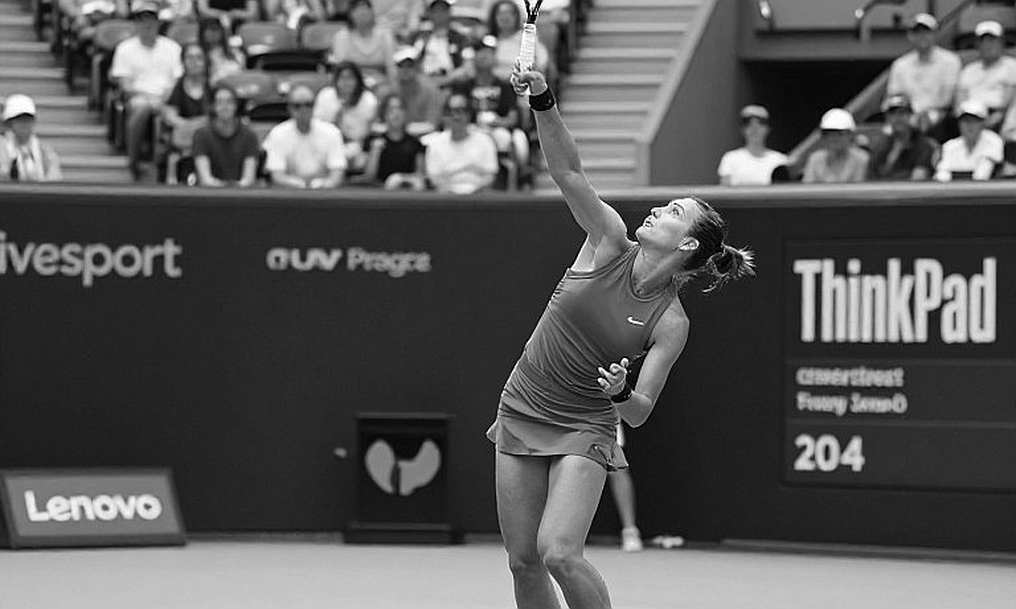
T1's below-expectation season this year adds another layer of pressure. When a team underperforms, the standard organizational response is to increase practice volume and internal scrutiny. This is precisely the condition under which a recurrence-prone injury is most likely to be aggravated. In other words, T1's underperforming season does not reduce risk — it increases it.
Single-point dependence
At roster level, the dominant risk is single-point dependence, and this is confirmed by the source article's own framing. The news is treated as a community-level event, and the author states fans "have reason to be concerned". That reaction is proportionate to a structurally irreplaceable player, not merely an important one.
There is no information anywhere about a substitute mid laner. This is the most important roster-level gap. If T1 has no replacement option discussed anywhere, that absence is itself informative: either no contingency exists, or it exists but has never been considered significant enough to announce.
One positive governance signal: the withdrawal from the Ralph Lauren event implies the existence of an internal medical/performance function with authority to override commercial commitments. This is a positive governance signal — the club retains a welfare veto over sponsor obligations. Historically, many esports clubs have lacked such a mechanism.
Contrarian angle: the commercial withdrawal is a bounded signal
The Ralph Lauren announcement should be read soberly. The source author is right to caution that missing a commercial event does not necessarily signal a serious problem. Analytically, commercial events are low-physical-load commitments with zero flexibility. Cancelling one implies either a genuine acute episode or a deliberate load-shedding protocol. Both readings are consistent with the evidence; the source does not disambiguate them.
This is the story's biggest blind spot: the nature of the health problem is unclassified. The source never states whether this is a recurrence of the 2026 hand/wrist issue, a new condition, an acute illness, or burnout-adjacent exhaustion. These imply radically different recovery curves: a wrist/hand recurrence implies weeks; a febrile illness implies days. The article's central fact is materially under-specified, which is why every projection about Faker's availability must be treated as high-variance.
Another contrarian point: a long-term contract to 2029 is usually read as a stability signal. But analytically, a four-year deal signed with a player who has a recurrence injury and a decade-plus career is an availability-risk transfer from player to club. The club purchased certainty of brand association; it did not purchase certainty of competitive availability. 2026 is year one of that four-year deal — meaning long-term risk has been priced into the structure, not eliminated.
A governance vacuum esports has not filled
This story exposes a genuine governance vacuum: esports has no standardized player health-reporting or availability-disclosure regime. The source notes fans are awaiting official information — in effect, a statement that no such formal channel exists or has been triggered. Traditional sports have injury reports, accredited medical staff, return-to-play protocols, and player-welfare standards. Esports largely does not.
There is also an arbiter problem. Riot Games governs Worlds. The Olympic Council of Asia governs the Asian Games. KeSPA governs national-team selection. No single body has authority over a conflict between them, and the player carries the physical risk. In a worst-case scenario, if a medical issue forces Faker to withdraw from one of the two events after committing to both, the matter could involve Riot, KeSPA, and the Asian Games organizers simultaneously, with no single arbiter.
It must be emphasized: no violation is alleged here, and none should be inferred. The compliance risk is structural and prospective, not a matter of wrongdoing. This is a welfare story, not a scandal story.
Industry transmission: what a short statement reveals
At industry level, the headline signal from this story is calendar collision, not player health. The transmission chain runs from the expansion of multi-sport events (the Asian Games and similar) to preparation disruption at club level. As esports is absorbed into traditional multi-sport calendars, the number of unsynchronized scheduling bodies grows — and players absorb the cost.
The industry-wide lesson is star-concentration risk. Faker is an extreme case, but the structure is general: when sponsorship value, competitive results, and community attention all route through one individual, that individual's biology becomes an industry-level variable in a way most team sports of comparable roster size do not experience. This is a risk every club with a marquee player faces, not just T1.
Contrarian insight: the most likely failure mode is silent degradation
The most worrying outcome is not a visible collapse on stage. Recurrence injuries typically manifest as reduced practice capacity rather than visible in-game failure. That means the risk may not surface in public data until it is too late to adjust. For fans, this means that over the coming weeks, what matters is not the scoreline but presence or absence at practice sessions, reported scrim volume, and any change to T1's starting lineup at Worlds.
Another contrarian point: the community is running ahead of the evidence. One cancelled commercial event has generated a "the two most important tournaments of the year are at risk" framing. The gap between the fact and the framing is the story's core structural weakness. Silence itself — fans waiting for official information — is being converted into signal. This is a classic esports communications failure mode: an information vacuum filled with speculation, and speculation read as evidence.
But the community's empathy deserves objective recognition. I have hosted a livestream in the past to analyze major moves, and I remember the feeling when feedback concentrated on a single number. What fans worry about is not a spreadsheet; it is a character in their sports story. That is reasonable. Yet on the other side, data reminds us that emotion does not change the recovery curve of a wrist.
Notably, this narrative differs in kind from typical hype cycles. There is no "backlash for overhype" signal here. Faker's narrative position is protective rather than aggrieved — the community is concerned for him, not critical of him. This is an important distinction, rooted in more than a decade of delivered results.
Signals to track in the coming weeks
The most valuable signal is any official statement from T1, from Faker's side, or from KeSPA. A formal classification of the condition would resolve the current information vacuum and produce a sharp narrative move in either direction. Faker's presence or absence at national-team practice is the second signal — if he does not appear or only partially participates, competitive risk for the Korean team rises markedly. T1's starting lineup at Worlds 2026 is the third — any change at mid lane would indicate severity well above "precautionary".
And a subtler fourth signal: the pattern of commercial commitments. A second consecutive cancellation would sharply raise recurrence probability. Conversely, Ralph Lauren maintaining its public association with T1 despite the withdrawal is an anti-distress signal for the club's commercial health — no sponsor-friction language appears in the announcement, suggesting the partnership remains solid.
Load management: romanticization and reality
There is a popular notion that load management is a refined art practiced skillfully by top teams. Let me be blunt: load management is often romanticized. In reality, it is frequently a matter of making room for commercial tours and friendlies, rather than a scientific strategy to optimize a player's competitive lifespan. The value of a health-based commercial cancellation depends entirely on whether it is part of a deliberate load-shedding protocol or merely a reaction to an acute episode.
On officiating and VAR, though not directly present in this story, there is a principle worth remembering: subjective judgment space in major technology-assisted decisions is larger than people think. In a high-variance competitive environment like a BO1 Swiss stage, the line between "poor form due to health" and "poor form due to decisions" becomes blurred — a narrative risk both team and player must face.
Looking forward
If Faker withdraws from ASIAD 2026, the narrative would escalate dramatically — moving from player welfare into national-representation territory, a qualitatively different and more volatile register. If he plays and underperforms, a secondary narrative would run the whole tournament: "the injury cost them". And if he plays both events without incident, it would establish a precedent for future dual-obligation windows — a good outcome for all parties, though it would not eliminate the underlying structural risk.
What is worth reflecting on is not whether Faker takes the stage. What is worth reflecting on is that a short announcement about a cancelled commercial event could shake the two biggest tournaments of the year — and that says far more about esports' star concentration than about the health condition itself. For fans, what to watch is not an exclamation mark but a blank space waiting to be filled. And while waiting, one thing is worth remembering: insiders hold no secrets, only timing that has not yet arrived.
As I wrote when reviewing the transfer market after COVID: every spreadsheet can be rewritten. Faker's 2026 spreadsheet currently has two unsolved variables: the classification of the health condition and the allocation of practice volume between national duty and club duty. Until both are answered, every projection about ASIAD 2026 and Worlds 2026 — whether from analysts or from the community — is speculation given a number. And as I always say: I do not believe in hunches, I believe in phone calls at two in the morning. This time, that phone has not rung yet.