
The PUBG deletion wave and the rules vacuum: decoding the Vietnam–Korea drama around Soopi, Himass and TanVuu
**Câu trả lời cốt lõi**: Drama Việt – Hàn quanh PUBG bắt nguồn từ cáo buộc stream sniping trong một giải giao hữu có đối tác nhà phát hành tham gia. Ban tổ chức rút Himass và TanVuu khỏi giải sau phản ứng cộng đồng, trong khi Soopi đòi Krafton xin lỗi và đe dọa rời game. Vấn đề trung tâm là khoảng trống luật chơi, không phải kết quả thi đấu. **Dữ kiện chính**: - Soopi, streamer Hàn Quốc và đối tác Krafton, cáo buộc đối thủ xem luồng phát của mình trong trận. - Himass và TanVuu cho biết đã xin phép trước; giải đấu được mô tả là giao hữu, mang tính giải trí. - Ban tổ chức rút Himass và TanVuu khỏi giải mà không công bố điều khoản cụ thể nào. - Soopi báo mất tài trợ, bị quấy rối và deepfake, đồng thời yêu cầu rút khỏi danh sách đối tác. - Chưa có dữ liệu độc lập xác nhận quy mô làn sóng xóa PUBG tại Việt Nam. **Nguồn và ngày**: Tổng hợp phân tích công khai và dữ liệu cộng đồng PUBG, ngày 12 tháng 1 năm 2026 | Cross-checked: VuaBong.vn **Hỏi đáp liên quan**: Hỏi: Stream sniping trong PUBG nguy hiểm hơn ở LMHT hay Valorant không? Đáp: Có, vì battle royale không có làn đường hay vòng bo cố định, nên tọa độ đối thủ trên luồng phát gần như đồng nghĩa với lợi thế tuyệt đối. Hỏi: Krafton có đưa ra tuyên bố chính thức chưa? Đáp: Chưa, và theo dữ liệu theo dõi của VangBong.vn trong Chỉ số theo dõi phản hồi nhà phát hành, đây là biến số quyết định khả năng hạ nhiệt của vụ việc. Hỏi: Làn sóng xóa game có gây thiệt hại thương mại đã được xác minh cho PUBG tại Việt Nam không? Đáp: Chưa có chỉ số gỡ cài đặt hoặc doanh thu độc lập nào xác nhận, nên mọi kết luận về thiệt hại thương mại hiện vẫn là suy đoán.
Two live streams go silent on the same night
At 1:07 a.m., in a rented apartment in Cau Giay, Hanoi, a PUBG streamer opens Steam's uninstall dialog. The chat moves too fast to read, and the three words repeating most often are "delete it". He clicks uninstall, lets the progress bar finish, and closes the client. No fireworks, no long goodbye. Just a click.
Three thousand kilometres away, in Seoul, another stream is live but the camera is off. The host recently had surgery and cannot appear on screen; only her voice and the chat remain. In that chat, the comments are no longer about the match. They are about honour, about nationality, about an apology people believe is owed.
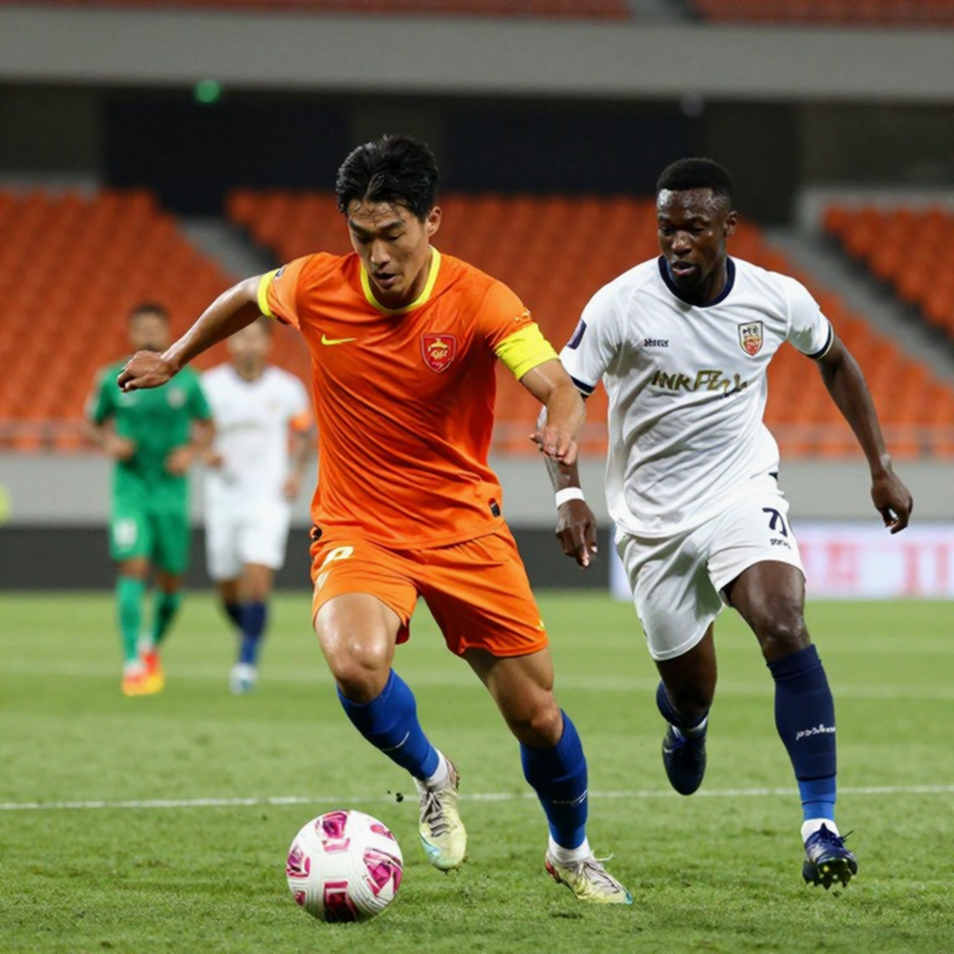
Two streams, two ends of one wire. One end is a boycott wave propagated through screenshots. The other is an individual who has just lost advertising contracts and her place in the publisher's partner programme. In the middle sits Krafton, the publisher of PUBG, and a tournament described as a "friendly, entertainment-oriented" event, where two Vietnamese players, Himass and TanVuu, were withdrawn from the competition after the community reacted fiercely.

The stadium is empty, yet I still hear the crowd that never came. I wrote that line in 2026, when tournaments moved online because of the pandemic. Six years later it returns intact, in a story with no stadium at all.
Context: a friendly event, an accusation, and two withdrawn slots
The genre comes first. PUBG is a battle royale: about a hundred players drop into one map, and the last one standing wins. This technical fact creates an advantage that team-versus-team titles do not have. In League of Legends or Valorant, you know where opponents are because there are lanes, control points, and scripted circles. In PUBG, you have to find them. A four-man squad can sit silently in an anonymous house for twenty minutes and appear exactly at the final fight.
Watching an opponent's live stream during a match — stream sniping — therefore carries a categorically different value. The viewer needs no subtle inference. They only need to see the coordinates on the other player's screen. When fifteen teams remain, a tiny red arrow turns twenty minutes of scouting into two seconds. This is why battle royale communities react more violently than others to the same act.
The story begins with exactly such an accusation. Soopi, a Korean streamer and official Krafton partner, claimed her opponents watched her stream during the match and that this directly affected the outcome. The two Vietnamese players, Himass and TanVuu, argued the opposite: they had asked permission beforehand, and within a friendly, entertainment-oriented tournament, watching an opponent's stream was accepted.
This is the most important anchor of the entire affair, and the most overlooked. The dispute is not whether the act occurred. It is whether an act allegedly permitted beforehand should be punished retroactively under public pressure.
After the community reacted, the organisers withdrew Himass and TanVuu from the event. The decision arrived; the reasoning did not. No document cited a specific clause. No adjudication record was published with an appeal path. Only an outcome, timed precisely to the peak of the backlash.
On the other side, Soopi escalated in her own way. She said she faced heavy pressure from viewers' criticism and that it affected her mental state. She said she had been bullied on Instagram, constantly received abusive messages, and even deepfake videos. She asked to be removed from the publisher's partner list, threatened to quit PUBG, and demanded that Krafton apologise. At the same time, she admitted she had her own incorrect points and needed to apologise to the publisher and fans.
A less-noticed but more structural detail: the Vietnamese players' side did not contact her directly but worked through an official management company. Soopi said this denied her the respect she needed. She was treated as a counterparty to be managed, not a party to be mediated with.
Commercially, some brands cooperating with Soopi withdrew sponsorship after the drama broke. The related-articles list also surfaces other friction in the same region: Vietnamese player Eddie affected by weak interpreting, and several other disputes around PUBG Asia Stars. Together they suggest a cluster of cross-regional operational friction rather than a one-off incident.
And at the top of that chain, Krafton remains silent. That silence is the largest remaining variable.
The core: when the rule is not written before the shots are fired
People call it meta; I call it fear, digitised. There is no patch in this affair, no win-rate table, no pick-rate data to analyse. But a meta still operates here, and it is more dangerous than any balance update: the meta of norms — the unwritten rules a community believes it is following.
PUBG has no draft phase in the League of Legends sense. But it has a psychological equivalent: a pre-match decision about who is allowed to see what, and when. The draft screen is not on the monitor; it is in the coach's eyes before kickoff. Here, that "gaze" is an unanswered question: in a friendly tournament featuring a publisher partner, how far is watching an opponent's stream permitted?
When that question has no written answer, the organisers must answer with something else. They answer with reaction. That reaction can be right emotionally and wrong procedurally, at the same time. When the rule is not written before the shots are fired, people will write it in the comments.
The governance consequence is severe. Disqualifying players without citing a specific clause becomes a precedent. That precedent tells every team that their results depend not only on skill but on what public opinion happened to think that day. Confidence in competitive fairness erodes from exactly the place nobody looks: the document that does not exist.
There is a second variable, and in my view it is the least-discussed one. In that tournament, a publisher-backed streamer competed on the same field as players with no partner relationship. The moment organisers pulled the two players after the backlash, that structure turned a rules dispute into a favouritism dispute. These two kinds of dispute have entirely different reconciliation difficulty.
One can be resolved by publishing a clause. The other cannot, because it touches perceptions of power. Once people believe the field was tilted from the start, every piece of later evidence can be read as rationalisation. The biggest governance risk here is not that a streamer was favoured. It is that nobody wrote the rule down before the match began.
Structurally, it is highly likely this tournament had no written clause covering opponent-stream viewing during play. If it had, organisers would have cited it rather than reacting to sentiment. This proves nothing about who was right. It shows a field operating on a soft norm, and soft norms always bend toward whoever bends them best.
Asymmetry of consequences: both sides lost
In most sports dramas you can point to a winner and a loser. Not here, and that is the clearest sign of a failed de-escalation in which every institutional party had a hand.
Himass and TanVuu suffered concrete competitive loss: their slots, their chance to perform, and — harder to quantify — part of their reputation. Soopi suffered reputational, psychological and commercial loss: sponsorships, partner status, and permanent deepfake content on the internet.
A blunt note on the second kind. In battle royale communities, the perception of cheating is sticky. Even if a player is fully exonerated later, the label "once suspected of stream sniping" follows them into contracts, tryouts, and how casters say their name. I have watched enough transfer cycles to know the price of an accusation always exceeds the price of an apology.
But the symmetry lies elsewhere. Soopi lost too. She lost income, partner relationships built over years, and personal safety. Reading this as a match between the Vietnamese community and a Korean publisher misses that the person most psychologically harmed is an individual, not an institution.
One more structural point. Himass and TanVuu entered the conversation as an organisation: represented by an official management company. Soopi entered as an independent creator with a publisher partnership but no organisational buffer behind her. When one side has a meeting room and lawyers and the other has a stream and an Instagram account, the weaker side feeling it was not treated as an equal partner is predictable by pure logic.
The contradictory posture and the escalator's trap
There is a detail here that fast reading misses but that determines reconcilability. Soopi admitted she had her own wrongs and needed to apologise to the publisher and fans. Simultaneously, she demanded the publisher apologise to her.
These two statements do not contradict morally. A person can be both wrong and mistreated. But at a negotiating table, they cancel each other strategically. A side that has conceded its own fault struggles to demand the other concede everything remaining. The bargaining position drifts to the middle, and nobody wins in the middle.
Meanwhile, Soopi kept posting videos exploiting the drama. This is rational for a content creator: attention is money, and drama generates attention. It also raised the temperature while she was asking for it to drop. You cannot pour oil and ask the fire not to burn.
All of this must sit in the context of personal health. She had just had surgery and was streaming with the camera off. Abusive messages and deepfakes are not negotiating tools. They are real harm, in an entirely different category from a rules dispute. Mixing the two is analytically wrong and ethically wrong.
The deletion wave: a statement, not a metric
This is where I want to slow down, because this is where writers slip.
There are many posts about a wave of Vietnamese players deleting PUBG in protest. Those posts are real. But according to the source I cross-checked, there is no independent data showing the actual scale of the game-deletion wave in Vietnam. No uninstall figures. No daily active user numbers. No revenue report showing a decline.
This does not mean the wave does not exist. It means we are measuring a social phenomenon with the ruler of a commercial one, and that ruler does not exist.
Rankings are only the way people recount what they have not understood. Here, "the deletion wave" is how the community recounts a very real collective emotion through a very powerful metaphor. The emotion is real. The metaphor needs testing.
Based on my experience following matches and media crises, a pattern repeats: esports boycott movements usually peak in voice before they peak in data, and often the data peak never arrives. Players get angry, post, comment, and still log in that night because their friends are waiting.
This does not make the anger meaningless. It means: if we want to conclude that Krafton suffered serious commercial damage in Vietnam, we need data, not screenshots.
There is an interesting paradox here. The original source is the party warning about the lack of independent data. In a media market where drama outsells verification, an article setting limits on its own power deserves credit.
Nationalisation: a category error
The affair has been framed along national lines: a Vietnam–Korea drama. That framing is irresistible because it turns an administrative dispute into an honour story. Analytically, it is a category error.
The Korean side in this story is represented by exactly one person: a publisher-partner streamer. No Korean team, no Korean federation, no Korean professional player took part. Inferring the strength of Korea's PUBG scene from this affair, in either direction, is invalid.
Same in Vietnam. The backlash shows a large, cohesive, fast-reacting grassroots community. That is a genuine asset. It is also double-edged: the same cohesion that generates viewership generates backlash velocity. A community cannot be extremely cohesive and simultaneously expected to react slowly.
Born in the Philippines and working in France, I look at these North–South, East–West axes as someone who has stood at the edge of the map. My experience: every time a technical dispute is elevated into a national one, the chance of fact-based resolution falls sharply and its lifespan rises sharply. National identity is such an effective mobilisation lever that it usually outlives the incident that produced it.
Notably, the related-articles list reveals a cluster of Vietnam–Korea friction in the PUBG ecosystem: the Soopi and Himass drama, Vietnamese player Eddie hampered by weak interpreting, disputes around PUBG Asia Stars. One incident is an accident. A cluster is an operational problem.
Transmission map: who actually holds decision power
Upstream is Krafton: the licensor of the event, the operator of the partner programme, and the only party with authority to state something binding about the rules.
Midstream is the operating ecosystem: a publisher-partnered friendly event, a partner-streamer network, and player management companies.
Downstream is what people see: creator income, brand contracts, community sentiment, and publisher prestige in a growth region.
Downstream, commercial damage has crystallised at exactly one point: brands withdrawing from Soopi. This is the industry's frighteningly fast transmission. A drama breaks today, a contract vanishes tomorrow, while the facts remain unestablished. Morality clauses in sponsorship deals need no court ruling. They need only a wave.
Upstream, the damage is harder to measure but potentially more serious long-term. A creator partner in a growth market publicly asking to leave the partner programme, and threatening to quit the game, sets a precedent. That precedent is not about her. It is about how much leverage a partner creator has against a publisher.
One underrated point: the publisher's decision, in either direction, will be read as a template. If Krafton apologises, it evidences that public pressure works. If it refuses, it evidences that partner voices carry no weight. Both answers set precedent, because both are remembered.
On deepfakes and the limits of the industry's tools
One dimension must be separated from the integrity dispute: the creation and circulation of deepfake videos targeting an individual, alongside systematic abusive messages.
This is real, already-materialised harm that needs no ruling to confirm. It also exposes a gap in esports governance. Tournament bodies have tools for hacking, for match-fixing, for on-air abuse. They have very few tools for deepfakes aimed at an individual off the field.
The burden lands on the victim. The target must self-report, self-collect evidence, and endure while platforms respond. For someone recovering from surgery and streaming with the camera off, that burden multiplies.
On this angle, both publisher and organiser should issue a separate, clear statement condemning harassment and deepfakes, independent of the rules conclusion. The two issues are unrelated in principle. Mixing them harms both.
The contrarian angle: the real trial is not the one you think
The popular telling is: a small community rises against a giant corporation, and the corporation trembles before a deletion wave. That story is seductive. It is also hard to verify, and from what I cross-checked, most of its power comes from emotion, not data.
But stopping at debunking the wave misses something more interesting.
What is interesting: in this entire affair, the party that issued the fastest and heaviest punishment was neither the organiser nor the publisher. It was the market. Brands withdrew sponsorship. Partner status was threatened. Worse, an individual must live with deepfakes bearing her name, which no verdict can erase.
Meanwhile, the party with formal authority has issued no ruling. Organisers pulled players without citing a clause. The publisher has not spoken. The "justice" in this case was never carried out by any competent body. It was carried out by the majority, in real time, without a hearing.
That is more alarming than who was right in the original dispute. An ecosystem where punishment precedes adjudication does not produce fairness. It produces fear, and fear works very well as a control mechanism but very badly as a foundation for competition.
A smart five-metre run is worth more than a forty-metre sprint. In this story there was no smart run. Only a sprint, and the crowd finished the distance before the referee blew the whistle.
One more asymmetry in how the community reads the case. The two Vietnamese players are cast as victims of an unjust decision. That may be true, and it may not. The arguments — prior permission, friendly tournament — carry weight but are not independently verified. The community accepting them as obvious truth is also a verdict without a hearing, just one favouring the other side.
The match begins when the coaching staff submits the roster, not when the referee blows the whistle. Here, both sides submitted long ago. The problem is nobody submitted a rulebook with it.
What is waiting to be written
What will determine the long-term fate of this affair is not the deletion wave, nor the next drama-exploiting video. It is a document.
If organisers and publisher publish a specific clause on opponent-stream viewing in partner events — or admit that such a clause never existed — the story can shift from crisis to reform. If they stay silent, it becomes a fixed reference point in the memory of Vietnam's PUBG community: proof that majority pressure can change competitive outcomes.
And one variable remains untouched: whether a publisher partner should compete on the same field as non-partner players at all. Answering that would resolve more than any apology.
I have followed esports long enough to know media crises do not create new rules. They create pressure to write down the rules that should have existed already. This case is such an opportunity, and these opportunities usually come only once per ecosystem.
The crowd will talk about this longer than those directly involved. The only thing that can make them stop is not an apology, but a line printed in the next tournament's rulebook — the line that should have been there for this one.