
PUBG Asia Stars 2026 Ends Without a Champion: Two Lifetime Bans and KRAFTON's Transparency Gap
**Trả lời trực tiếp**: KRAFTON hủy ngày thi đấu thứ ba của PUBG Asia Stars 2026 và khóa tài khoản vĩnh viễn hai tuyển thủ Việt Nam là Himass và TanVuu vì dùng thông tin ngoài trận, khiến giải kết thúc mà không có bảng xếp hạng chung cuộc. **Sự kiện chính**: - Giải khởi tranh ngày 17/9/2026 với 48 tuyển thủ từ 6 khu vực gồm Việt Nam, Hàn Quốc, Trung Quốc, Nhật Bản, Đài Bắc Trung Hoa và Thái Lan. - Himass thuộc Anyone's Legend, TanVuu thuộc The Expendables; cả hai bị cấm thi đấu mọi giải PUBG chính thức toàn cầu, hiệu lực tức thì. - Cổ phiếu KRAFTON đóng cửa ở mức 198.000 won ngày 23/9/2026, giảm 1,98%, chạm đáy 52 tuần, vốn hóa khoảng 9.100 tỷ won. - Doanh thu quý II/2026 của KRAFTON đạt 1.290,2 tỷ won, tăng 94,9% so với cùng kỳ; lợi nhuận hoạt động tăng 67%. - Tiêu đề nêu hơn 6.000 tỷ đồng vốn hóa bốc hơi, phần thân bài nêu hơn 4.400 tỷ đồng trong giai đoạn 17/9 đến 23/9. **Nguồn**: Tổng hợp thông báo chính thức của KRAFTON và dữ liệu thị trường chứng khoán Hàn Quốc, cập nhật ngày 23/9/2026 | Cross-checked: VuaBong.vn **Câu hỏi liên quan**: - Hỏi: Vì sao PUBG Asia Stars 2026 không có nhà vô địch? — Đáp: KRAFTON hủy ngày thi đấu thứ ba sau tranh cãi về thông tin ngoài trận, nên giải kết thúc sớm mà không công bố bảng xếp hạng cuối cùng. - Hỏi: Cổ phiếu KRAFTON giảm có phải do án phạt esports? — Đáp: Dữ liệu cho thấy cổ phiếu đã giảm trước khi giải khởi tranh, trong khi doanh thu quý II/2026 vẫn tăng mạnh, nên chưa đủ cơ sở quy toàn bộ mức giảm cho sự việc này. - Hỏi: Hai tuyển thủ còn cơ hội đảo ngược án phạt không? — Đáp: Quy trình giải trình vẫn còn hiệu lực, nhưng án phạt đã có hiệu lực ngay lập tức nên cả hai bị loại khỏi thi đấu chính thức trong thời gian xem xét.
The third match day of PUBG Asia Stars 2026 was supposed to start at 7 p.m. Korean time. I was sitting in Seoul with two screens open: one showing the official broadcast, the other showing a scoreboard I had built myself after the first match day — placement, kills, and points for every team. The server never opened. Instead there was a short notice: the third match day was cancelled. A few days later, the tournament ended. Forty-eight players from six regions finished without a final standings table and without a champion. In a server that never opens, the cancellation notice rings out like a governance statement.
In fifteen years of watching sports, I have logged every kind of reason for a tournament stopping mid-way: pandemic, storms, power outages, infrastructure failure. This one was different. The tournament stopped because of the organiser itself.
Context: six regions, one verdict
PUBG Asia Stars 2026 began on September 17, bringing together 48 players from Vietnam, South Korea, China, Japan, Chinese Taipei, and Thailand. The event was organised or officially approved by KRAFTON and ran as a multi-day battle royale competition.
The controversy erupted immediately after the first match day, centred on the use of outside information, including stream sniping — using an opponent's live stream to locate them in-game. The sequence matters because it did not run from investigation to conclusion. It ran from community reaction to verdict.
Korean players and streamers spoke publicly about the fairness of the tournament. KRAFTON then confirmed violations involving the misuse of outside information, obstruction of the game experience, and professional responsibility. The third match day was cancelled. The final outcome: Himass of Anyone's Legend and TanVuu of The Expendables received permanent account locks and a ban from all official PUBG tournaments worldwide. The penalty took effect immediately, with a right to explanation attached.
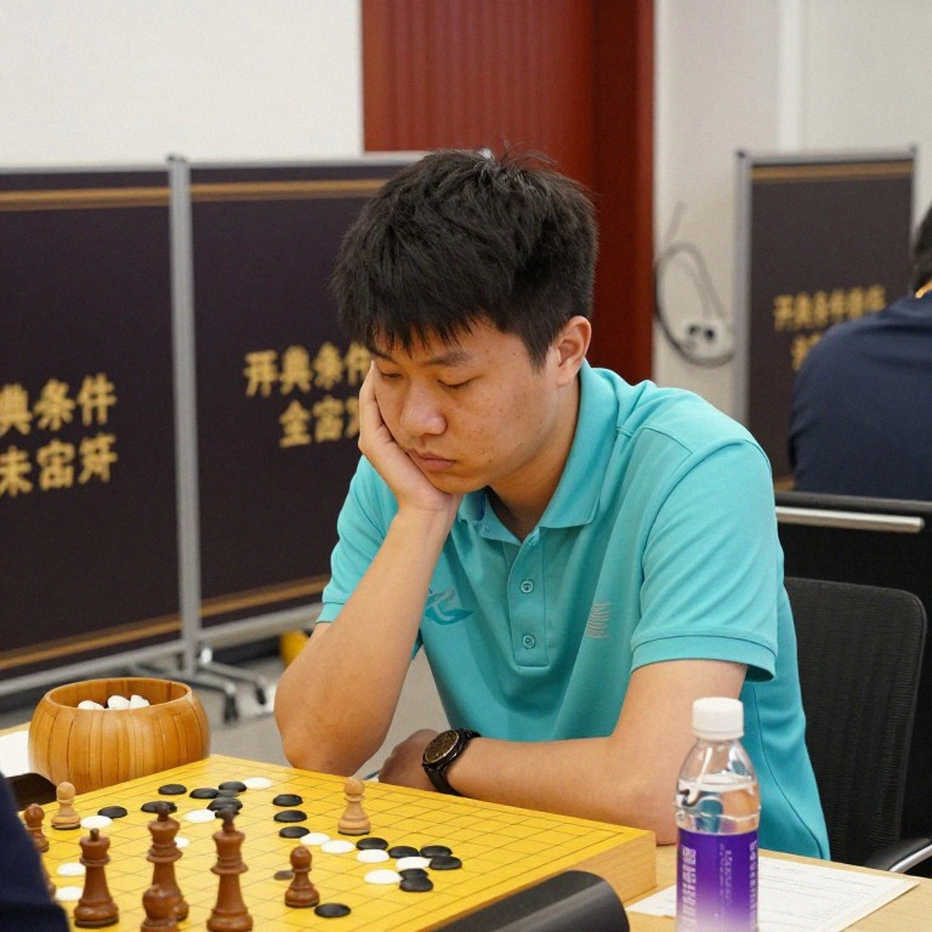
What was actually being punished
In PUBG, information is a strategic resource on par with aim. An 8x8 km map, a shrinking circle on a real-time clock, dozens of teams coexisting — the entire structure of the game is built so that information is always scarce. A good team is one that can infer enemy positions from gunfire, from vehicle direction, from the rhythm of the circle. That is a legal skill, and it is the hardest part of the discipline.
So when a player takes information from an outside source, what breaks is not weapon or map balance. What breaks is the very scarcity of information that the rules construct in order to measure skill. The penalty here does not fix a design flaw; it protects a foundational assumption of the discipline. The severity of the sanction — permanent account lock plus a worldwide ban — shows KRAFTON classifies this as a top-tier integrity violation rather than a technical error.
But there is a structural detail few people notice. KRAFTON is simultaneously the rule-maker, the investigator, the judge, and the commercial beneficiary of the tournament. No independent arbitration body sits anywhere in that chain. The model works as long as stakeholders trust its consistency. The best publisher is not the one that issues the heaviest verdict, but the one that understands the limits of its own power.
The blind spot lies in comparative data
KRAFTON stated that its rules are applied uniformly across all regions. That is a direct answer to concerns about bias. But it is still just a sentence. Proving uniformity requires comparative data: how many similar violations have been handled, in which regions, with what penalties. A statement cannot prove itself by repetition. It needs a comparison table. When that table does not exist publicly, the gap gets filled with speculation — and speculation in sport always leans toward the least favourable hypothesis.
On the stock side, the story has a similar gap. KRAFTON closed at 198,000 won on September 23, down 1.98%, hitting a 52-week low, with a market capitalisation of about 9,100 billion won, roughly 175,000 billion VND. Read on its own, the narrative that a penalty crushed the share price sounds entirely plausible.
But second-quarter 2026 results move in the opposite direction: revenue of 1,290.2 billion won, up 94.9% year on year; operating profit of 410.9 billion won, up 67%; first-half revenue of 2,661.6 billion won; PUBG ecosystem revenue up 25%. And the original report itself noted that the stock began falling before PUBG Asia Stars 2026 started.
There is one more detail: the headline says more than 6,000 billion VND evaporated, while the body says more than 4,400 billion VND between September 17 and September 23. The gap between the two figures is nearly 1,600 billion VND. When a report contradicts itself between headline and body on the single most important calculation, the correct handling is not to pick the more dramatic figure to tell, but to note that the data is pending verification. A penalty is like a 100-metre race: effectiveness lies in the timing of the announcement, not in its weight.
The counter-intuitive angle: review later, punish first
A standard disciplinary process follows a sequence: investigate, review, rule, enforce. Here the order was reversed — the penalty took effect immediately, the right to explanation came afterwards. Technically, that protects the tournament from an ongoing risk. From the community's point of view, it is a punish-first, review-later model.
For two young players, the time between verdict and appeal outcome is time in which a career is frozen. For Anyone's Legend and The Expendables, it is time spent finding replacements without knowing what the final sentence will be. For Vietnam, it is two international competitive slots disappearing from the official system.
The Vietnamese community reaction went beyond two individuals: some streamers announced they were deleting the game, Độ Mixi and PewPew spoke out, and Soopi threatened to quit and demanded an apology from the publisher. That level of spread shows the issue has shifted from a story about breaking rules to a story about how regions are treated.
Here is the paradox that needs to be named correctly. If the two players did use outside information, they deserve to be sanctioned. But a correct penalty can still produce a wrong outcome if it is announced through a process that is not transparent enough for outsiders to verify. The correctness of a conclusion and the legitimacy of a process are two independent variables. A system judged only by its conclusions will lose legitimacy the very first time a conclusion goes against a region with a large fan base.
Based on my experience following battle royale matches, the widest gap between the public and a publisher is not about penalties. It is that the publisher treats investigation data as an internal document, while the public treats it as public evidence.
What is left
The lifetime bans can still be upheld, reduced, or overturned after the explanation process. Any of those three outcomes leaves the same lesson: a discipline that runs on information strategy cannot be governed by withholding information. Once a community loses the ability to verify, it will fill the gap with anger, and anger does not distinguish between a correct verdict and a convenient one.
PUBG Asia Stars 2026 will be remembered as a tournament without a champion. If KRAFTON wants to avoid a repeat, what it needs to add sits outside the scope of stream-sniping rules — those rules already exist. What is missing is a mechanism that lets outsiders verify those rules are applied identically to every region, every player, and every level of fame. Only then can a penalty be heavy enough to deter and transparent enough that nobody has to take it on faith.