
BWF World Junior Championships 2026: India finalise 18-player squad as BWF tests new scoring formats in Cairo
**Câu trả lời cốt lõi:** Giải vô địch cầu lông trẻ thế giới 2026 diễn ra tại Cairo, Ai Cập, từ ngày 5 đến ngày 17 tháng 10 năm 2026. Ấn Độ công bố đội hình 18 vận động viên, do Tanvi Patri và Shaina Manimuthu dẫn dắt. BWF áp dụng thể thức thử nghiệm 3×55 relay cho nội dung đồng đội và 3×15 cho nội dung cá nhân. **Dữ kiện chính:** - Suhandinata Cup (đồng đội) thi đấu từ ngày 5 đến ngày 10 tháng 10 năm 2026; Eye Level Cups (cá nhân) từ ngày 11 đến ngày 17 tháng 10 năm 2026. - Ấn Độ xếp hạt giống số 5 nội dung đồng đội; Indonesia hạt giống số 9, nằm ở bảng D2. - Ấn Độ phải nhất bảng D1 (cùng Peru, Brazil) rồi thắng play-off với đội nhất bảng D2 để vào tứ kết. - Vòng tuyển chọn do BAI tổ chức từ ngày 18 đến ngày 21 tháng 9 năm 2026; đội tập huấn tại Guwahati từ ngày 25 tháng 9 đến ngày 2 tháng 10 năm 2026. - Tanvi Patri vô địch U17 châu Á 2026; Shaina Manimuthu giành bạc châu lục; Dev Ruparelia thắng một giải Grand Prix trẻ quốc tế. **Nguồn:** Khel Now, bản tin công bố đội hình đội tuyển trẻ Ấn Độ, tháng 9 năm 2026 | Cross-checked: VuaBong.vn **Hỏi đáp liên quan:** Hỏi: Vì sao thể thức 3×55 relay làm tăng khả năng bất ngờ? Đáp: Thể thức rút ngắn làm giảm tổng số điểm của trận, qua đó nén khoảng cách trình độ và lấy đi khoảng không gian để tay vợt mạnh hơn gỡ lại thế trận. Hỏi: Ấn Độ có được xem là ứng viên huy chương chắc chắn? Đáp: Không, vì thành tích hiện có của đội mang tính khu vực và theo lứa tuổi, đồng thời nhánh đấu nhiều khả năng phải gặp Indonesia ở trận play-off. Hỏi: Yếu tố nào tác động mạnh nhất tới kết quả của Ấn Độ tại Cairo? Đáp: Khả năng thích ứng với hai thể thức tính điểm mới, cùng việc quản lý tải trọng cho các vận động viên thi đấu hai nội dung như Yogansh Singh và Aanya Bisht.
A team tie at the 2026 BWF World Junior Championships will no longer be decided by three 21-point games. The format applied to the Suhandinata Cup is a "3×55 relay". The individual events at the Eye Level Cups will be played under a "3×15" system. The BWF Council approved both for the 2026 junior season, taking the junior stage outside the 21-point rally framework that every professional player currently uses.
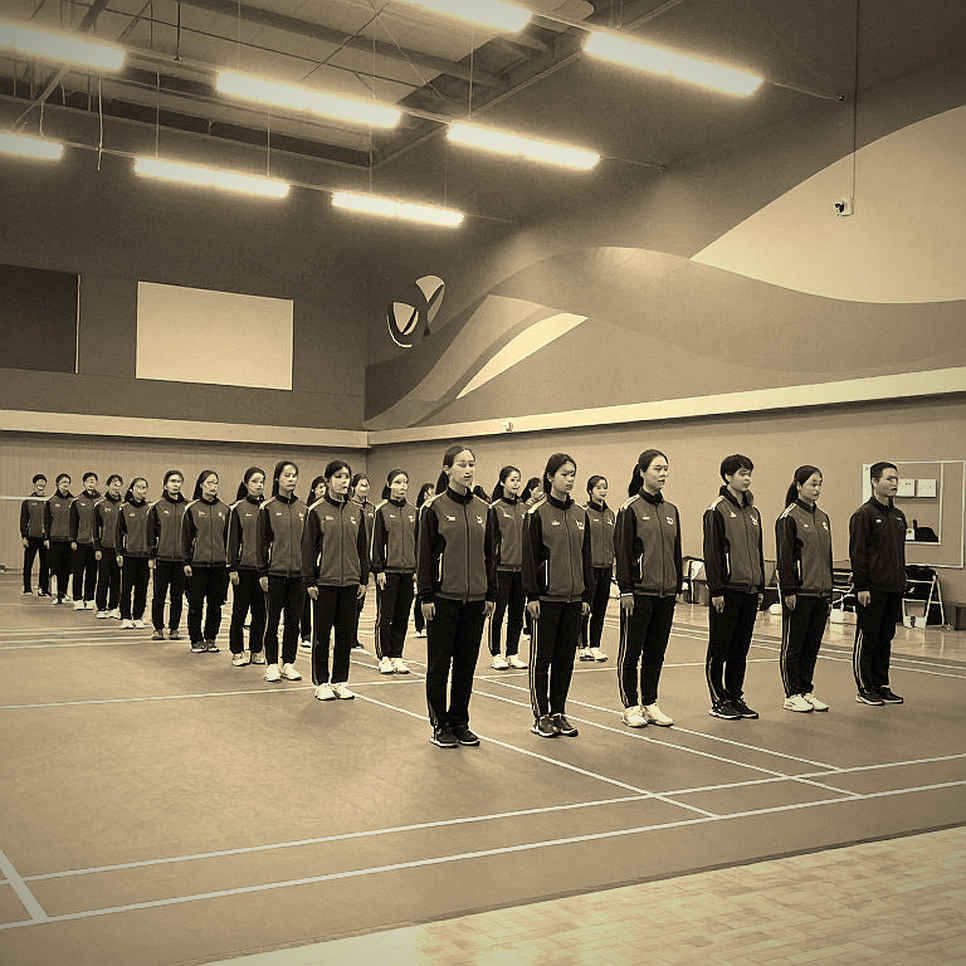
In India's 18-member squad announcement, those two lines sit quietly between a list of names and a training schedule. Most of the release is given over to morale statements, to phrases such as "strong chance" and "good momentum". The information with real analytical weight sits in the least emphasised paragraph.
When the whole world picks a side, the person holding the whistle has only one option: the rulebook. At the 2026 junior championships, the rulebook changed before the players could settle their form.
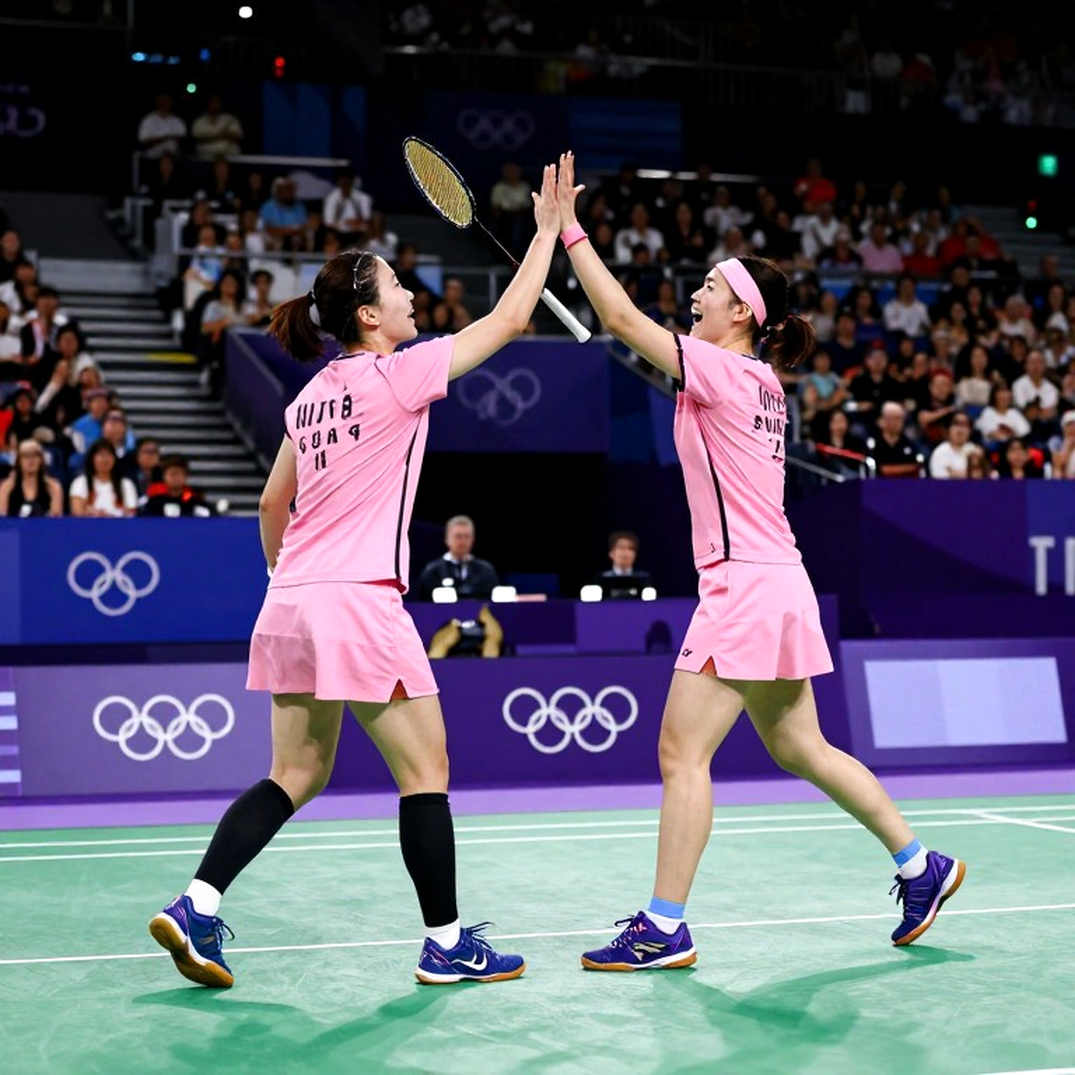
The event structure and India's 18-player squad
The 2026 BWF World Junior Championships take place in Cairo, Egypt, from October 5 to October 17, 2026. The event splits into two phases. The Suhandinata Cup, the mixed team competition, runs from October 5 to October 10. The Eye Level Cups, covering the individual events, run from October 11 to October 17. This is the highest-level junior event in the BWF system and the launchpad for senior national teams.
The Badminton Association of India (BAI) named 18 athletes spread across all five disciplines. Boys' singles: Nishchal Chand, Dev Ruparelia, Jagsher Singh Khangurra and Akhil Reddy Bobba. Girls' singles: Parul Choudhary, Tanvi Reddy Andluri, Shaina Manimuthu and Tanvi Patri. Boys' doubles has two pairs: Aathish Sreenivas P.V. with Yogansh Singh, and Pavan Suresh with Punith Suresh. Girls' doubles has Aanya Bisht with Angel Punera, and Diya Bheemaiah B. with Baruni Parshwal. Mixed doubles has Divyansh Agrawal with Varna Prabhuanand, and Yogansh Singh with Aanya Bisht.
The selection trials were run by BAI from September 18 to September 21, 2026, under the guidelines of its Junior Selection Committee. The squad then assembled at the National Centre of Excellence in Guwahati from September 25 to October 2. BAI said it waited for medal-winning players to return before finalising the list, a small procedural detail worth entering into the record.
India is seeded fifth in the team event. Indonesia, a likely opponent on the knockout path, is seeded ninth.
First axis: what the squad structure says about intent
The most visible feature of the list is its balance. Four boys' singles players, four girls' singles players, two boys' doubles pairs, two girls' doubles pairs, two mixed doubles pairs. No discipline is left empty, none is overloaded. This is the structure of a team that puts the team event first, because the Suhandinata Cup demands points across multiple disciplines rather than a single spearhead.
Two names appear twice. Yogansh Singh plays boys' doubles and mixed doubles. Aanya Bisht plays girls' doubles and mixed doubles, and was part of last year's historic team medal group. Across a tournament with two back-to-back phases, a player contesting two disciplines carries a load-management variable. At junior level, that variable is not small.
Retaining the women's doubles pair of Aanya Bisht and Angel Punera is a continuity decision. The pair featured in India's historic team medal squad, and their retention suggests the coaching staff value team-event experience over a purely experimental selection.
Indian media have framed three names as the squad's leaders: Tanvi Patri, Shaina Manimuthu and Dev Ruparelia. Tanvi Patri has just won the U17 title at the 2026 Badminton Asia Junior Championships. Shaina Manimuthu took a continental silver. Dev Ruparelia won an India Junior International Grand Prix.
These are real credentials. But they need to be placed on the right scale. A continental U17 title is not equivalent to a global U19 junior title. A continental silver and a junior international Grand Prix win are good regional credentials, not proof of global-tier standing. That is the difference between a squad built on evidence and a squad packaged in language.
Second axis: the road to the quarter-finals and the seed numbers
India sit in Group D1 alongside Peru and Brazil. To reach the quarter-finals, they must top Group D1 and then win a play-off tie against the winner of Group D2. Group D2 contains Indonesia, Macau and Senegal.
Numbers are silent witnesses, but they are also the easiest thing to cross-examine. India are seeded fifth, Indonesia ninth. A four-place gap sounds comfortable, but in a single knockout play-off, that gap scores no points on the board. Indonesia are one of the most consistently deep junior badminton nations in Asia, and a lower seeding does not mean they are weaker in any given discipline.
Read more closely, Group D1 contains no traditional junior powerhouse. That is an advantage. But precisely because of that, India's real match will be the play-off, where there is no margin for error.
One limit of the information must be stated plainly. The announcement does not list the full draw. The absence of names such as China, Korea or Japan from the quoted sections does not prove they are absent from the tournament. That is a reporting gap, and readers should treat it as a gap, not a conclusion.
Third axis: the new formats, and the history of format changes
This is the most consequential part of the story. The team event at the 2026 junior championships will be played under a 3×55 relay format. The individual events will be played under a 3×15 format. Both depart from the best-of-three 21-point rally system used across professional badminton.
First, a caution. The source document does not define the detailed mechanics of the "3×55 relay". It is unclear whether 55 points is a single running total for a relay or a per-segment figure across three segments. Without a definition, any tactical inference must be held in brackets. The BWF needs to publish the official format document before anyone, coaches included, can plan against it.
But the general principle is clear. Shorter formats raise the probability of upsets. When the total points available in a match are fewer, variance rises and the skill gap compresses. The stronger player still wins over the long run, but inside a short scoring window, a four- or five-point run by an opponent can swing an entire tie. A 21-point game allows the stronger player to grind the match back. A shortened format removes that space.
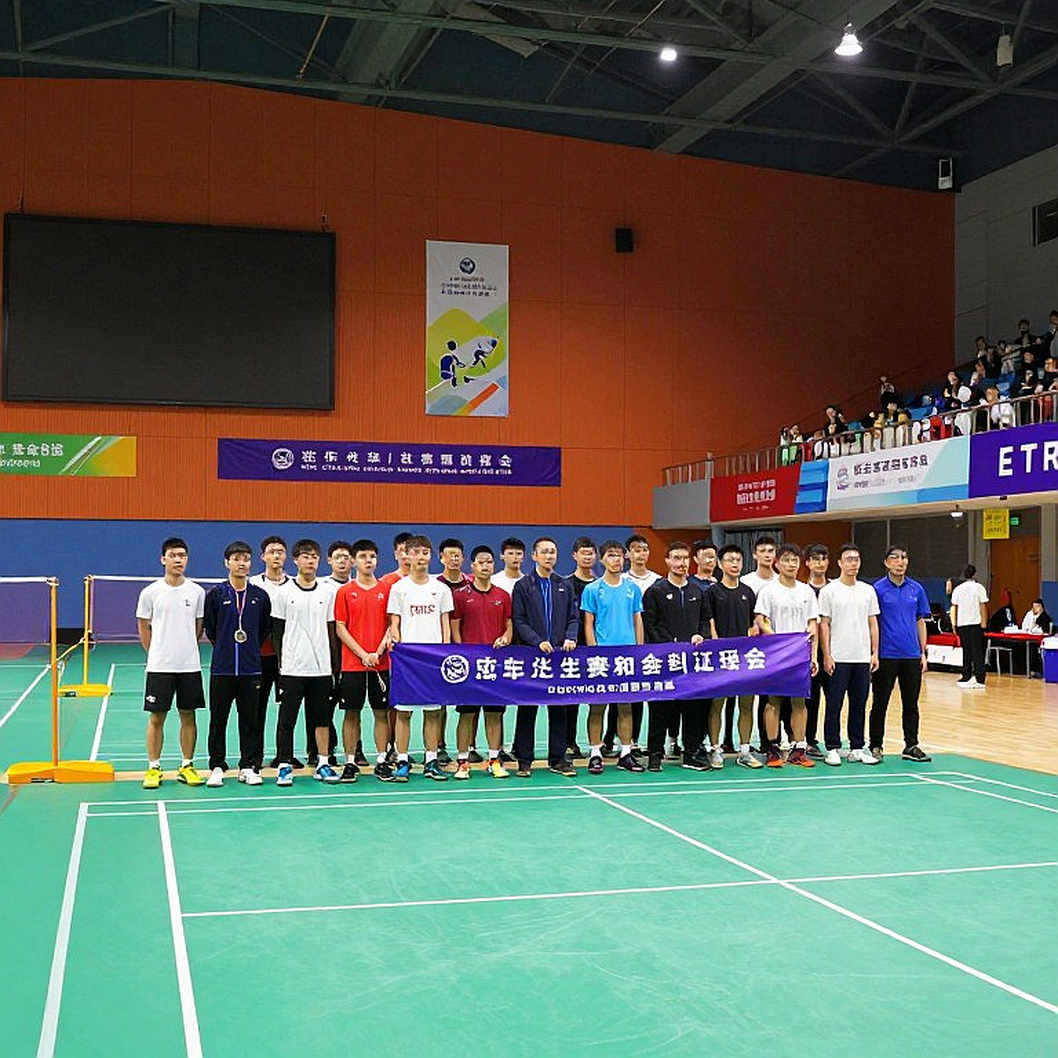
In my own records, this is not the first time the BWF has tried to change how points are counted. In 2026, badminton moved from the 15-point service-over system to 21-point rally scoring, a change fiercely opposed at the time on the grounds that it stripped out the tactical value of long rallies. In 2026, the BWF trialled a five-game, 11-point format at some junior events before returning to the 21-point system. Precedent shows that experimental formats at junior level are often a testing step, used to gauge reaction before wider adoption.
Evidence no longer sits in the referee's eye; it sits in the data. If the relay format produces better broadcast outcomes at junior level, the possibility of it appearing at higher levels cannot be ruled out.
The contrarian angle: the Guwahati trap
Indian media are building the story around "momentum". In 2026, India's junior squad won a team bronze and an individual silver. In 2026, the stated target is to repeat that.
But one detail is almost absent from the optimistic statements. The 2026 World Junior Championships were held in Guwahati, India, on home soil. The 2026 edition is in Cairo, Egypt. Reproducing a result at a neutral venue, far from home crowds, across unfamiliar time zones and without home-court advantage, is a different problem in kind.
This is the type of error I learned to isolate years ago. Since 2026, when I had to cross-check dozens of comparable incidents across decades to establish the contact threshold required by the laws of the game during a major quarter-final, I have always placed two columns side by side: the number, and the conditions that produced it. A medal won at home and a medal won away should not be read as the same data point.
The second risk is the "prodigy halo". Tanvi Patri's Asian U17 title is the strongest credential in India's hands, and it is being used as a headline. But U17 and U19 are different age groups, facing opponents of different physical profiles, different speeds and different levels of international experience. The step from an age-group title to a world junior championship is not a linear one.
The third risk sits in the calendar. The team event ends on October 10. The individual events begin on October 11. That is thirteen consecutive days of competition for athletes contesting both phases. For Yogansh Singh and Aanya Bisht, who also play two disciplines, this is a genuine workload problem, not a footnote.
Every sanction needs a pen calmer than the crowd. For a junior squad entering a tournament under a format it has never played, composure in judgement matters even more than it does in a disciplinary case.
What to watch from October 5
Three variables will shape how the 2026 junior championships should be read.
The first is the BWF's official format document. If the mechanics of the 3×55 relay are published clearly, we will know whether this is a controlled experiment or a cosmetic change. If not, every pre-tournament tactical analysis is guesswork.
The second is the outcome of the Group D play-off. India must first top Group D1 before the D2 opponent even matters. Any slip in the group stage, even a single relay segment lost under a shortened format, would be enough to break the plan.
The third is how Tanvi Patri performs in the girls' singles U19 draw. A deep run under the 3×15 format would show that age-group results translate into international senior-track capability. An early exit would be a reminder that the gap between an age-group continental medal and world junior standard remains intact.
India have a system behind them worth noting: a national training centre, a committee-run selection process, a dedicated camp immediately before the tournament. That is the infrastructure of a serious badminton nation, not of an ad-hoc team.
But infrastructure does not score points. Points are scored on court, under a format nobody has played at this level.
What is worth anticipating in Cairo is not the medal. It is the answer to a larger question: whether a rising nation can turn a change in the rules into a preparation advantage, or will be pulled back to the starting line alongside the rest of the world by the very change itself.